Most people comparing MarketMuse against Surfer and Clearscope are comparing different kinds of product, and that mismatch is why they end up disappointed.
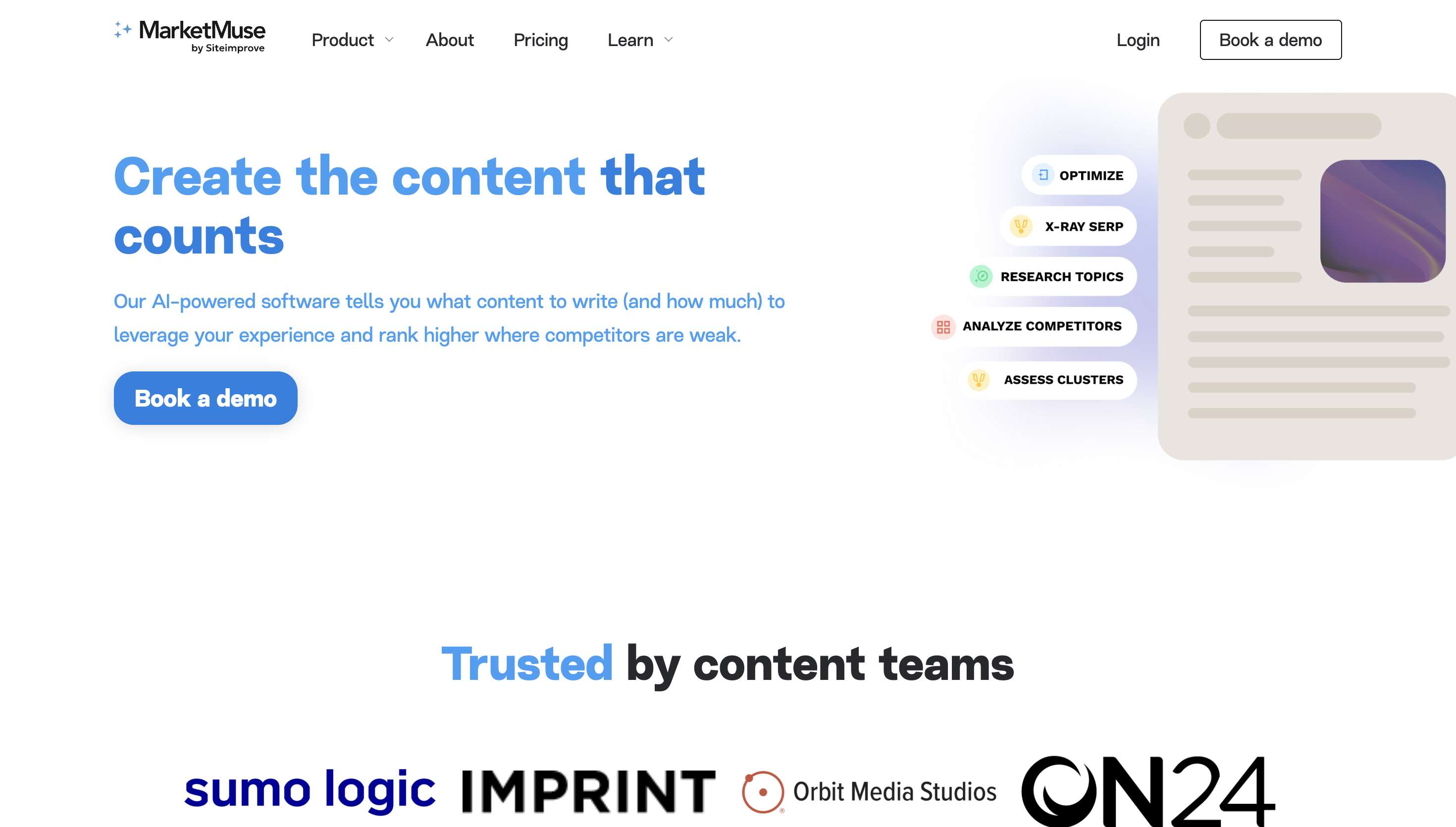
MarketMuse is a planning tool. It models topics, maps clusters, audits an existing library and tells you where the gaps are. Surfer and Clearscope grade a draft you've already written. Buy the first expecting the second and it feels slow and abstract. Buy the second expecting the first and you still don't know what to write.
The seven worth comparing are Strivelabs, Surfer SEO, Clearscope, Frase, Dashword, BrightEdge and AirOps.
At a Glance
-
MarketMuse plans. Surfer, Clearscope and Dashword grade. Different jobs, routinely confused.
-
MarketMuse has a free tier, which is a real reason to keep it alongside something cheaper rather than replacing it.
-
Published pricing in this category is reported inconsistently across comparison sites. Verify current tiers with the vendor before you budget.
-
If a brief takes days, that's a speed problem. If you don't know which page to write, that's a planning problem. Different fixes.
-
Run a 30-day pilot with KPIs agreed per role before you start, not after.
-
A person reviews every automated suggestion before it publishes.
When switching makes sense
Cost outruns usage. Buying a planning platform you use twice a quarter is expensive digital clutter. Divide the monthly fee by the briefs or audits you actually run.
Briefs take too long. If a single brief takes days, the bottleneck is speed. MarketMuse's depth is wasted on that problem.
You need grading, not planning. Drafts that read fine but don't rank need a grader. Different purchase entirely.
When to stay. Complex sites needing site-wide content inventories, topical modelling and personalised difficulty scores don't have many alternatives. The free tier also means you can keep it for planning while using something cheaper day to day.
Better decisions start with better infrastructure.
Most mid-market teams pick a channel and hope. Strivelabs gives you the data to know, and the infrastructure to act on it.
The seven alternatives
1. Strivelabs — quoted
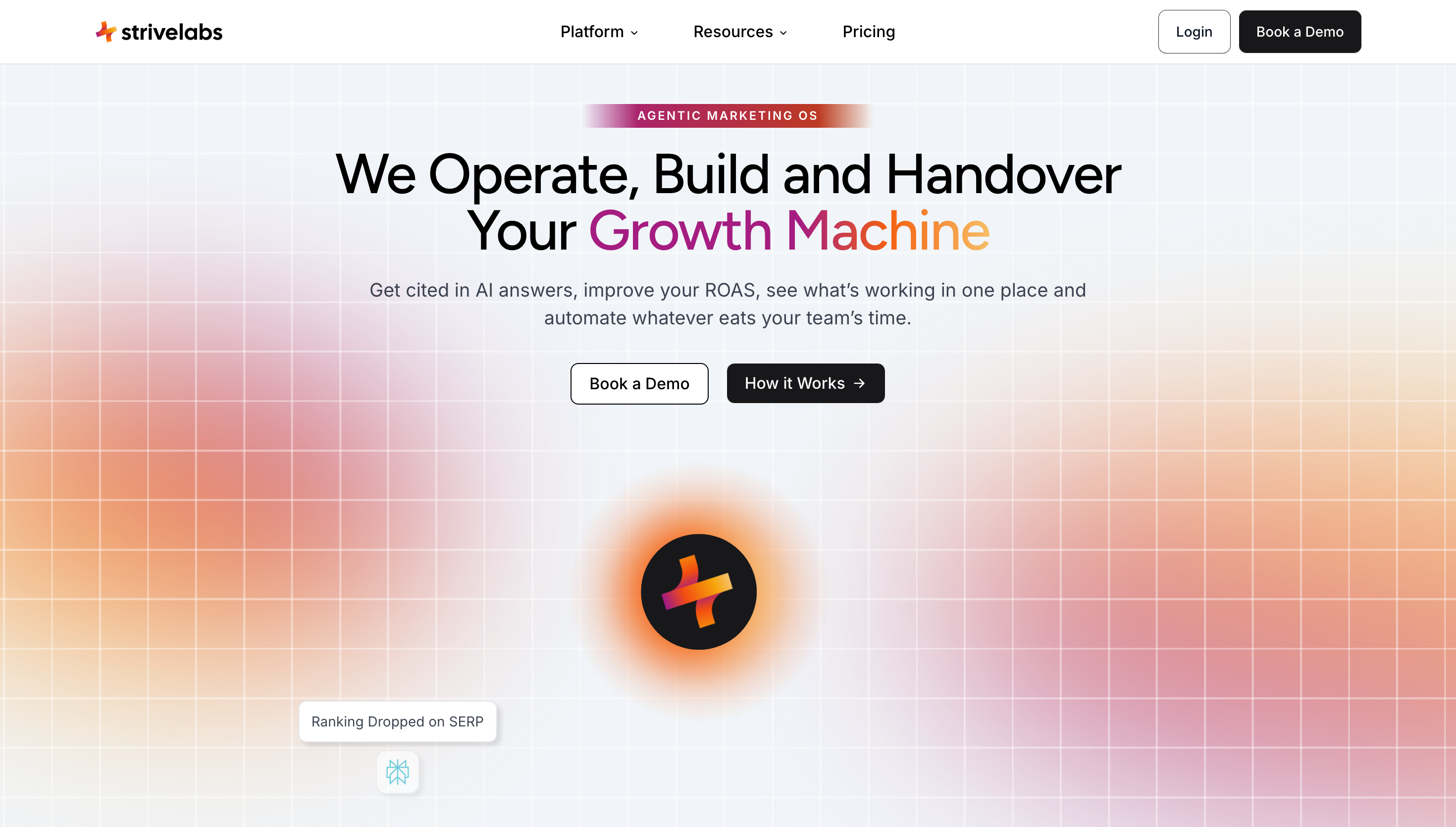
Connects Search Console, GA4, Google Ads, HubSpot, LinkedIn Ads and your existing research tools, reads them together, and turns what it finds into work with a named owner and approval enforced by role permission.
MarketMuse plans from topic models. Strivelabs plans from what's actually happening to your traffic and pipeline — a different input and a different kind of answer.
Three things that need more than one system to see: a page losing organic position while you're still paying for traffic to it, a topic gaining impressions with no page behind it, and contacts reading a specific subject before booking a demo.
It also samples ChatGPT, Gemini, Claude, Perplexity and Google AI Overviews against prompt sets you define, so the same system shows whether the work is landing in AI answers.
Better than MarketMuse at: prioritising by commercial impact rather than topical gap, catching decay before it costs a quarter, and connecting content decisions to live ad spend and pipeline data
Falls short on: topic modelling depth, which is MarketMuse's core strength and worth keeping the free tier for
2. Surfer SEO — from $59/mo

Real-time page scoring that updates as you write, plus keyword research and topical maps. The feedback loop is tight enough that writers use it rather than working around it.
Workflow: bring in a keyword or URL, generate the brief, write in their editor or your CMS, publish and track in Search Console.
Better than MarketMuse at: speed, price, and immediate feedback while drafting
Falls short on: site-level planning depth and personalised difficulty scoring
Our Surfer SEO alternatives comparison covers where it holds up against the rest.
3. Clearscope — from $129/mo
The most trusted grading in the category. Writers follow the score rather than arguing with it, which shortens review cycles — genuinely valuable when managing a rotating set of freelancers. Positioned for editorial teams and priced accordingly, with seat caps on entry plans.
Better than MarketMuse at: editorial consistency and reviewer confidence
Falls short on: price, the highest of the dedicated tools, and it does no planning at all
If the price is the sticking point, our Clearscope alternatives piece works through it.
4. Frase — from $49/mo
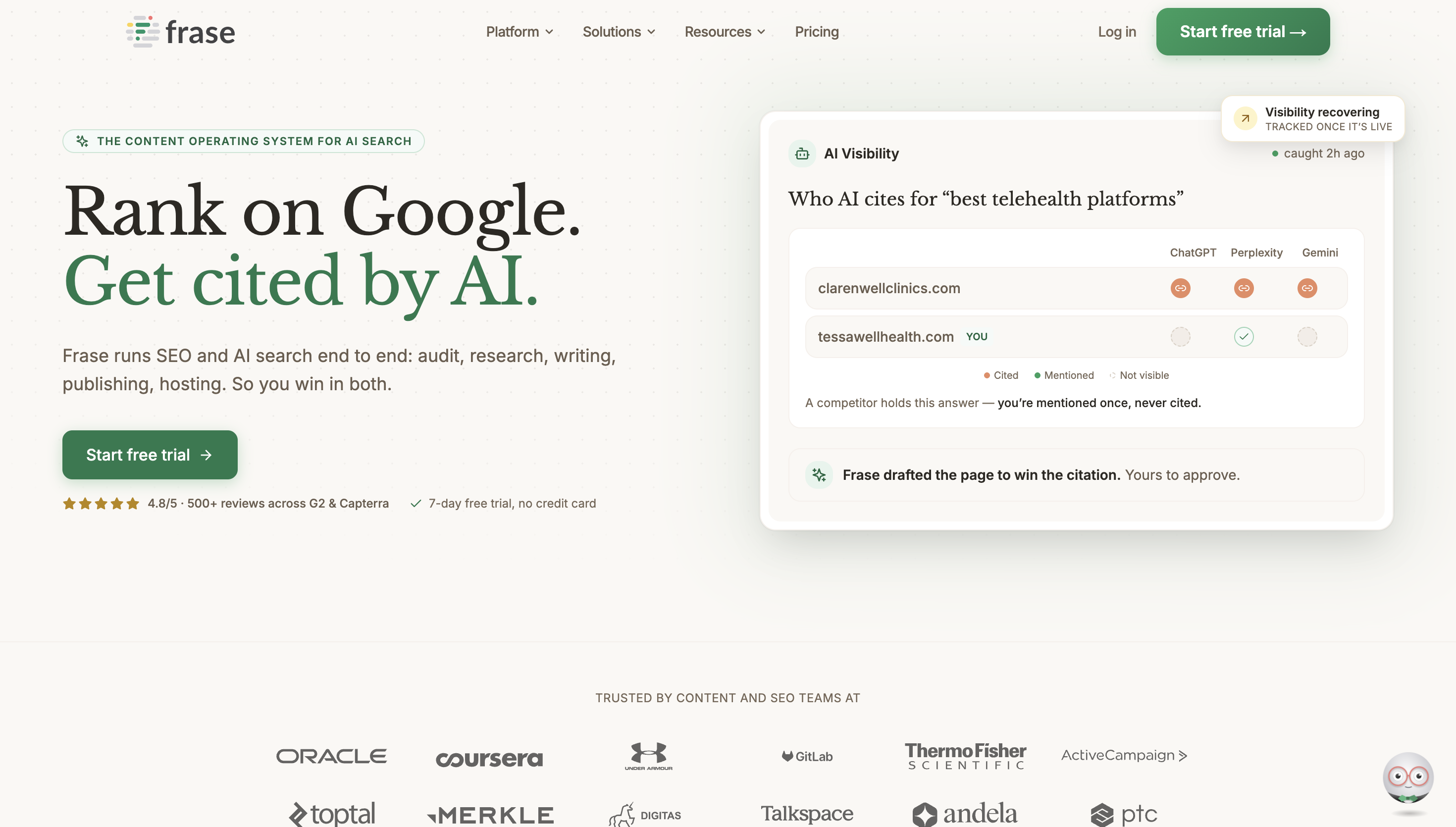
Turns SERP research into a usable brief in minutes, with AI drafting in the editor. Fastest route from keyword to draft and the cheapest entry point here. Document and AI run caps drive the real bill rather than the headline price.
Better than MarketMuse at: brief creation speed and entry price
Falls short on: difficulty scoring and research depth in specialised niches
More on where it fits in our Frase alternatives comparison.
5. Dashword — check current pricing
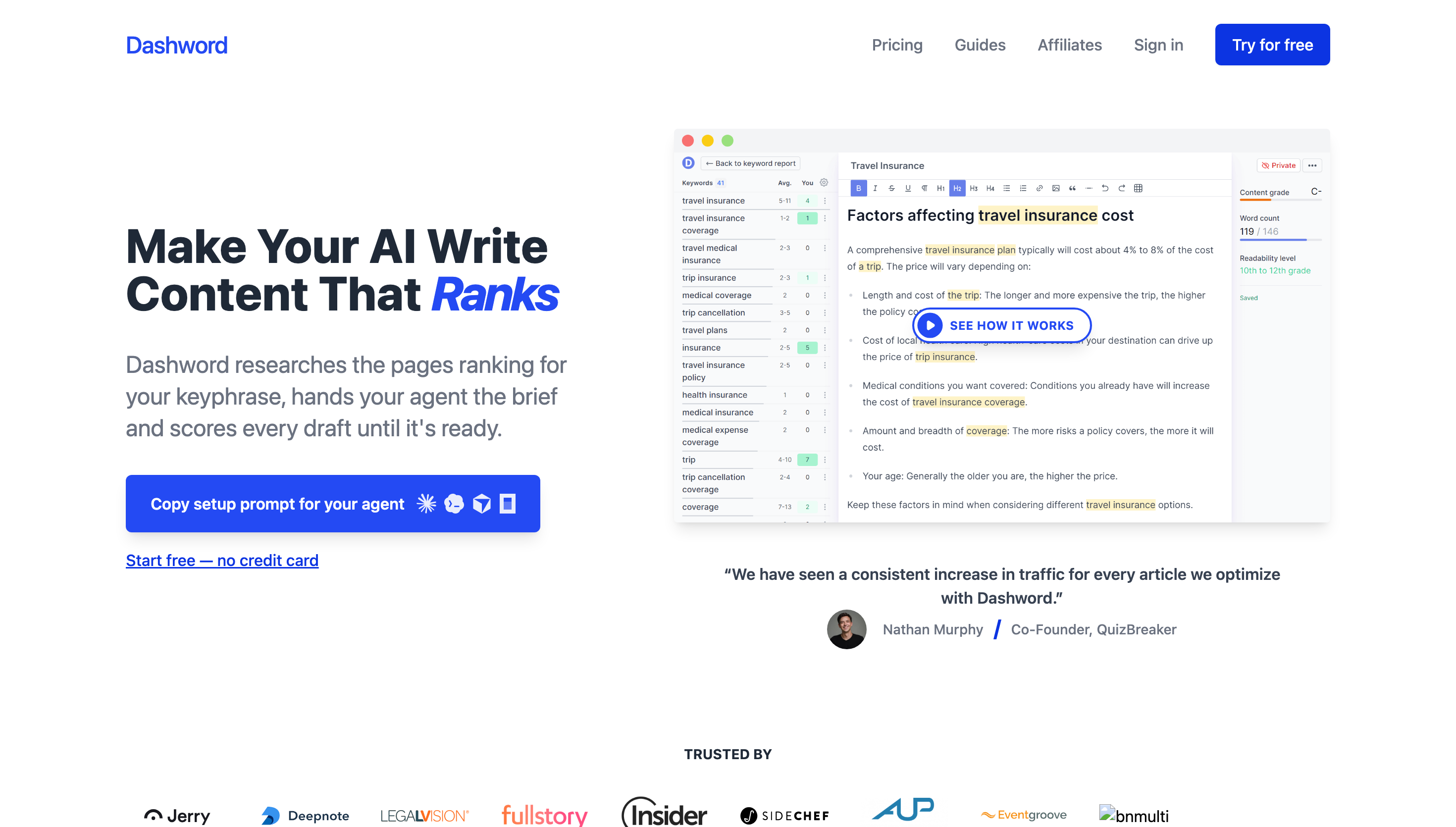
A clean, simple editor with live optimisation scoring and WordPress integration. Almost no learning curve, which matters when onboarding freelancers.
Better than MarketMuse at: simplicity and time to first useful output
Falls short on: whole-site planning, which it doesn't attempt
6. BrightEdge — enterprise, sales-led
An enterprise SEO platform with custom reporting, global team support and technical audits alongside content. Budget for a procurement cycle as well as a licence.
Better than MarketMuse at: breadth across technical SEO and enterprise reporting
Falls short on: cost and implementation time. Only sensible if the project justifies the bill
7. AirOps — not published, sales-led
Composable workflows chaining research, generation and publishing at volume against your own data. Flexible if someone will build with it, wasted if nobody does.
Better than MarketMuse at: automating repeatable production and refresh work
Falls short on: cost forecasting on a credit model, and pricing isn't published
We've looked at it in more depth in our AirOps alternatives comparison.
Planning tools and page optimisers
| Planning tools | Page optimisers | |
|---|---|---|
| Question answered | What should we write? | Is this draft good enough? |
| Unit of work | Topic cluster, content library | Single page |
| Examples | MarketMuse, Strivelabs | Surfer, Clearscope, Dashword |
| Fails when | You need a draft fixed today | You don't know which page to fix |
Most teams above a certain size end up with one of each. Budgeting for a single replacement is how people end up back where they started.
What a content score can and can't tell you
Every optimiser here works the same way underneath: crawl the pages currently ranking for a term, extract common terms and structure, score your draft against that benchmark.
That's useful and it has a limit worth understanding. A score describes how your page compares to competitors today. It says nothing about whether the page deserves to rank.
Google's guidance on creating helpful content is explicit that content should be made for people rather than to satisfy a formula, and their E-E-A-T framework — experience, expertise, authoritativeness, trustworthiness — is applied by human quality raters assessing whether ranking systems are working. It isn't a number you optimise toward.
The practical consequence: hitting a target score is a floor, not a strategy. Two pages can both score 85 and only one is worth reading. The same holds for topical authority, which is built by covering a subject properly rather than by hitting a number.
Worth adding that Google's spam policies address content produced at scale primarily to manipulate rankings. Any tool that automates further toward publishing needs a tighter review gate, not a looser one.
Running a 30-day pilot
Before you start. Define KPIs per role. Paid marketers watch CTR and Quality Score. Content teams watch brief creation time and Search Console clicks. Product marketers watch competitor movement. Agreeing these in advance stops the pilot becoming an argument about what success looked like.
Then connect HubSpot, GA4 and Search Console so data actually flows, and run two or three real content projects rather than browsing features.
Tasks by role
-
Paid — does it produce landing page copy that lowers bounce rate or improves Quality Score?
-
Content — how long does a brief take, and do the resulting pages move in Search Console?
-
Product — can it surface competitor positioning changes and route alerts to Slack?
What to measure. Briefs completed per week, hours on research versus writing, average position change in Search Console, lead volume in HubSpot. Four weeks tells you whether the workflow fits. Ranking stability takes longer, so don't judge that inside a month.
Track the outcome in Search Console and GA4 rather than in the tool's own dashboard, which will always report favourably on itself.
Where this leaves you
If site inventory, topical modelling and personalised difficulty scores matter to your strategy, MarketMuse does something few tools do and switching costs you real capability. The free tier means you can keep it for planning and add something cheaper for daily grading.
If briefs are slow, Frase fixes it. If drafts aren't ranking, Surfer or Clearscope fix it. If the problem is that nobody knows which page matters commercially, no tool on this list solves it from topic models alone.
Upgrade to an Agentic Marketing OS
Connect your stack, get content work routed to the right person with enforced approvals. No more decisions made blind to what you're spending on paid.
Frequently Asked Questions (FAQs)
What are the best MarketMuse alternatives?
Strivelabs for end to end content workflows, Surfer SEO for real-time page scoring, Clearscope for editorial grading, Frase for fast briefs, Dashword for simplicity, BrightEdge for enterprise breadth, AirOps for custom workflows.
How much does MarketMuse cost?
Around $99 a month on the Optimize tier, with a free tier below it. That free tier is worth knowing about, because it lets you keep MarketMuse for planning while using something cheaper day to day.
Is Surfer better than MarketMuse?
For page-level work, faster and cheaper. For planning what to write across a quarter, MarketMuse does something Surfer doesn't attempt. Different products that get compared as though they aren't.
Why do pricing figures differ between comparison articles?
Some quote annual billing as if it were monthly, some are out of date, and some are simply wrong. Confirm current tiers directly before budgeting.
What should I measure during a pilot?
Hours saved on research and briefing, movement in Search Console position, organic clicks and time on page in GA4, lead volume in HubSpot. Agree targets before you start.
When is a simple editor better than an enterprise platform?
When you need one page fixed quickly, or freelancers productive without a large invoice. Enterprise platforms earn their cost on reporting across global teams, not single-page work.
Does hitting a high content score mean the page will rank?
No. A score measures similarity to pages currently ranking. Google's own guidance emphasises content made for people over content built to satisfy a formula, so treat the score as a floor rather than the goal.