If AirOps isn't quite fitting how your team works, the seven platforms worth comparing are Strivelabs, Jasper, Copy.ai, Surfer SEO, Clearscope, Frase, and MarketMuse.
This is written for VPs and heads of marketing at B2B SaaS companies running lean content operations, usually one to five people, where the person choosing the tool is also the person using it. If you have a content team of ten and a dedicated ops function, the calculation is different and most of this will read as over-cautious.
At a Glance
-
AirOps' flexibility is its real differentiator — but it needs someone to build with it, which most lean teams don't have.
-
Jasper is the strongest pick for brand voice consistency across multiple writers, at $69/seat.
-
Clearscope is the most trusted for editorial quality at $129/mo; Frase is the cheapest entry for briefs at $49.
-
Strivelabs is the only option here that connects live funnel data to a specific next action with enforced approval.
-
The real cost per article isn't the subscription — it's editing time multiplied by your loaded hourly rate.
What AirOps is
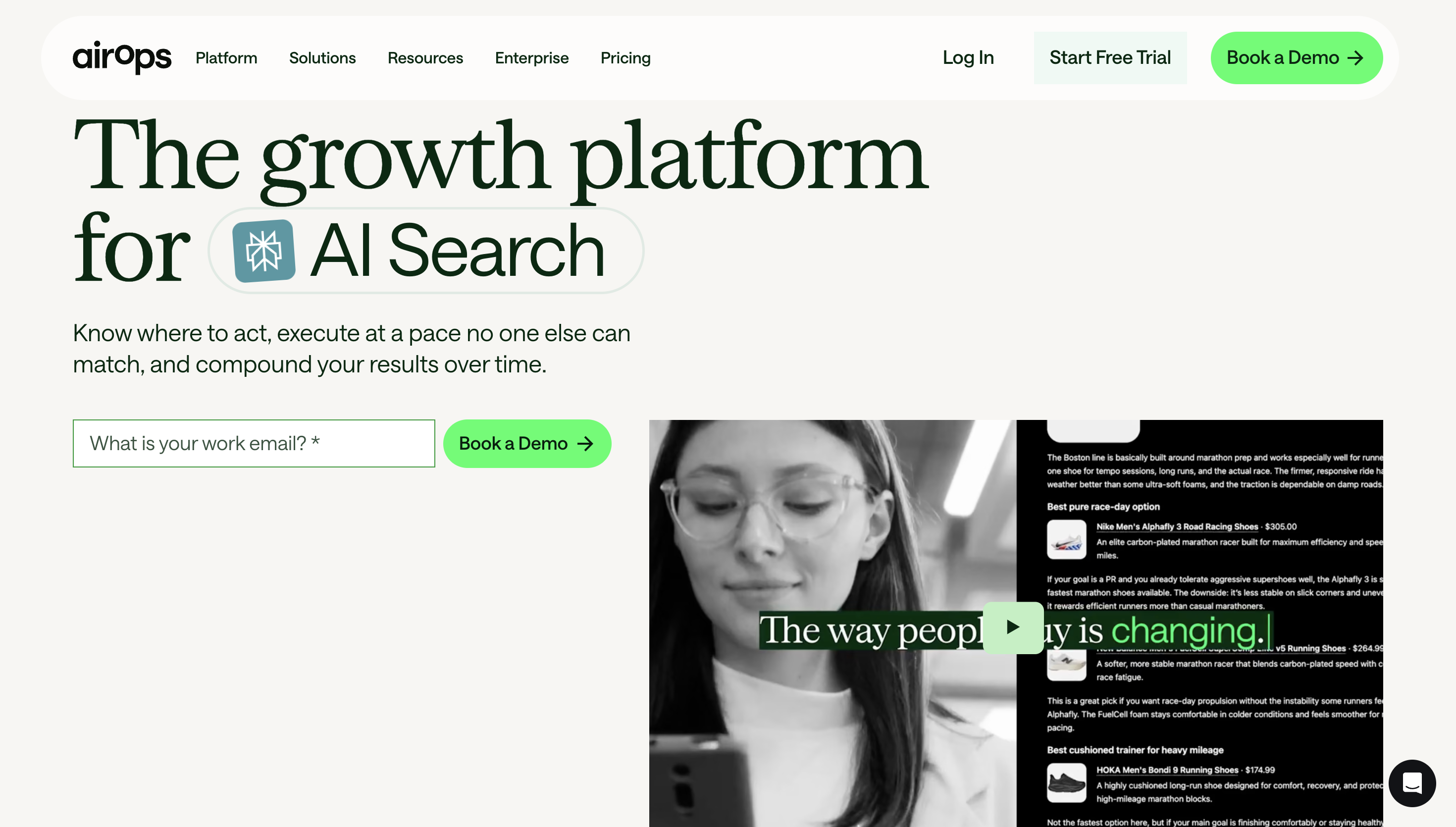
AirOps is a content workflow platform. You build automated sequences, called workflows, that chain together research, generation and publishing steps, connect them to your own data, and run them at volume. The pitch is a library of small automations rather than one big application.
It sits between the AI writing tools and the SEO optimisation tools, and does a bit of both. You can generate content, optimize it against search signals, and push it into a CMS, all from workflows you assemble yourself. For teams that like building their own machinery, that flexibility is the whole appeal.
Their own content operation tells you something about the philosophy. AirOps ranks for roughly 300 keywords, holds somewhere around 116 comparison pages, and no single page on their site pulls more than about 250 monthly visits. That's a deliberate breadth strategy: many small assets, each earning a little, aggregating into something meaningful.
The product reflects the same thinking. Lots of workflows, each handling a narrow job. Whether that's right for you depends mostly on whether you have the time to assemble and maintain them, which is the question running through everything below.
Why teams look at alternatives
Breadth needs someone to wield it. A library of composable workflows is powerful if you'll build with it. If nobody on the team has a spare afternoon to design a workflow, you end up using three of the fifty available and paying for the rest.
Credit-based pricing makes cost per article hard to see. Workflow runs consume credits, and credits move with usage. If you're trying to answer "what does a published post actually cost us," that's harder to model than a flat seat price.
Assembly, not opinion. AirOps gives you the parts. Tools like Clearscope and Surfer hand you a strong opinion about what good looks like and grade you against it. Teams that want guidance rather than building blocks often prefer the opinionated option.
Connections to your own funnel data. Check specifically whether HubSpot, Google Ads, Search Console and GA4 signals come in live, and whether a recommendation can reference an active ad audience. Content decisions made without that context can contradict what you're already spending money on.
And the reason that isn't a criticism: AirOps' flexibility is genuine and nothing else on this list matches it for building custom pipelines. If you have someone who enjoys that work, it's the most capable option here.
What to evaluate before you switch
Changing a content stack costs more than the subscription line. Four things are worth measuring during a pilot rather than assuming from a demo.
Quality-to-edit ratio. Time how many minutes your team spends fixing each AI draft. That number, multiplied by your loaded hourly cost, is the real price per article, and it varies enormously between tools. It's also the metric no vendor will volunteer.
Published pricing, modelled honestly. Take your expected monthly usage and add 30 percent, because early usage always runs higher than planned. On credit systems, do this before you sign rather than after your third invoice.
Live integrations, tested. Confirm that HubSpot and GA4 data actually flows rather than appearing in a feature list. Ask to see a recommendation that references live conversion data.
Approval gates you can't switch off. The agent proposes, a person approves. Enforce it with role-based permissions rather than team discipline. A tool that lets you disable human review is optimised for demos, not for daily operation.
Two red flags worth naming: pricing that only exists behind a sales call, and no published SLA.
Quick comparison
| Vendor | What it does | Entry price | Best-fit team | Main limitation |
|---|---|---|---|---|
| AirOps | Composable content workflows at volume | Not published, sales-led | Teams who'll build and maintain workflows | Credit costs, and flexibility needs an owner |
| Strivelabs | Turns connected data into approved actions | Quoted | Lean teams whose gap is execution | Fewer published case studies than incumbents |
| Jasper | Brand-consistent generation at scale | $69/mo (Pro, single seat) | Larger teams protecting brand voice | Cost climbs per seat, still needs fact-checking |
| Copy.ai | Fast short-form and GTM workflows | Free, paid from $29/mo | Teams producing ads and social at volume | Long-form reads disconnected |
| Surfer SEO | Page-level optimisation against live SERPs | $59/mo (Discovery) | Teams optimising individual pages | AI features cost extra, no production management |
| Clearscope | Content grading and topical accuracy | $129/mo (Essentials) | Editorial teams prioritising quality | Optimisation only, no production layer |
| Frase | Briefs and SERP research, fast | $49/mo (entry) | Teams whose bottleneck is briefing | Research is thin in narrow niches |
| MarketMuse | Topic modelling and authority planning | $99/mo (Optimize) | Teams planning clusters over quarters | Steep learning curve, planning not production |
Ordered below by fit for a lean B2B SaaS team where the buyer is also the operator. A larger team with dedicated ops would reorder this.
Better decisions start with better infrastructure.
Most mid-market teams pick a channel and hope. Strivelabs gives you the data to know, and the infrastructure to act on it.
The seven alternatives
1. Strivelabs
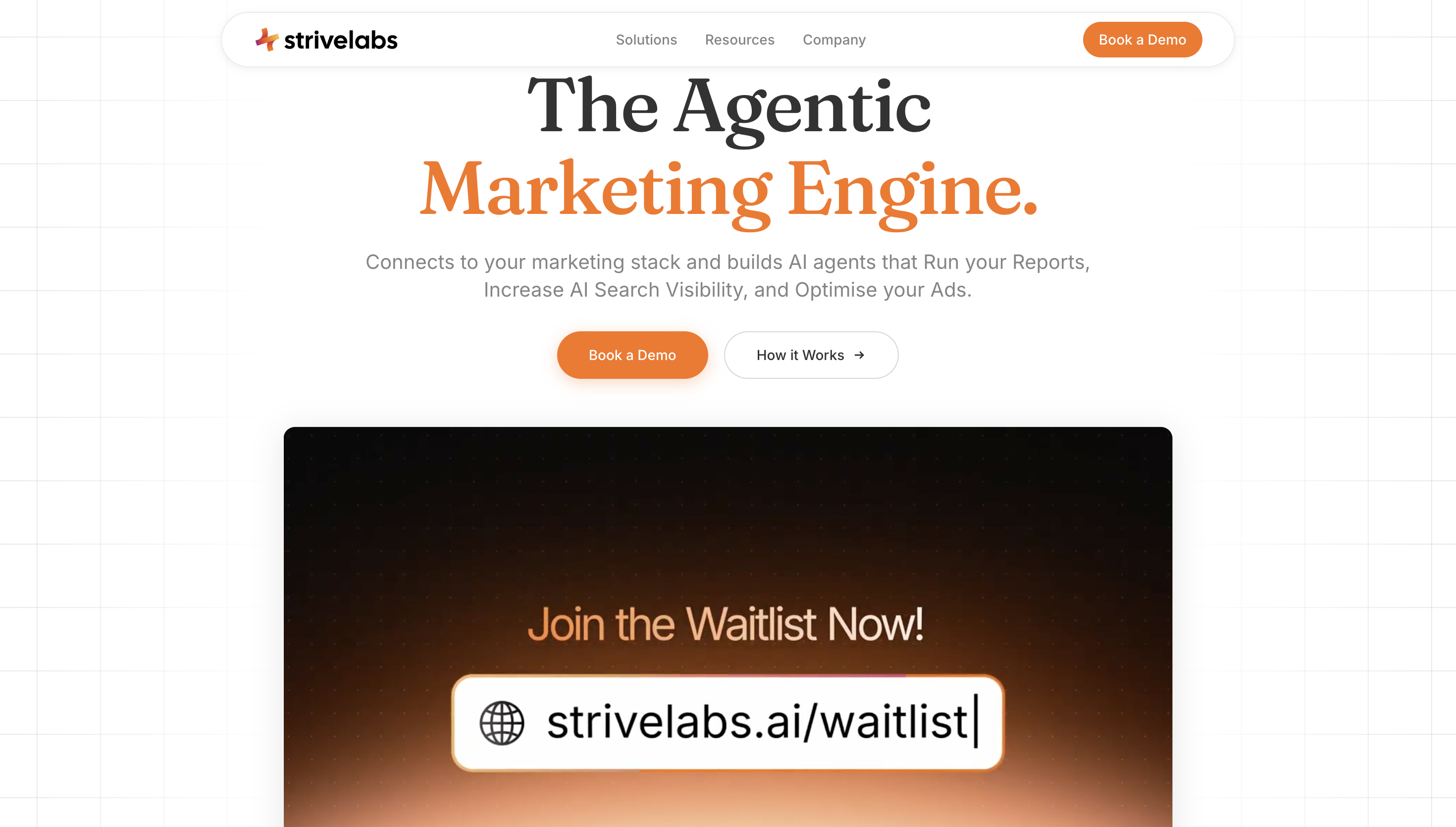
Best for: lean teams whose bottleneck is acting on findings, not producing them
Pricing: quoted
Strivelabs connects to Google Ads, HubSpot, Search Console, GA4, LinkedIn Ads and the rest of your stack, then turns signals into work: an SEO brief, an ad test, a task routed to the right person, with a human approving before anything ships. Approvals are enforced by permission rather than convention.
The distinction from AirOps is where the intelligence sits. AirOps gives you components and expects you to assemble the pipeline. Strivelabs decides what should happen next from your connected data and puts it in front of someone to approve. If you'd rather build your own machinery, AirOps is genuinely the better fit.
It's first here because for most lean teams the constraint turns out to be deciding and shipping rather than generating, and that's worth testing before buying more generation capacity.
Better than AirOps at: connecting first-party funnel data to a specific next action, and enforcing approval
Falls short on: published case studies, being newer than most of this list, so there's less third-party evidence to point at
2. Jasper
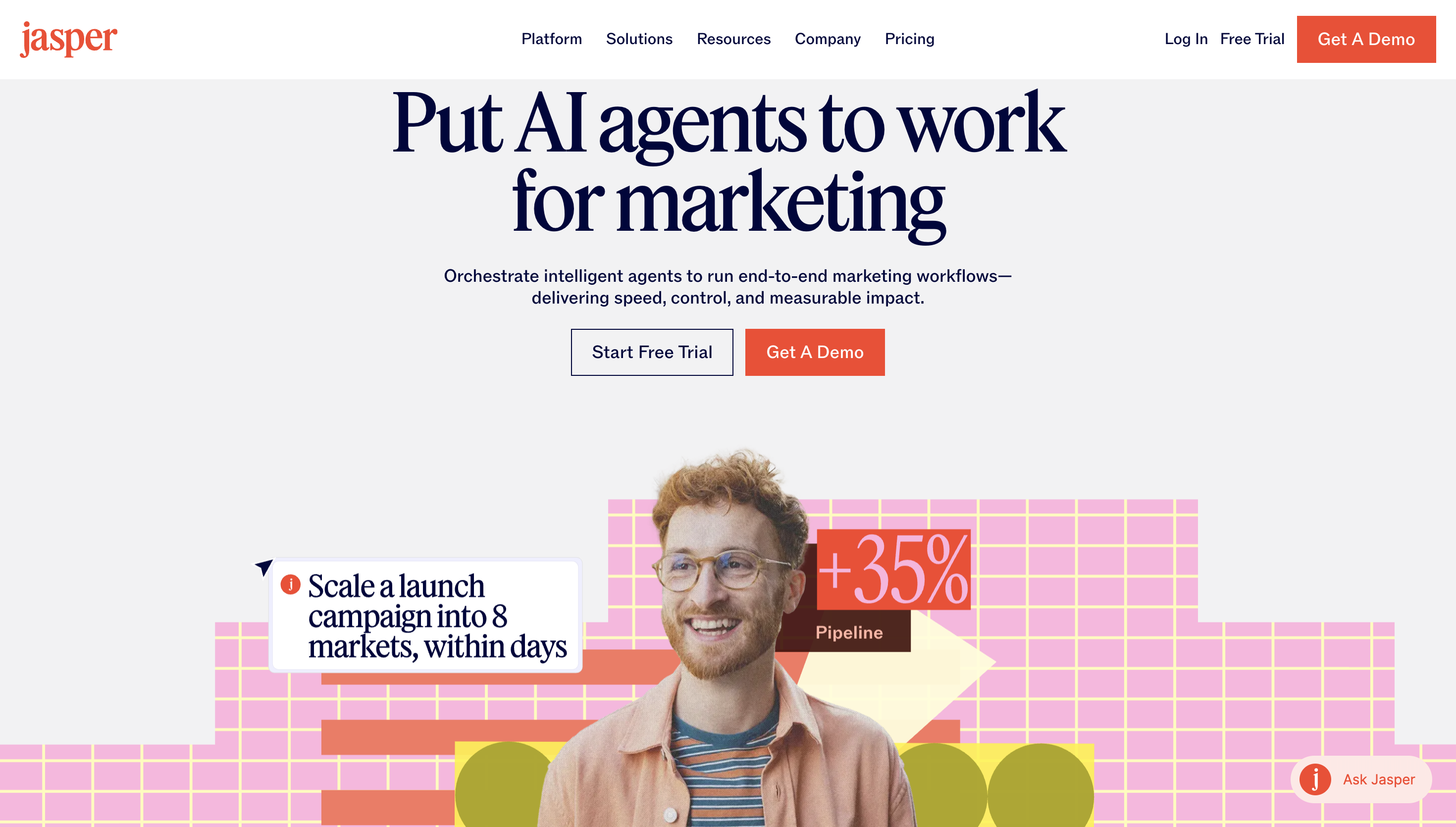
Best for: larger teams where brand voice consistency is the priority
Pricing: from $69/mo per seat (Pro)
Jasper is the most mature generation platform here, with brand voice controls, multi-model routing, and connections into HubSpot and most CMS platforms. If several people are producing content and it all needs to sound like one company, this is the tool built for that problem.
Better than AirOps at: brand voice control, and predictable per-seat pricing instead of credits
Falls short on: cost as headcount grows, and it still needs a human fact-checking every draft
3. Copy.ai
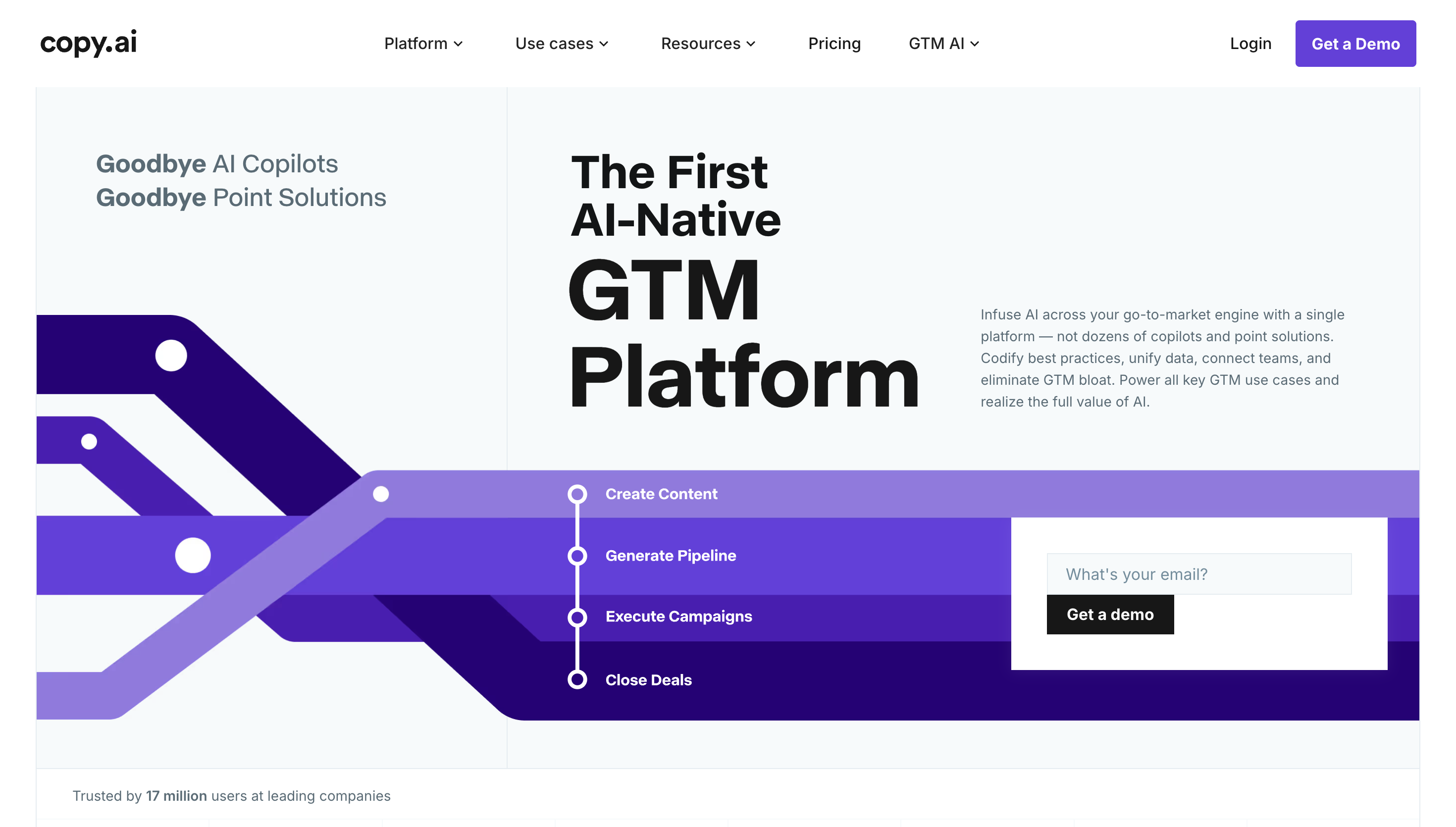
Best for: teams producing ads, social and short-form at volume
Pricing: free tier, paid from $29/mo
Copy.ai has moved toward GTM workflows rather than pure copy generation, with Zapier and CRM connections that make it easy to slot into existing processes. For short-form output at speed it's hard to beat on price.
Better than AirOps at: speed on short-form, and a genuinely usable free tier for testing
Falls short on: long-form coherence, where pieces tend to read as assembled rather than written, and it shares AirOps' credit-based cost unpredictability
4. Surfer SEO
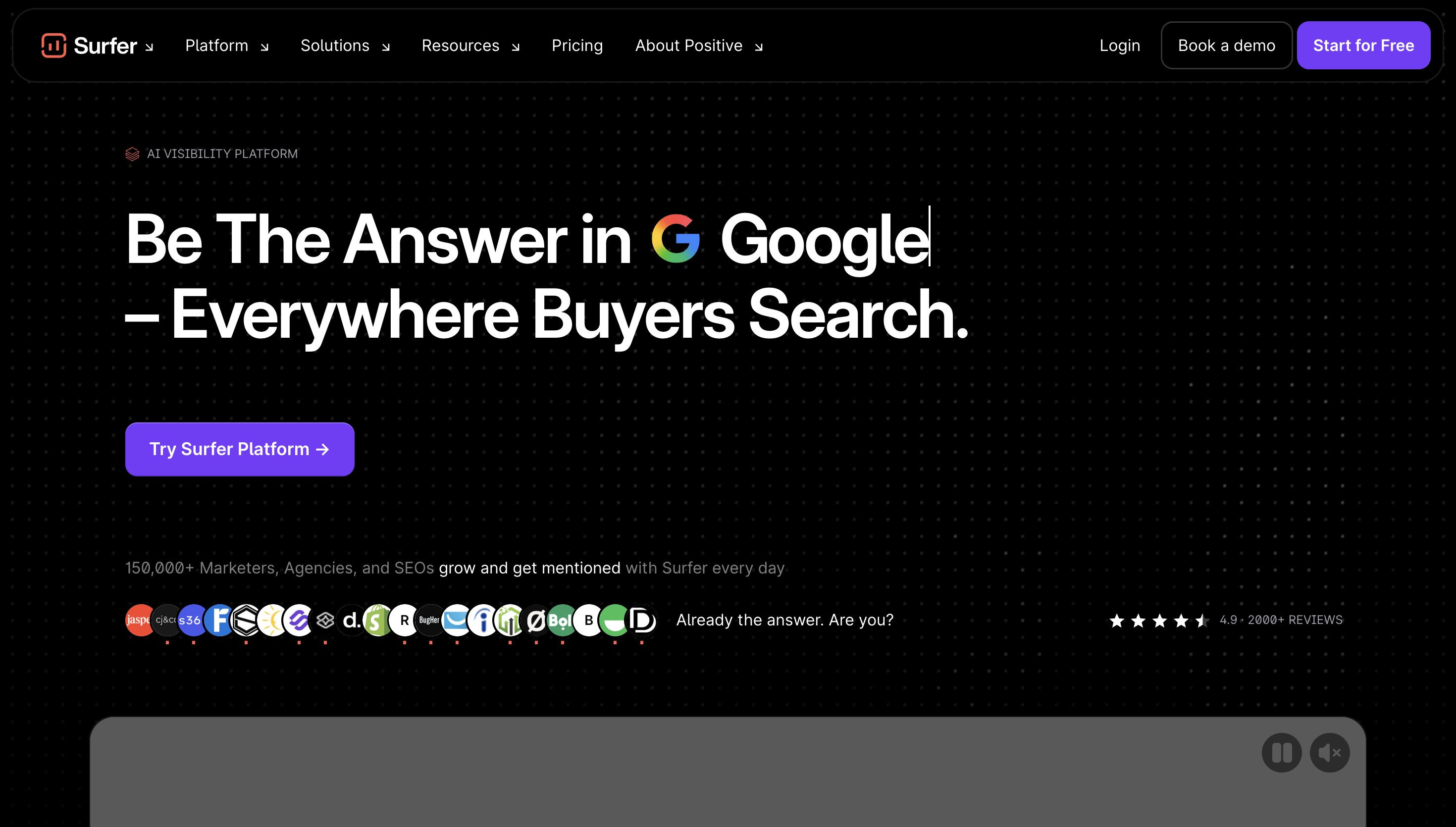
Best for: teams optimising individual pages against current search results
Pricing: from $59/mo (Discovery)
Surfer's editor grades a draft against what's currently ranking and tells you what's missing. It's focused, it's fast, and the feedback loop is tight enough that writers actually use it. Keyword research sits alongside it.
Better than AirOps at: page-level optimisation depth, and a much shorter learning curve
Falls short on: production management, and AI writing features cost extra on top of the base plan
5. Clearscope
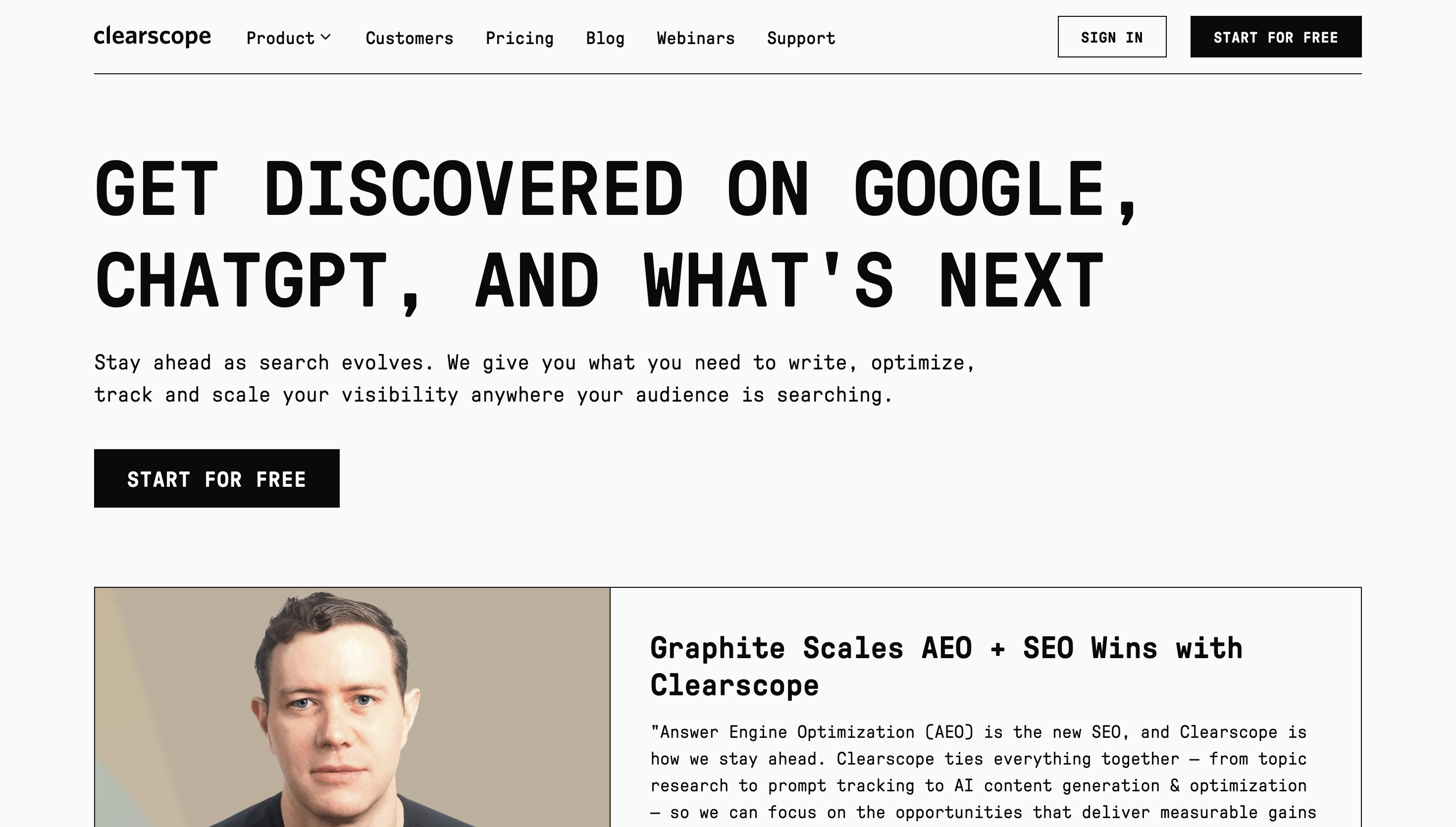
Best for: editorial teams where accuracy matters more than throughput
Pricing: from $129/mo (Essentials)
Clearscope's content grading is widely regarded as the most reliable in this category, and editors tend to trust it in a way they don't always trust automated suggestions. If quality per piece is the metric you're judged on, this is the opinionated option.
Better than AirOps at: editorial quality signals, and clear seat-based pricing
Falls short on: scope, since it optimises drafts and does nothing about producing them, and entry plans cap seats
6. Frase
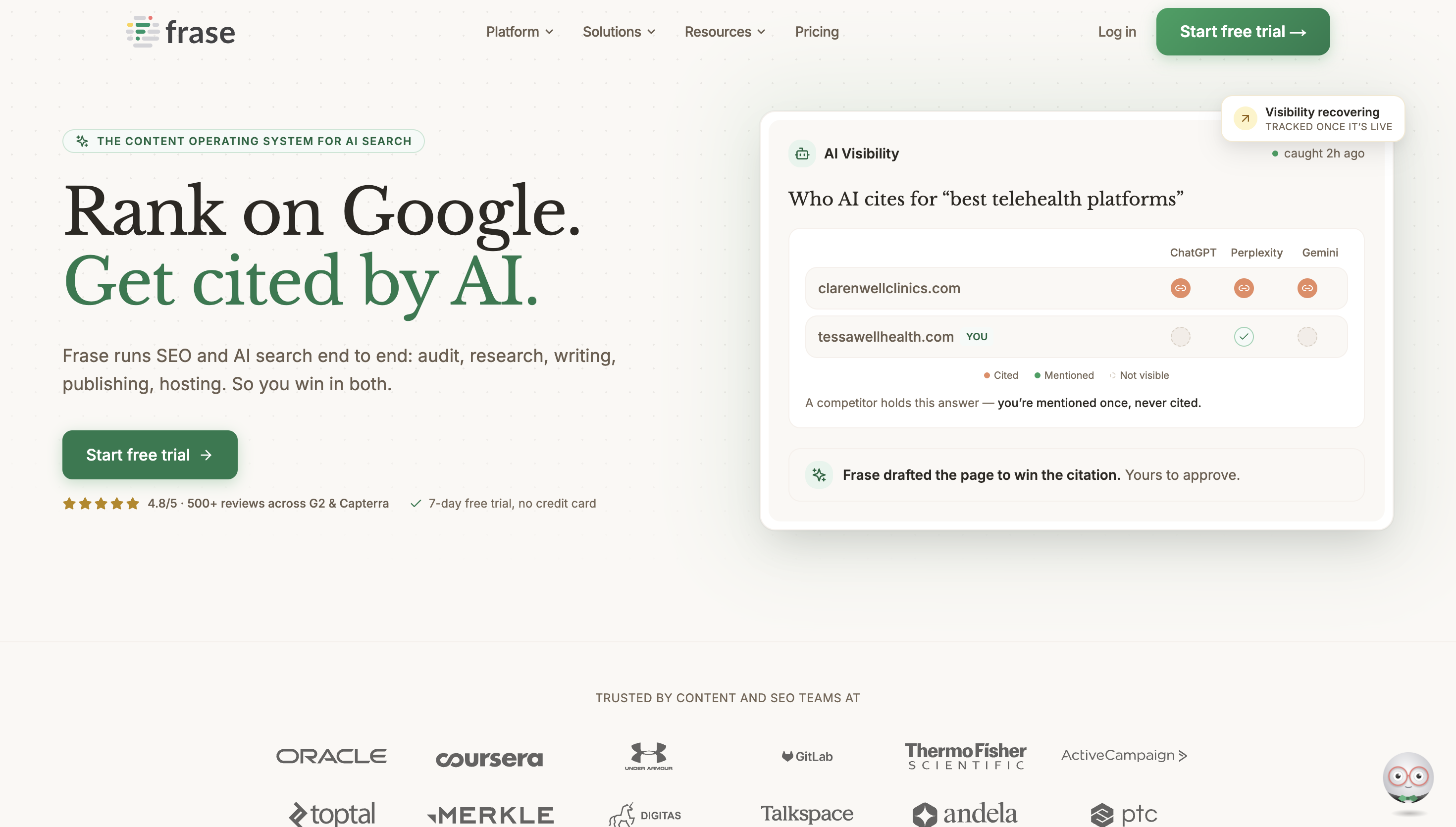
Best for: teams whose real bottleneck is getting briefs written
Pricing: from $49/mo
Frase turns SERP research into a usable brief in minutes, which is the step most content operations quietly lose days to. It's cheap enough to test without a procurement conversation.
Better than AirOps at: speed from research to brief, and low-risk entry pricing
Falls short on: research depth in specialised niches, where the SERP data thins out fast
7. MarketMuse
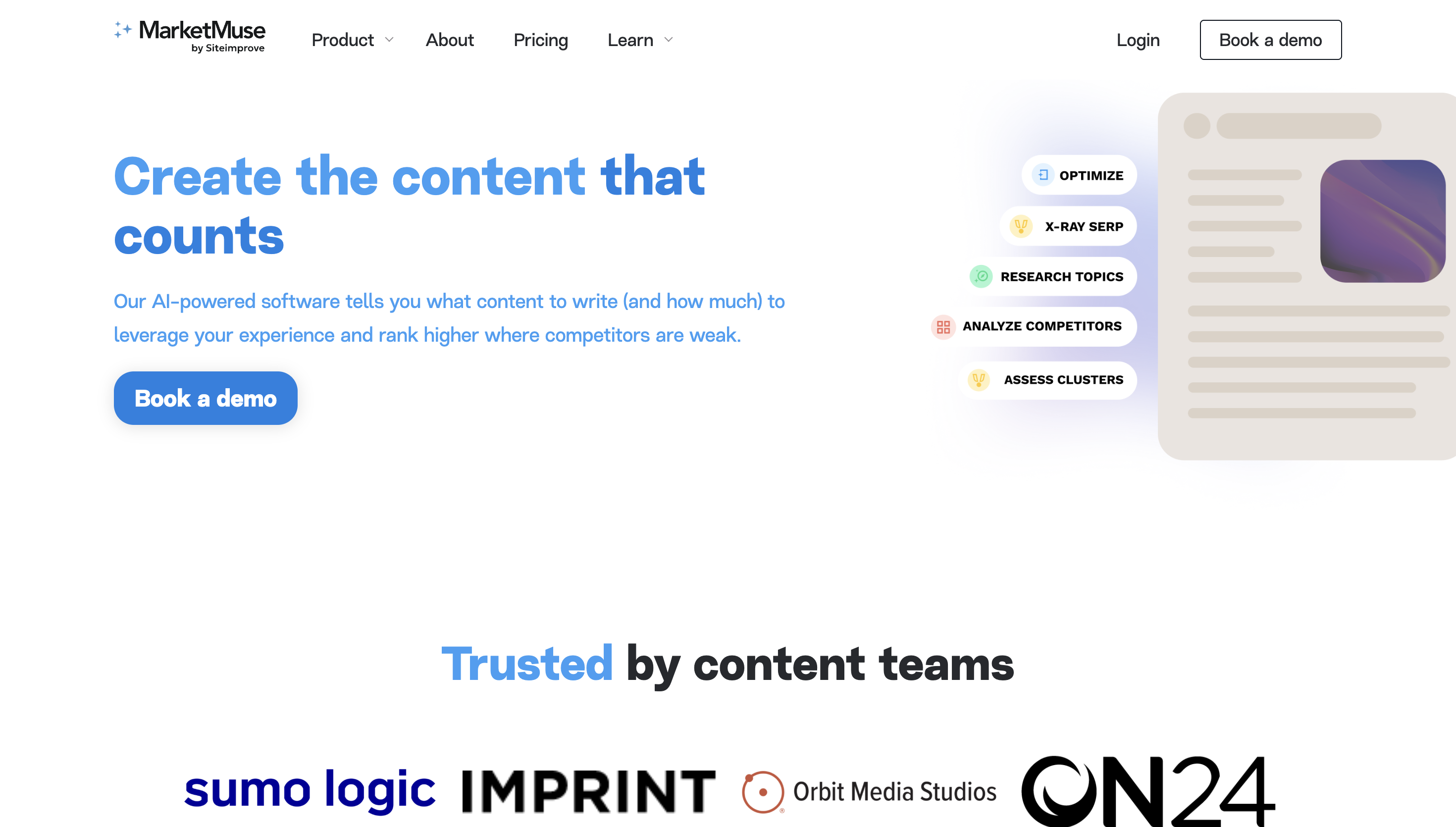
Best for: teams planning topic clusters across quarters
Pricing: from $99/mo (Optimize)
MarketMuse is a planning tool rather than a production one, which is a distinction buyers often miss when they group it with Surfer and Clearscope. Topic modelling, internal link suggestions, and content audits are what it's for.
Better than AirOps at: long-horizon topical planning and authority modelling
Falls short on: the learning curve, which is the steepest here, and it won't help you actually produce anything
When AirOps is still the right choice
Three situations where switching would be a mistake.
You have someone who likes building workflows. AirOps' flexibility is real, and nothing else on this list lets you assemble custom pipelines to the same degree. If that person exists on your team, you'll get more from AirOps than from anything more opinionated.
Your requirements are genuinely unusual. Off-the-shelf tools encode assumptions about how content gets made. If yours don't match, composability beats opinion.
You're already deep in it. Migrating a library of working workflows is not a weekend job. If what you have is running, the cost of moving may exceed whatever you're hoping to fix.
How to choose
Is your gap generation, optimisation, or deciding what to do? Generation points to Jasper or Copy.ai. Optimisation points to Surfer or Clearscope. Deciding and shipping points to Strivelabs.
Will someone build workflows? If yes, stay with AirOps. If no, an opinionated tool will get more actual use.
Flat pricing or credits? If you need to forecast cost per article, seat-based pricing on Jasper, Surfer, Clearscope, Frase or MarketMuse is easier to model than credits.
Does it need to see your funnel? If content decisions have to reflect live ad spend and conversion data, most of this list doesn't connect to it.
Who signs off? Confirm approval gates can be enforced by permission rather than trust.
Running a useful pilot
Two weeks is enough if you set it up properly.
Pick 6 to 10 recent posts or briefs as a baseline so you're comparing like with like. Run two tools in parallel against the same work. Time every minute of internal editing, because that's where the real cost hides. Confirm HubSpot and GA4 data actually flows rather than trusting the feature list. Put a manual sign-off in every automated sequence and measure the delay a reviewer adds. Log every slow support response, since that's the best available signal about what year two looks like.
Two practical things that derail pilots: missing Search Console or GA4 API access on day one, and never defining what a good edit looks like, which makes the editing-time numbers meaningless. Sort both before you start.
If your gap is deciding and shipping rather than generating, that's the conversation worth having.
Upgrade to an Agentic Marketing OS
See how Strivelabs gives mid-market teams the operational capacity without the hiring cost.
Frequently Asked Questions
What are the best alternatives to AirOps?
The seven worth comparing are Strivelabs, Jasper, Copy.ai, Surfer SEO, Clearscope, Frase and MarketMuse. Jasper is strongest on brand voice at $69 a month per seat, Clearscope on editorial quality at $129, Frase cheapest for briefs at $49, and Strivelabs handles execution rather than generation.
What is AirOps used for?
Building composable content workflows that chain research, generation and publishing steps together and run at volume, connected to your own data. It sits between AI writing tools and SEO optimisation tools and does some of both, with flexibility as the main selling point.
Why do teams leave AirOps?
Usually because the flexibility needs someone to build with it. Teams without that person use a fraction of what they pay for. Credit-based pricing also makes cost per article hard to forecast, which matters when you're justifying budget.
What is the cheapest AirOps alternative?
Copy.ai, with a free tier and paid plans from $29 a month. Frase is next at $49 and Surfer SEO at $59. All three trade AirOps' workflow flexibility for a fixed, predictable monthly cost.
Is Jasper or AirOps better for content production?
Depends what breaks first. Jasper is better if you need consistent brand voice across several writers and want predictable per-seat billing. AirOps is better if you're building custom pipelines and have someone to maintain them.
Which AirOps alternative connects to HubSpot and GA4?
Strivelabs connects to HubSpot, GA4, Google Ads, Search Console and LinkedIn Ads directly. Jasper connects to HubSpot and most CMS platforms. Surfer and Frase connect to Search Console. Most of this category doesn't reach live conversion data at all.
What does an AI content platform really cost per article?
The subscription is usually the smaller half. Measure the minutes your team spends fixing each draft, multiply by loaded hourly cost, and add that to the per-article share of your plan. Editing time is where the cost actually sits.
How long should a pilot run before deciding?
Between one and two weeks against 6 to 10 real briefs. That's long enough to measure editing time and confirm integrations hold. Anything shorter measures onboarding rather than the tool.