Start with something most comparison pages get wrong: Copy.ai isn't really a copywriting tool anymore.
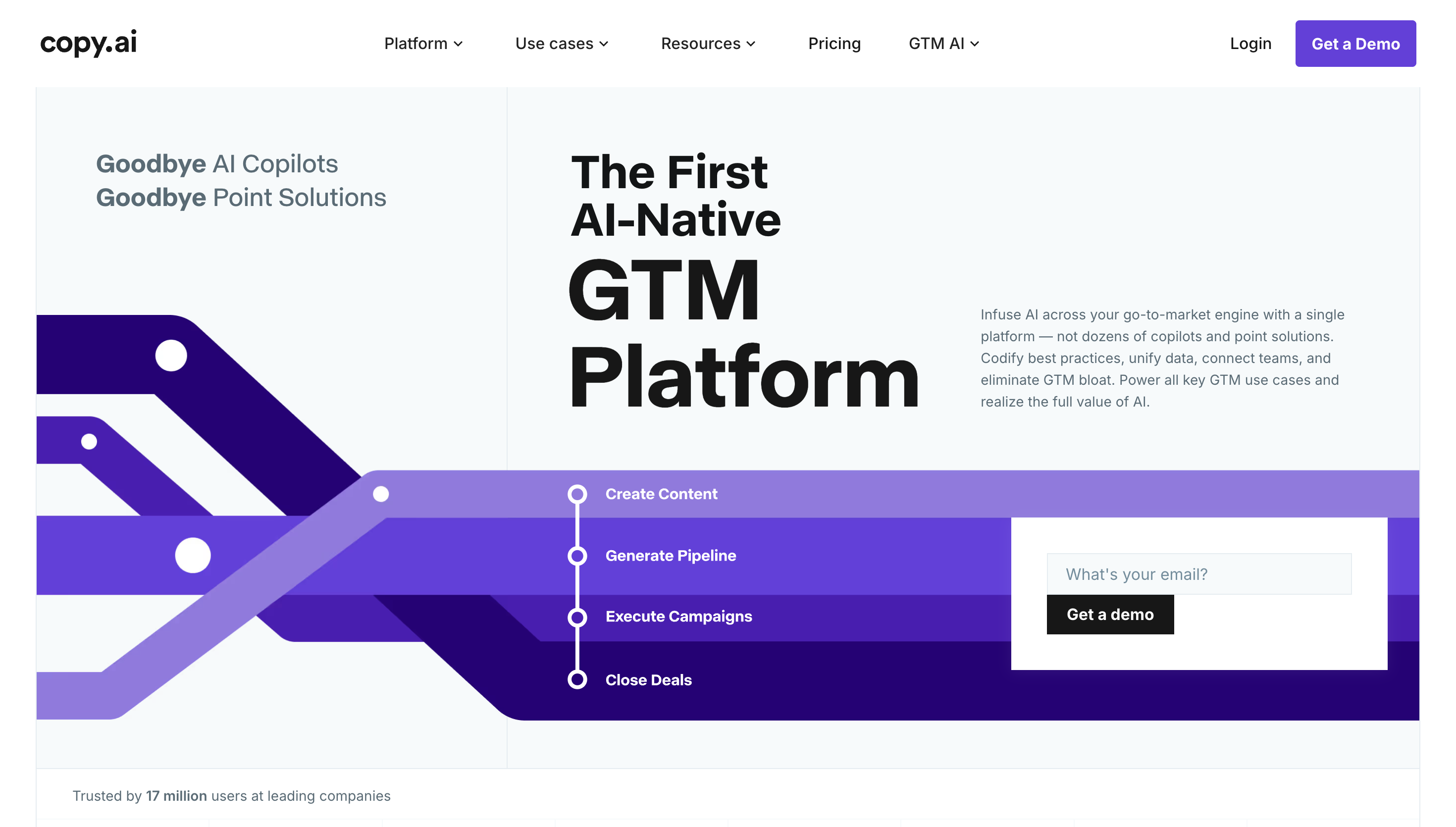
It has repositioned toward GTM workflows — sequences that chain research, enrichment and outbound with CRM connections attached. Plenty of articles ranking for this term still describe it as a short-form generator, which means they're comparing it against the wrong products.
That matters for your shortlist. If you're leaving because the writing quality disappointed you, the alternatives are different from the ones you'd pick if you're leaving because the workflow credits vanished.
The seven worth comparing are Strivelabs, Jasper, Writesonic, SEO.ai, Anyword, Rytr and Surfer SEO.
At a Glance
-
Copy.ai starts free, with paid plans from $29/mo. Workflow credits, not seats, drive the real bill.
-
Two different reasons to leave: output quality, or cost unpredictability. They point to different replacements.
-
Run the credit test before committing — identical briefs through two tools, logging credits and editor hours.
-
Per-seat pricing is easier to forecast. Credit pricing is cheaper until it isn't.
-
Keep a person approving every piece. Generated output states things confidently and sometimes wrongly.
-
Confirm HubSpot, Google Ads, Search Console and GA4 connections during the trial, not from the feature list.
Better decisions start with better infrastructure.
Most mid-market teams pick a channel and hope. Strivelabs gives you the data to know, and the infrastructure to act on it.
The seven alternatives
1. Strivelabs — quoted
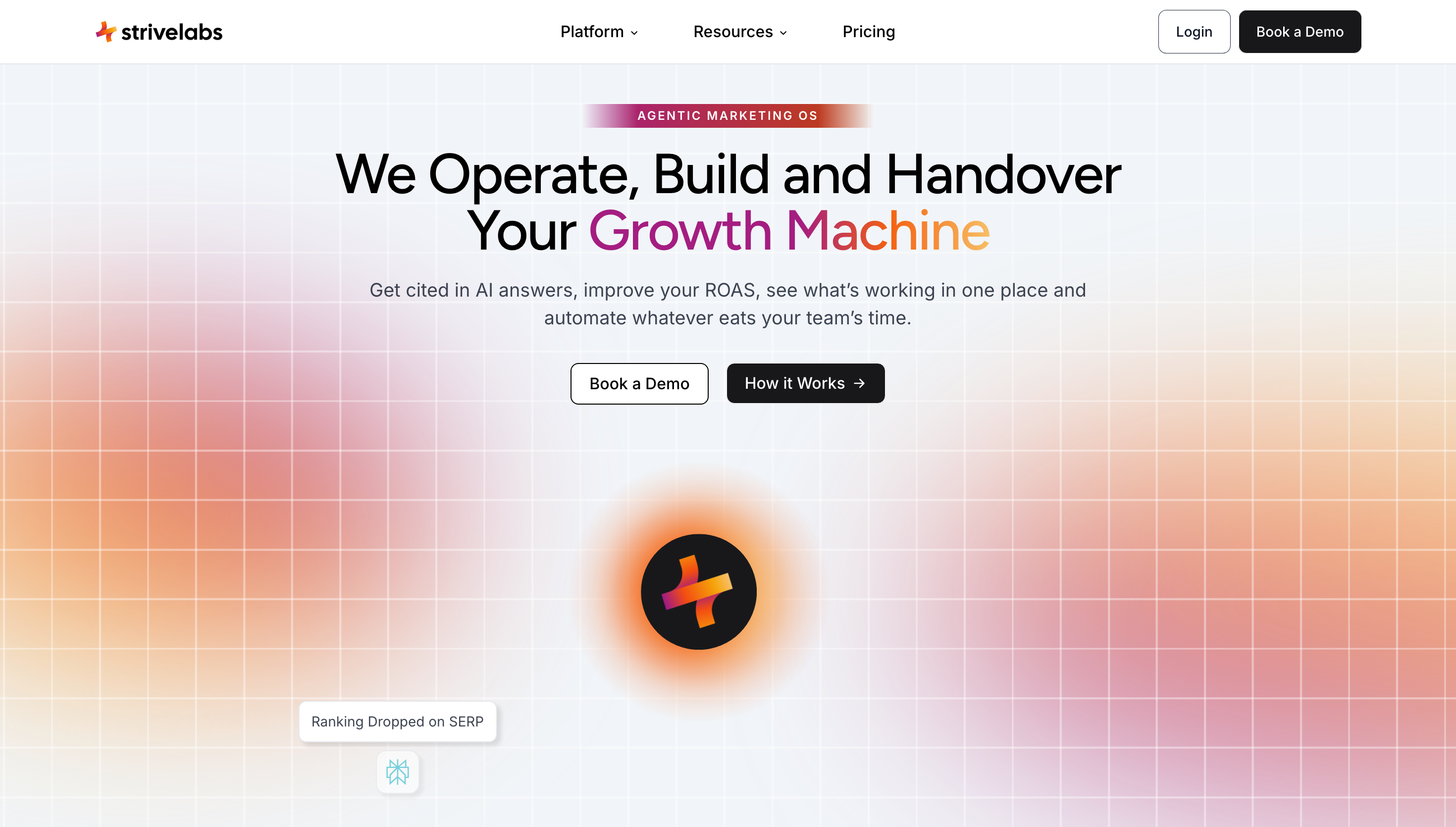
Connects Search Console, GA4, Google Ads, HubSpot, LinkedIn Ads and your existing research tools, reads them together, and turns what it finds into work with a named owner and approval enforced by role permission.
The closest comparison on this list, because Copy.ai's GTM direction and Strivelabs both sit at the workflow layer rather than the writing layer. The difference is what triggers the work. Copy.ai runs sequences you design. Strivelabs decides what should happen next from what's actually occurring in your performance data.
Three things that need more than one system to see: a page losing organic position while you're still paying for traffic to it, a topic gaining impressions with no page behind it, and contacts reading a specific subject before booking a demo.
It also samples ChatGPT, Gemini, Claude, Perplexity and Google AI Overviews against prompt sets you define, so the same system shows whether the work is landing in AI answers.
Better than Copy.ai at: deciding what to work on from live funnel data, catching decay before it costs a quarter, and enforcing approval as a permission rather than a convention
Falls short on: short-form volume — ad variants, social posts, email sequences at scale are Copy.ai's home ground and worth keeping it for
2. Jasper — $69/mo per seat
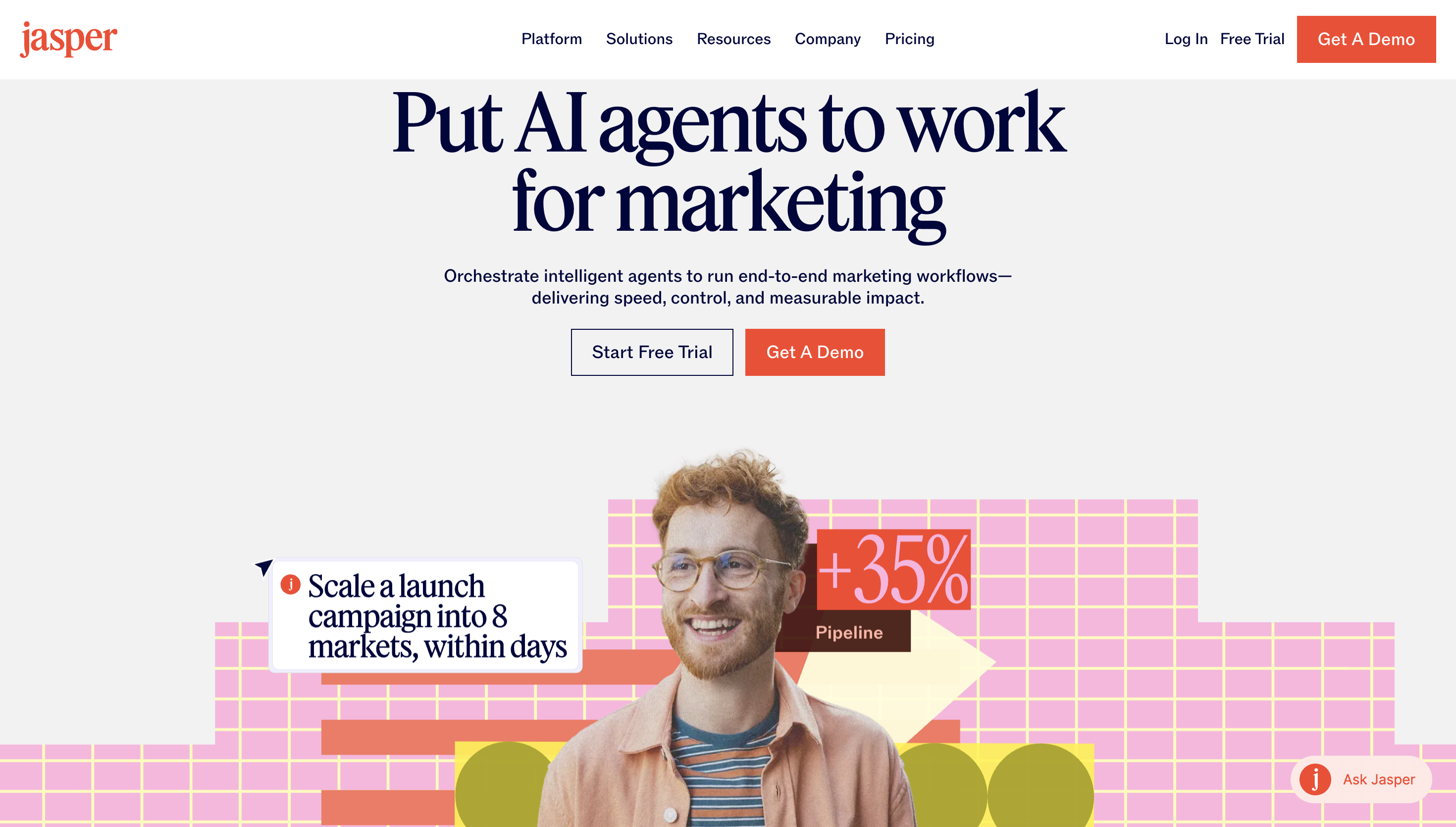
The most mature generation platform here, with Brand Voice controls trained on your writing, multi-model routing and HubSpot and CMS connections. DR 88 with more independent evidence available than anything else on this list.
Better than Copy.ai at: brand consistency across multiple writers, and predictable per-seat billing
Falls short on: cost as headcount grows, and every draft still needs fact-checking
We've compared it across the category in our Jasper alternatives piece.
3. Writesonic — $79/mo Starter
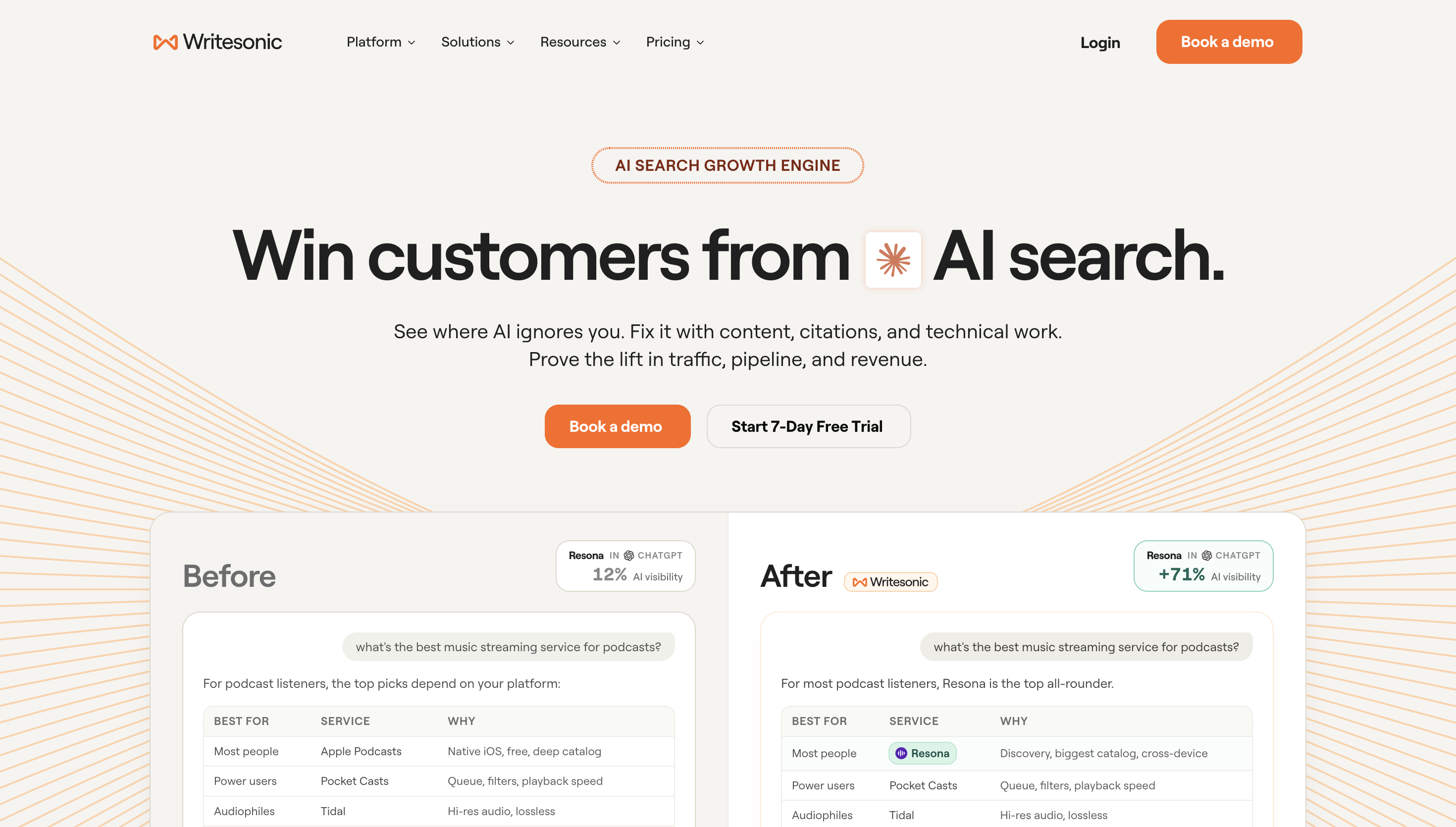
Article generation with SEO and AI visibility features layered on, plus publishing integrations. The argument is consolidation: drafting and visibility in one subscription.
Better than Copy.ai at: long-form built for search, and covering visibility in the same tool
Falls short on: depth in each area, since breadth is the trade, and the better visibility features sit on higher tiers
If it's on your shortlist, our Writesonic alternatives comparison covers where it holds up.
4. SEO.ai — site-based subscription, check current pricing
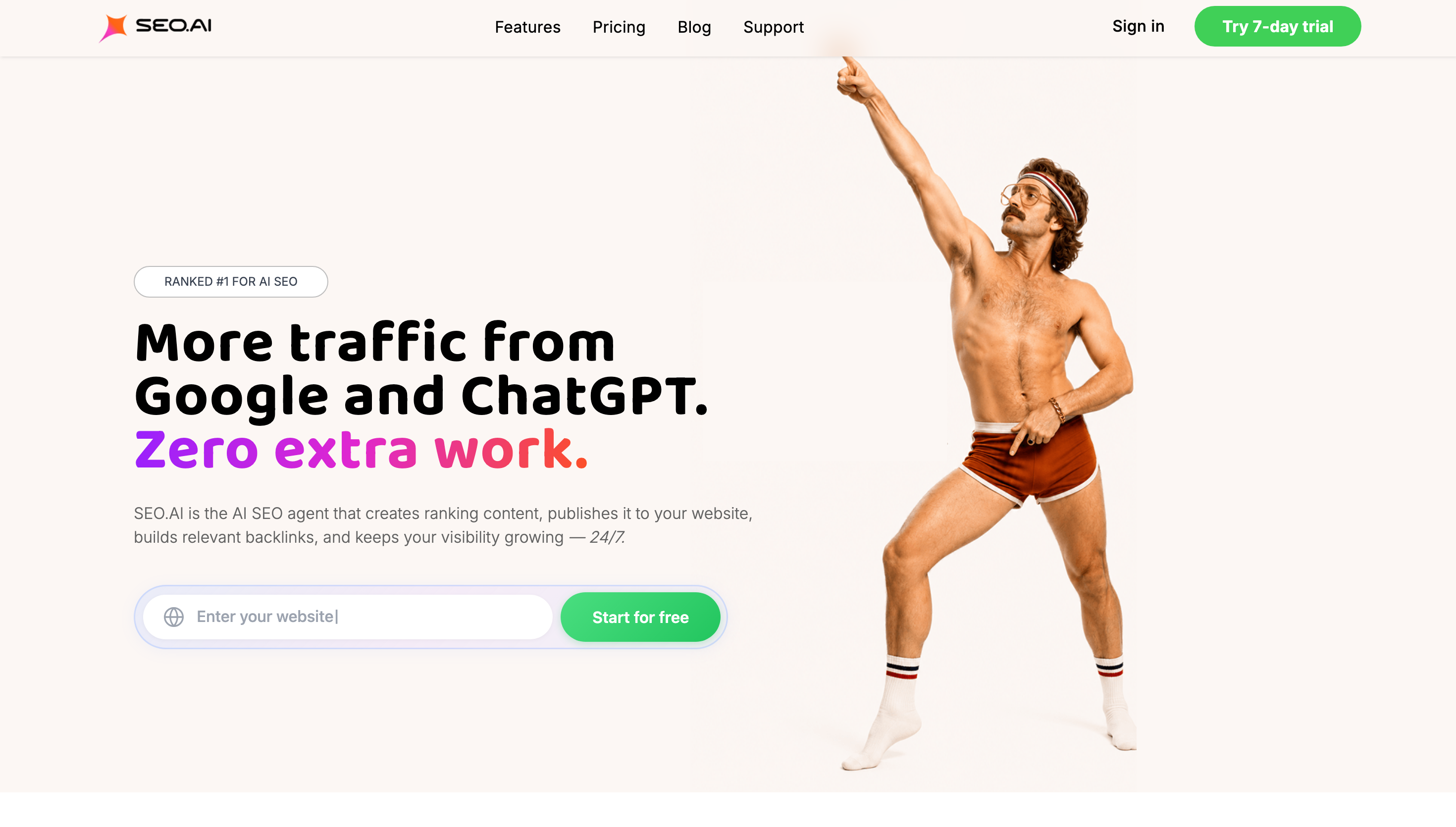
The largest organic presence in this comparison at DR 77 and 78,835 monthly US visits. Built around generating and publishing SEO content at volume, with automation running further toward the publish step than most.
Better than Copy.ai at: producing search-targeted content at scale with less manual assembly
Falls short on: oversight, because automation reaching the publish step needs tighter quality gates than most teams set up
5. Anyword — check current pricing
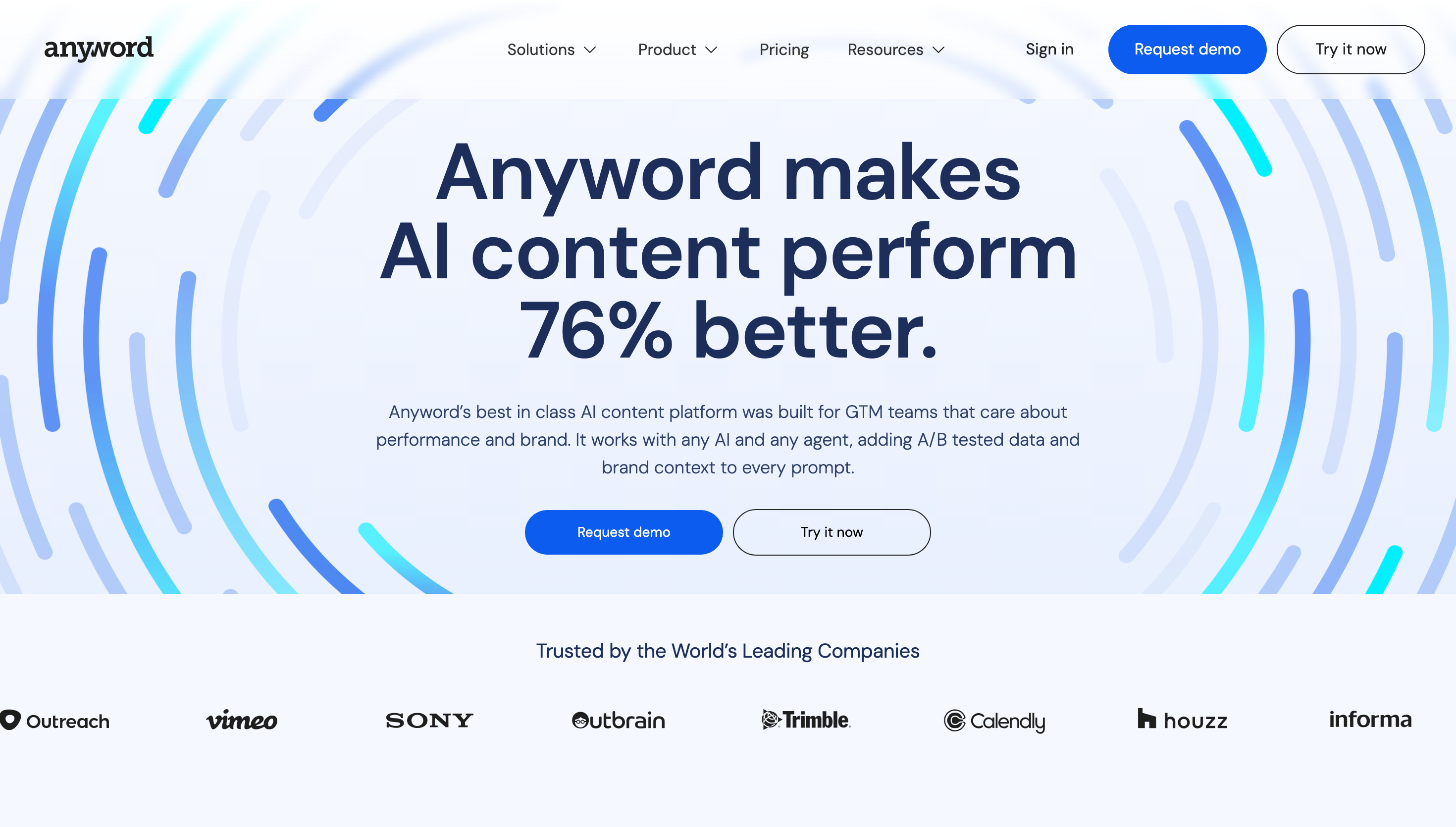
Predictive scoring on ad and landing page copy, aimed at teams who want an estimate of performance before spending on distribution.
Better than Copy.ai at: performance prediction for paid copy specifically
Falls short on: long-form, and the deeper analytics sit behind higher tiers
6. Rytr — free tier, low monthly paid plans
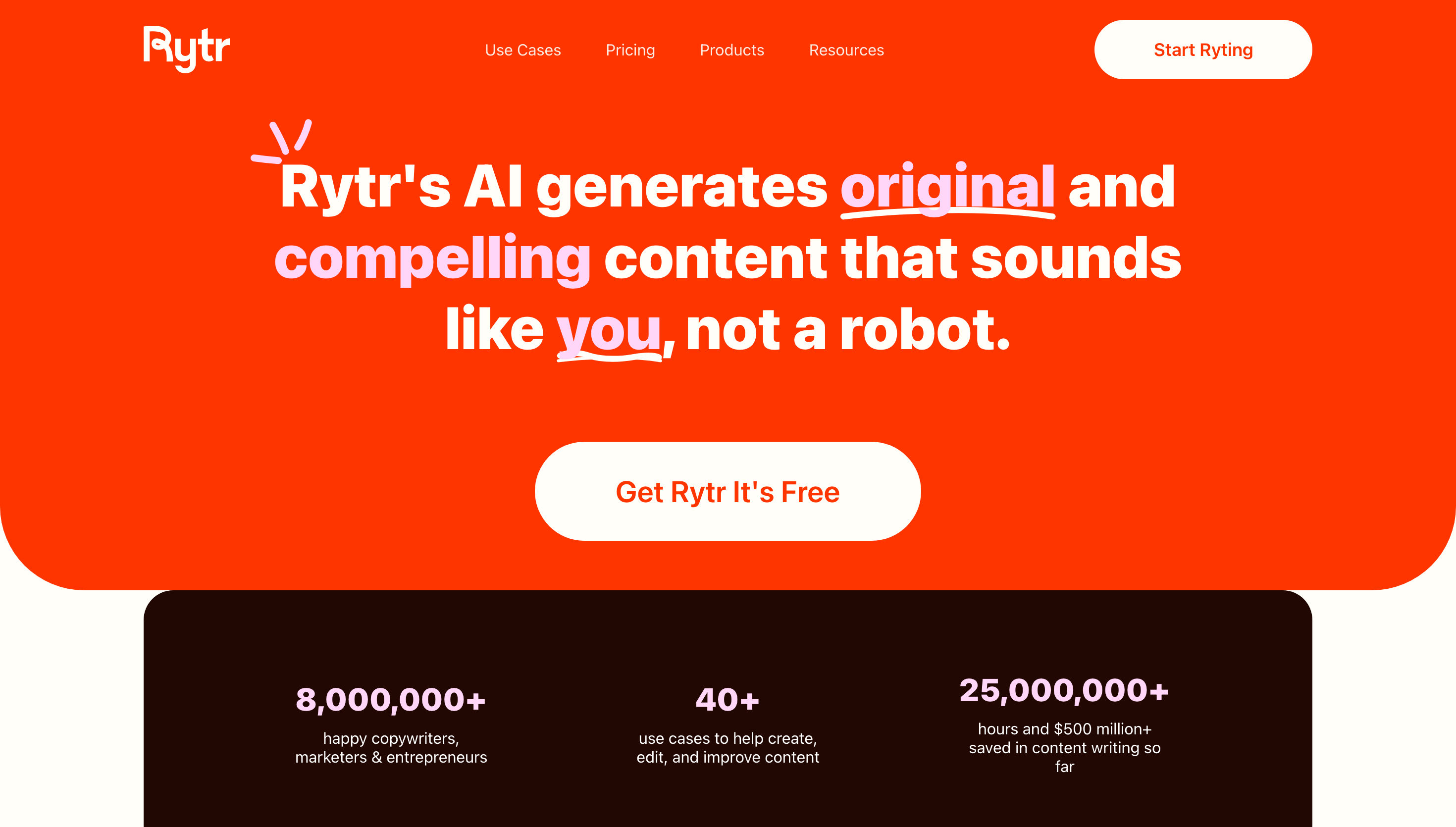
The budget option. Fast short-form output, simple interface, no enterprise machinery. DR 79 with a large backlink profile, so it's established rather than new.
Better than Copy.ai at: cost for solo operators and very small teams
Falls short on: long-form quality and team controls, which is the trade you're accepting
7. Surfer SEO — $59/mo Discovery
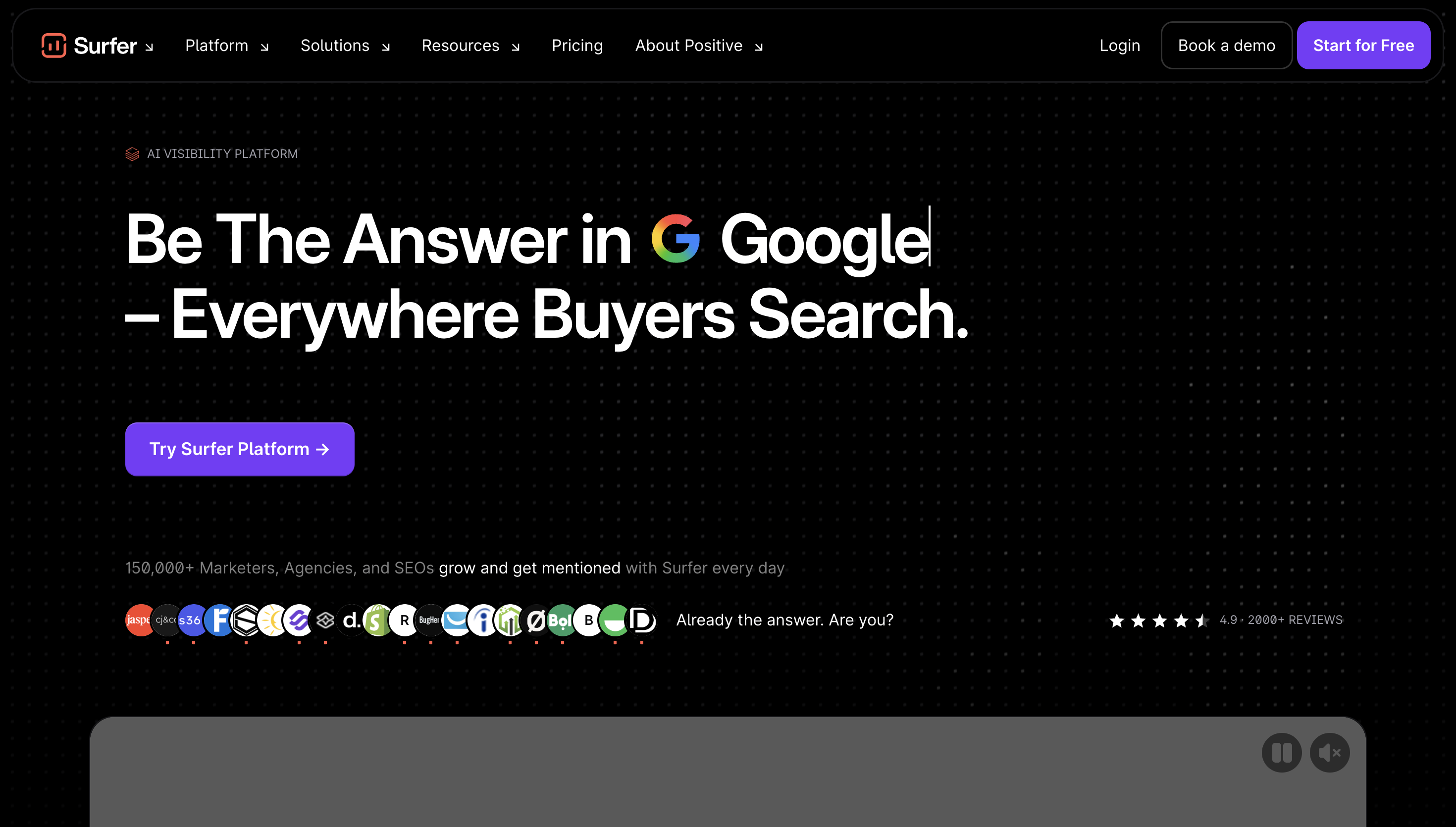
Not a generator. It grades a draft against pages currently ranking, with the score updating as you write. Included because teams leaving Copy.ai over content quality usually need a grader rather than a different writer.
Better than Copy.ai at: telling you whether a draft will actually rank
Falls short on: production, since it writes nothing, so it sits alongside a generator rather than replacing one
Also worth considering: AirOps for composable workflows if you have someone to build them, Frase at $49 if briefing is the bottleneck, and ChatGPT if you're comparing against the free option you already have — workable for a skilled prompter, with no brand controls, no team workspace and no audit trail.
Which problem are you actually solving?
| If the issue is | Look at |
|---|---|
| Drafts need heavy rewriting | Jasper ($69/seat), or add Surfer ($59) to grade what you have |
| Credits vanish unpredictably | Per-seat pricing: Jasper, or Rytr at the budget end |
| Long-form doesn't rank | Writesonic ($79), SEO.ai, or Surfer alongside your current tool |
| Paid copy underperforms | Anyword |
| Brand voice drifts across writers | Jasper |
| Nothing gets prioritised or actioned | Strivelabs |
Most teams end up with two tools rather than one. A generator plus a grader is the common shape, and budgeting for a single replacement is how people end up disappointed.
Working out what it really costs
The sticker price rarely matches the invoice. Credit systems, seat tiers and gated features all move the number.
Run a credit test. Pick a typical week and run identical briefs through both finalists. Log every credit consumed and every editor hour spent turning a draft into something publishable. Divide total spend by finished assets.
That figure — cost per finished asset — is the only number worth comparing, and it usually reorders the shortlist. A cheap tool producing drafts that need three hours of rewriting is more expensive than a pricier one that doesn't.
What drives credit consumption: multi-step workflows, model switching, research passes and image generation. Costs rise fastest where a workflow chains several operations, which is exactly what GTM-style automation does.
Per-seat versus credits. Seats are easier to forecast and scale with headcount. Credits are cheaper at low volume and unpredictable at high volume. If you can't model your monthly usage confidently, seats are the safer choice.
Negotiating
Bring your expected monthly volume, your CMS and CRM connections, and any SLA requirements to the first conversation rather than the third.
Ask about annual or multi-year discounts, and use pilot data to request a trial extension if two weeks hasn't settled it. Vendors will usually extend when you can show what you're still testing.
Brand governance, and why it decides some purchases
For teams publishing across several product lines, consistency matters as much as output.
Per-seat platforms tend to be stronger here, because audit logs and role-based access come with the model — you know who wrote what, who approved it and when. Credit-based tools optimise for throughput instead, which suits a different problem.
The approval step isn't optional regardless of which you choose. Google's guidance on AI-generated content is direct about this: generative AI is useful for research and structure, but using it to produce many pages without adding value may violate their scaled content abuse policy. Human review is what keeps volume on the right side of that line.
Have a content engineer or editor own prompt templates and sign off on output. That's the difference between scaling production and scaling risk.
What actually improves performance
Worth knowing before you choose a tool on output quality alone.
The 2023 paper that coined generative engine optimization, from researchers at Princeton, Georgia Tech, IIT Delhi and the Allen Institute for AI, tested content strategies across 10,000 queries. Adding statistics improved visibility by around 41% and adding quotations by around 28%. The biggest effect went to pages ranking around position five, where citing external sources improved visibility by up to 115%, while pages already at position one saw little change.
Two implications for tool choice. Specific numbers and attributed sources matter more than fluency, and generation tools are generally poor at supplying either — that's an editorial job. And if you're deciding which pages to run through any of these tools first, mid-ranking pages gain most.
Running the trial
Two weeks, two tools, real work.
-
Identify your actual content types and monthly volume
-
List every integration and admin control you need
-
Decide between per-seat and credit billing before you compare features
-
Define where a human reviews and who signs off
-
Run identical briefs through both finalists on a live project
Then measure three things: credits consumed, editor hours spent correcting output, and time from brief to published. Check search visibility on the pilot pages after four weeks rather than judging in the first fortnight.
Pick the tool that fixes the problem you actually have, not the one with the longest feature list.
Where this leaves you
If Copy.ai's GTM workflows are doing what you need and the cost is predictable, switching may cost you more than it saves.
If credits vanish unpredictably, per-seat pricing solves it. If drafts need heavy rewriting, a grader alongside your generator solves it. And if the real problem is that nobody knows which page to work on, no generator on this list solves it.
Upgrade to an Agentic Marketing OS
Connect your stack, get content work routed to the right person with enforced approvals. No more decisions made blind to what you're spending on paid.
Frequently Asked Questions (FAQs)
What are the best Copy.ai alternatives?
Strivelabs at a quoted price, Jasper at $69 per seat for brand consistency, Writesonic at $79 for long-form SEO, Surfer at $59 for grading, Rytr at the budget end, Anyword for paid copy scoring, and SEO.ai for volume publishing.
How much does Copy.ai cost?
Free tier, with paid plans from $29 a month. Workflow credits rather than seats drive the real cost, so multi-step sequences consume budget faster than the entry price suggests.
How do I calculate the true cost of a credit-based tool?
Run a two-week trial on real briefs, log every credit and every editor hour spent fixing output, then divide total spend by finished assets. That's your cost per asset, and it usually differs sharply from the sticker price.
Is Jasper better than Copy.ai?
For brand consistency across several writers and predictable billing, yes. Copy.ai is stronger on GTM workflows and cheaper at entry. They're solving different problems now, which most comparisons haven't caught up with.
Which integrations matter most?
Search Console and GA4 to connect content to search performance, HubSpot for pipeline attribution, and your CMS for publishing. Test each during the trial rather than trusting the feature list.
Why does every piece need human approval?
Because generated output states things confidently and sometimes wrongly, particularly product claims and pricing. One error in a published post costs more than the review time saves.
Can one tool replace Copy.ai entirely?
Depends what you use it for. Short-form volume, yes — Rytr or Jasper. GTM workflows plus generation plus prioritisation is usually two tools, which is the normal shape of a content stack.