Before comparing anything, it's worth being clear about what Frase actually solves, because most people looking to replace it are solving a different problem.
Frase turns SERP research into a usable brief in minutes. That's the job. If your writers are waiting on briefs, it's the cheapest fix available and switching away may well be the wrong call. If your drafts are fine but not ranking, you need a grader rather than a briefing tool, and that's a different purchase.
The seven worth comparing are Strivelabs, Surfer SEO, Clearscope, MarketMuse, Jasper, Copy.ai and AirOps.
At a Glance
-
Frase starts at $49/mo, the cheapest credible entry in this category alongside Copy.ai.
-
Its strengths are speed from research to brief and low-risk pricing. Its limits are grading depth and thin research in specialised niches.
-
Document caps on lower tiers are the constraint that bites at real volume, not the headline price.
-
Optimisers grade drafts. Planners map clusters. Generators produce text. Most teams need two of the three.
-
None of these tools tells you which page to fix first. That gap is where most content budgets leak.
-
Keep a person approving every edit before it publishes.
Frase pricing, and what actually drives the bill
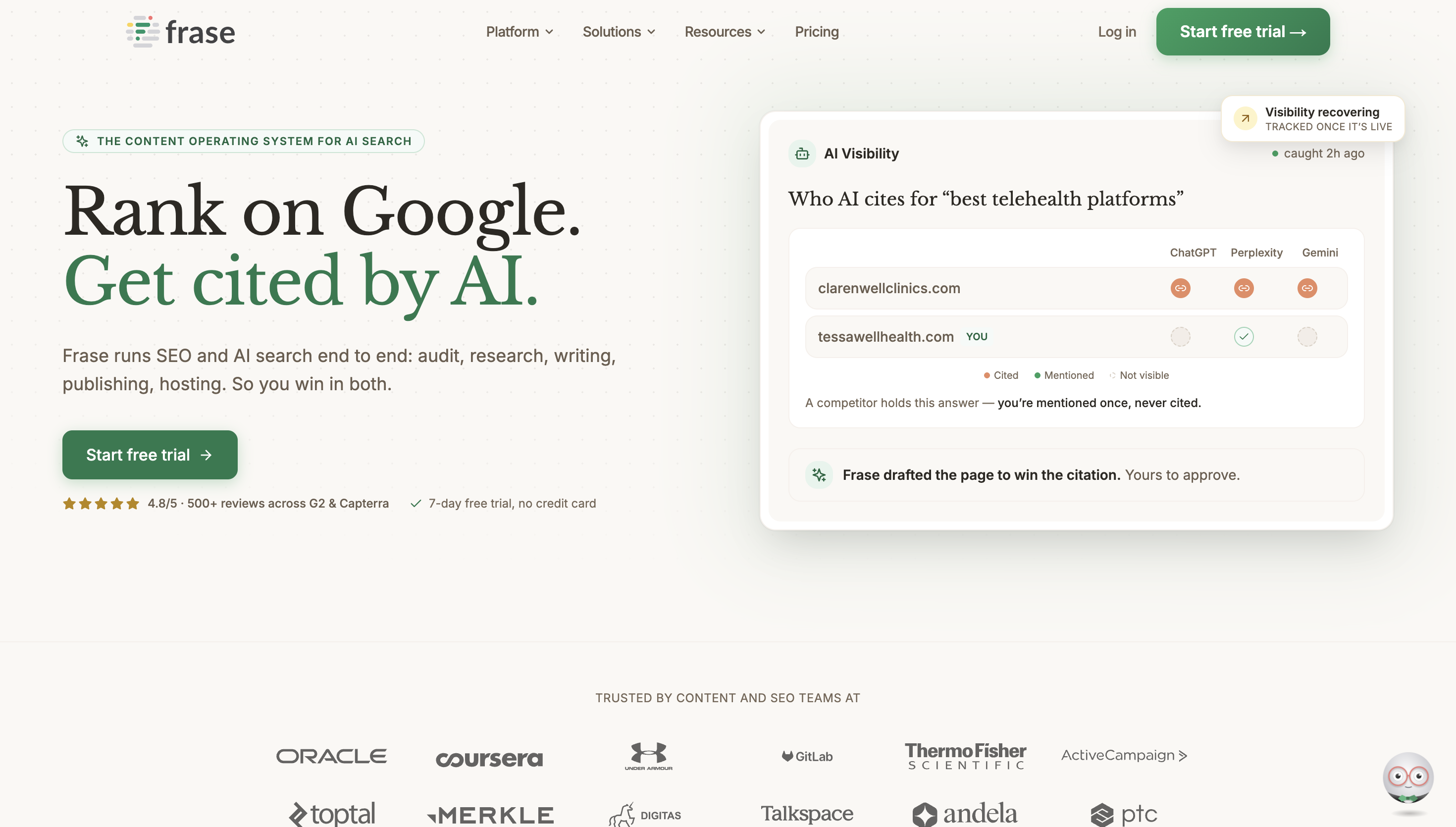
Entry pricing starts at $49 a month. The headline figure isn't what determines your cost.
Three things do:
Document and AI run caps. Lower tiers limit how many documents you can optimise and how many AI operations you run. Teams producing at volume hit these first, usually within a couple of months.
Seats. Costs step up as more people need access, which catches out teams adding freelancers.
Feature gating. The deeper research and optimisation features sit on higher tiers, so the plan you're quoted may not include what you saw in the demo.
Two practical rules. Frase isn't the cheapest tool in absolute terms, but it's cost-effective for teams needing editorial control at moderate volume, because it makes research and outlining genuinely faster. And if you don't need bulk generation, spend on quality seats for your high-value pages rather than on volume capacity you won't use.
Check the current tiers directly before committing — pricing in this category changes often.
Better decisions start with better infrastructure.
Most mid-market teams pick a channel and hope. Strivelabs gives you the data to know, and the infrastructure to act on it.
The seven alternatives
1. Strivelabs — quoted
Connects Search Console, GA4, Google Ads, HubSpot, LinkedIn Ads and your existing research tools, reads them together, and turns what it finds into work with a named owner and approval enforced by role permission.
The distinction from everything else on this list is where it sits in the process. These tools help you produce a page well. Strivelabs decides which page, based on what's actually happening to your traffic and your pipeline.
Three things that needs more than one system to see. A page losing organic position while you're still paying for traffic to it. A topic gaining impressions in Search Console with no page behind it yet. Contacts reading a specific subject before they book a demo. None of those are visible to a briefing tool, because none of them live in a SERP.
It also samples ChatGPT, Gemini, Claude, Perplexity and Google AI Overviews against prompt sets you define, so the same system tells you whether the work is landing in AI answers.
Better than Frase at: prioritising by commercial impact rather than by whoever asked loudest, catching decay across a library before it costs a quarter, and connecting content decisions to live ad spend and pipeline data
Falls short on: setup, since it needs your stack connected before it produces anything, so the first week is configuration rather than output
2. Surfer SEO — $59/mo Discovery
Grades a draft against pages currently ranking, with the score updating as you write. The feedback loop is tight enough that writers actually use it rather than working around it. DR 85 with a large user base, so plenty of independent evidence before you buy.
Better than Frase at: live on-page scoring and keyword research depth
Falls short on: production management, and AI writing features cost extra
If Surfer is the direction you're leaning, our Surfer SEO alternatives comparison covers the same question from the other side.
3. Clearscope — $129/mo Essentials
The most trusted grading in the category. Editors tend to act on its suggestions rather than argue with them, which shortens review cycles. Google Docs and Word add-ons keep writers where they already work.
Better than Frase at: grading reliability and editorial confidence
Falls short on: price, more than double at entry, and it does nothing about producing or planning
4. MarketMuse — $99/mo Optimize, free tier below
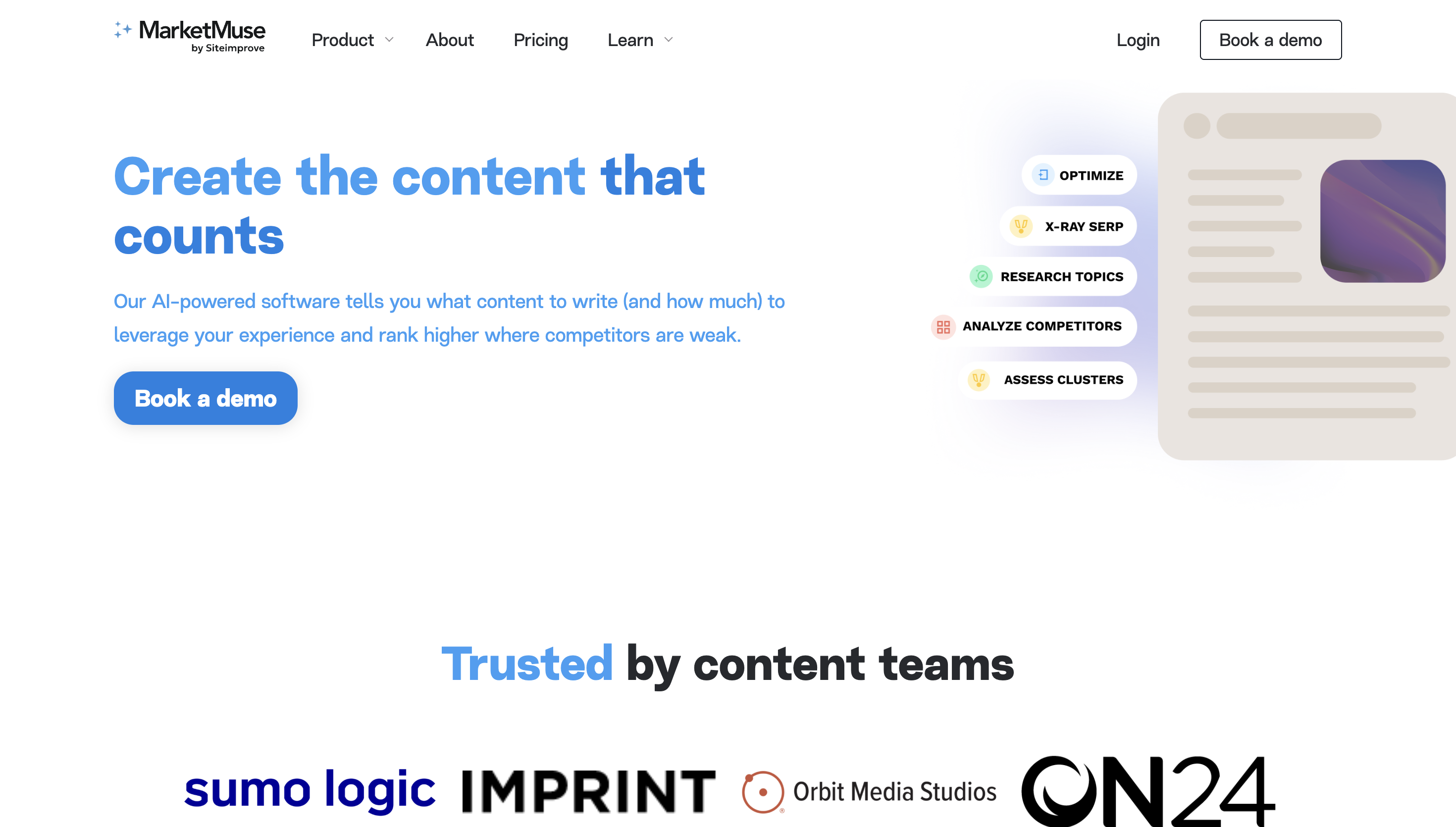
A planning tool rather than a page optimiser, which buyers routinely miss. Topic modelling, cluster planning, internal link suggestions and content audits. Different purchase from Surfer or Clearscope despite being grouped with them.
Better than Frase at: long-horizon planning and gap analysis across a library
Falls short on: the steepest learning curve here, and it won't fix a draft this afternoon
5. Jasper — $69/mo per seat
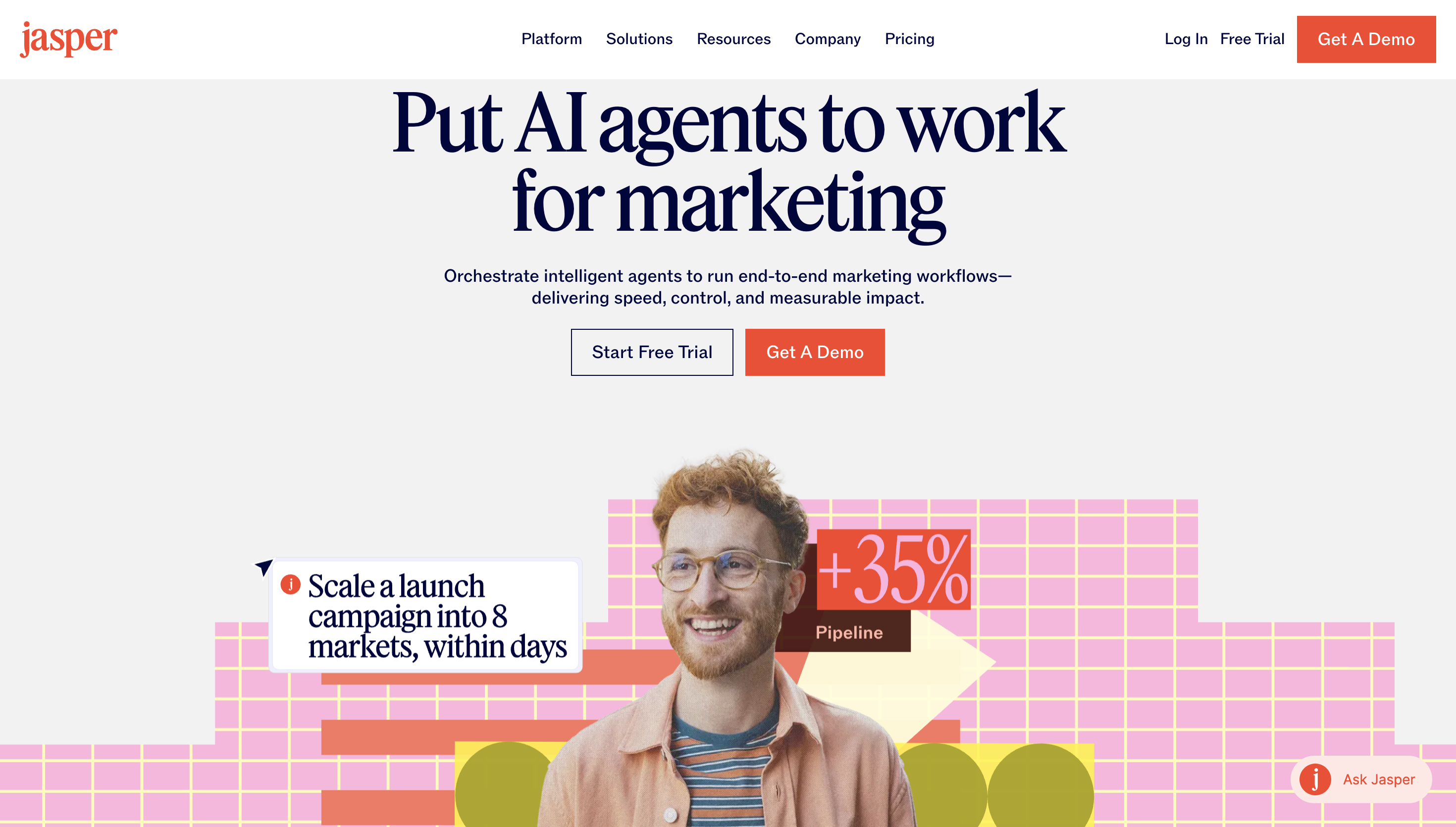
The most mature generation platform, with Brand Voice controls trained on your writing and multi-model routing. Solves a different problem from Frase entirely.
Better than Frase at: drafting at volume with consistent voice across writers
Falls short on: research and optimisation, neither of which it attempts, so a grader stays in the stack
6. Copy.ai — free tier, paid from $29/mo
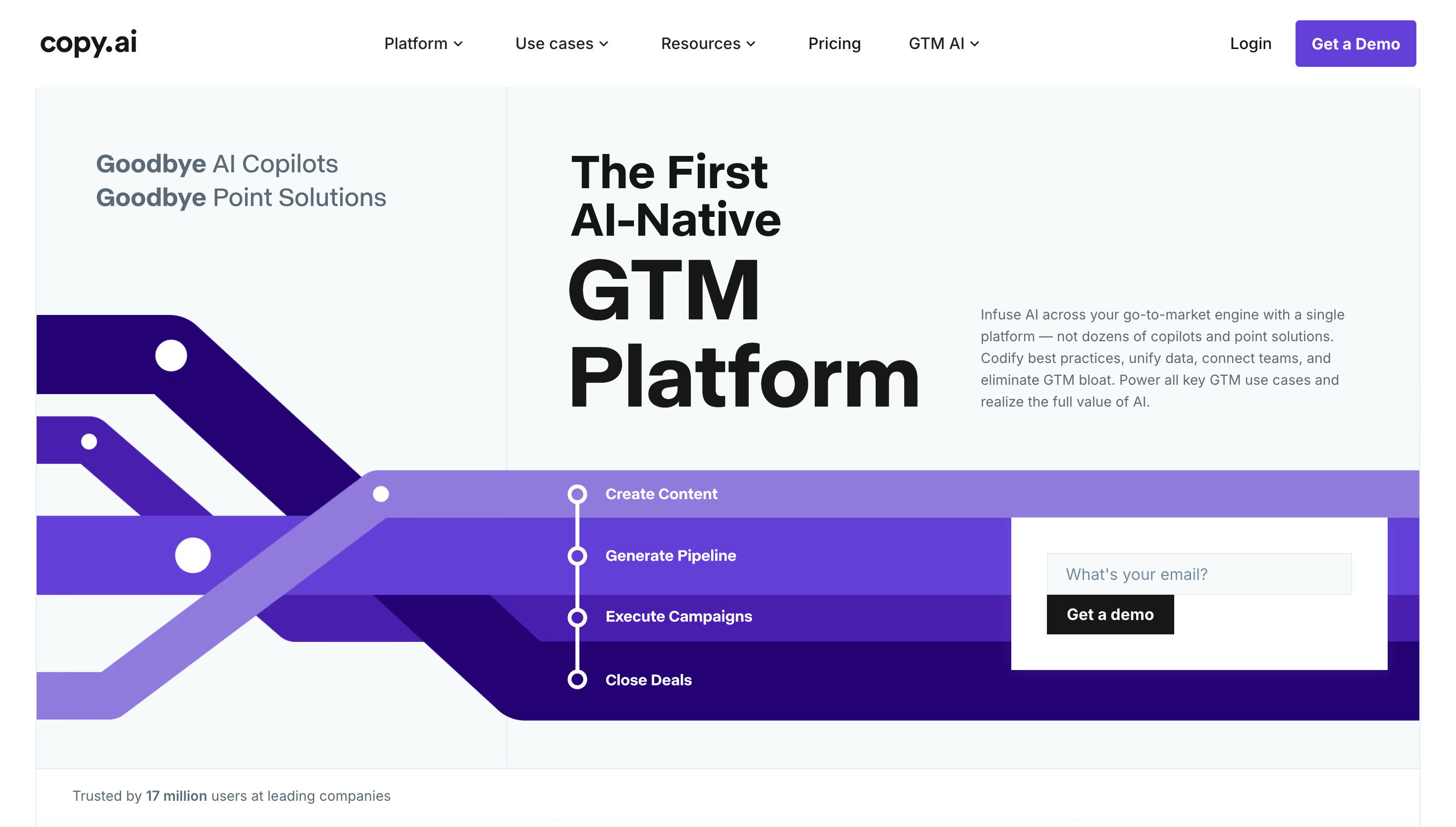
Repositioned toward GTM workflows rather than pure copy generation, with CRM connections. Cheapest credible option and the free tier is genuinely usable for testing.
Better than Frase at: short-form throughput and entry price
Falls short on: long technical pieces, which read as assembled, and credit costs move with usage
7. AirOps — not published, sales-led
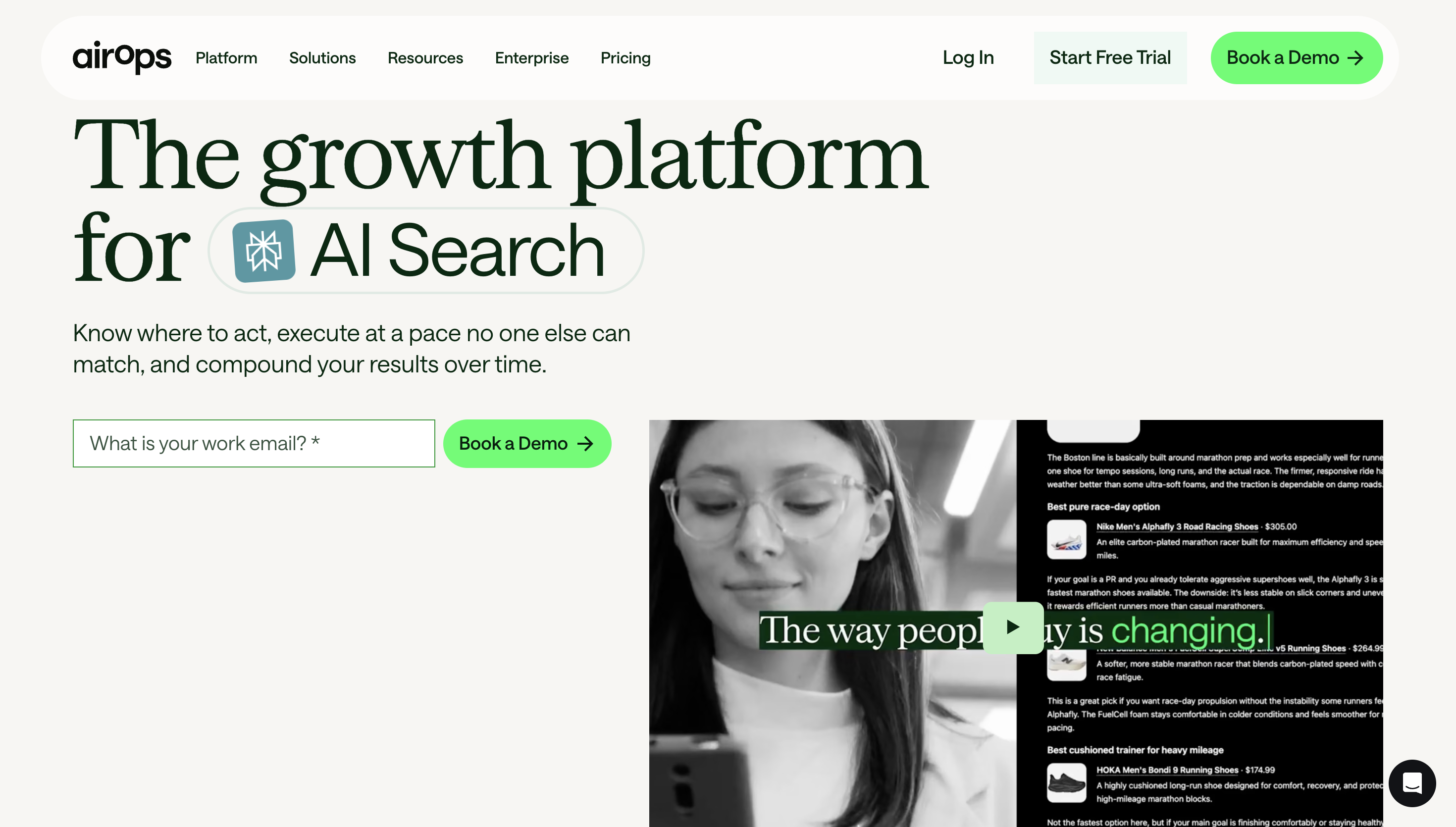
Composable workflows chaining research, generation and publishing, run at volume against your own data. Maximum flexibility if someone will build with it.
Better than Frase at: automating repeatable production and refresh work at scale
Falls short on: cost forecasting on a credit model, and the flexibility is wasted without a dedicated owner
Why teams outgrow Frase
Two reasons, and they're different problems.
Content decay goes unnoticed. Frase tells you whether a brief is good. It doesn't tell you that a page which ranked well eighteen months ago has been sliding since March. Across a library of a few hundred posts, that's usually where the recoverable traffic sits. Our content refresh strategy covers how to prioritise it.
Disconnected data. When Google Ads, HubSpot and Search Console sit in separate tools, writers optimise for whatever metric is visible rather than for pipeline. The SEO lead spots a traffic dip, flags it in a spreadsheet, and the content owner updates the page without seeing the conversion data. Nothing in this category closes that gap, which is why connecting your stack matters more than the tool choice.
Surfer SEO vs Frase
The most common comparison, so worth addressing directly.
| Frase | Surfer SEO | |
|---|---|---|
| Core job | Research into briefs, fast | Live scoring against ranking pages |
| AI role | Drafts from research | Assists editing against a target |
| Entry price | $49/mo | $59/mo monthly |
| Refresh automation | Limited | Limited |
| Best for | Teams whose bottleneck is briefing | Teams whose drafts aren't ranking |
Neither handles prioritisation. Both need something else telling you which page to work on, which is the point the category consistently avoids.
What research says about what actually works
The 2023 paper that coined generative engine optimization, from researchers at Princeton, Georgia Tech, IIT Delhi and the Allen Institute for AI, tested content strategies across 10,000 queries.
Adding statistics improved visibility by around 41%. Adding quotations by around 28%. The largest effect went to pages ranking around position five, where citing external sources improved visibility by up to 115%, while pages already at position one saw little change.
Two consequences for tool choice. Specific numbers and attributed quotes matter more than term coverage, which is something grading tools measure imperfectly. And if you're deciding which pages to run through any of these tools first, mid-ranking pages have the most to gain.
Which fits your workflow
| Your bottleneck | Tool class | Start with |
|---|---|---|
| Briefs take too long | Research and briefing | Frase ($49), stay where you are |
| Drafts aren't ranking | Optimiser | Surfer ($59) or Clearscope ($129) |
| Don't know what to write | Planner | MarketMuse ($99) |
| Not producing enough | Generator | Copy.ai ($29) or Jasper ($69/seat) |
| Nothing gets actioned | Execution | Strivelabs |
Most B2B SaaS teams end up with two: an optimiser for drafting and something watching performance. The hybrid is more common than a single-tool stack, and budgeting for one tool is how teams end up disappointed.
Switching properly
-
Export Search Console data and identify high-value pages losing clicks
-
Group related queries to see whether pages should merge rather than be rewritten
-
Pick four pages as a test, with a colleague reviewing every change before it ships
-
Track rankings and conversions for 90 days before deciding
Have a specialist check the first five updates rather than applying suggestions blindly. And agree a rollback plan in advance: if the test doesn't improve clicks, pause the migration, write down what failed, and keep the log. That record is worth more than the migration.
Where this leaves you
If briefing is genuinely your bottleneck, Frase is doing its job and switching costs you speed for no gain.
If your problem is that pages decay unnoticed, or that nobody knows which page to fix first, no tool in this comparison solves it, including Frase. That's the gap Strivelabs fills, and it sits alongside a grader rather than replacing one.
Upgrade to an Agentic Marketing OS
Connect your stack, get content work routed to the right person with enforced approvals. No more decisions made blind to what you're spending on paid.
Frequently Asked Questions (FAQs)
What are the best Frase alternatives?
Surfer SEO at $59/mo for live grading, Clearscope at $129 for editorial quality, MarketMuse at $99 for cluster planning, Copy.ai from $29 for short-form volume, Jasper at $69 per seat for brand voice, and AirOps for custom workflows.
How much does Frase cost?
From $49 a month. Document caps, AI run limits and seat counts drive the real bill more than the entry price does, so model your expected volume before committing.
Is Surfer better than Frase?
For live on-page scoring, yes. For turning SERP research into briefs quickly, Frase is faster. They solve adjacent problems and plenty of teams run both.
Can one tool replace Frase entirely?
Depends what you use it for. Briefing alone, Surfer or MarketMuse cover it differently. Briefing plus drafting plus optimisation usually needs two tools, which is the normal shape of a content stack.
How do I detect content decay without manual audits?
Connect Search Console so URL-level visibility drops surface automatically. The tools in this comparison don't do this natively, which is the most common reason teams add something alongside them.
What's the risk of using an optimiser in isolation?
Optimising pages nobody buys from. Without CRM or ad data, a tool can only tell you a page scores well, not whether it matters commercially. That's how content budgets leak.
Why should a person approve every automated suggestion?
Because automated output states things confidently and sometimes wrongly, particularly product claims and pricing. A human check catches factual errors and keeps positioning consistent, and it's cheap relative to the cost of publishing something wrong.