If you're evaluating Scrunch AI and the gap between what it tells you and what you can do about it is the sticking point, the seven platforms worth comparing are Strivelabs, AthenaHQ, Otterly, Rankscale, Peec AI, Profound, and the Semrush AI Visibility Toolkit.
This is written for marketing leads at mid-market B2B SaaS companies who need AI visibility work to end in a shipped change rather than a dashboard. The organising question throughout is how directly each platform connects a visibility signal to something happening in HubSpot, Google Ads or your CMS.
At a Glance
-
Scrunch AI's real differentiator is crawler control — if that's your problem, it does it better than almost anything here.
-
Otterly is cheapest at $29/mo; AthenaHQ most balanced at $295; Profound deepest on measurement; Strivelabs most direct on execution.
-
The tracking-vs-execution gap is real: a tool scoring 5 on tracking and 2 on execution is half a solution — worth knowing before you budget as though it's the whole thing.
-
Strivelabs is the only option here that connects live funnel data to a specific next action with enforced approval — but it doesn't do visibility tracking of its own.
-
Score your shortlist on five capabilities: prompt coverage, citation transparency, GA4/Search Console mapping, HubSpot action mapping, and enforced human approval.
What is Scrunch AI
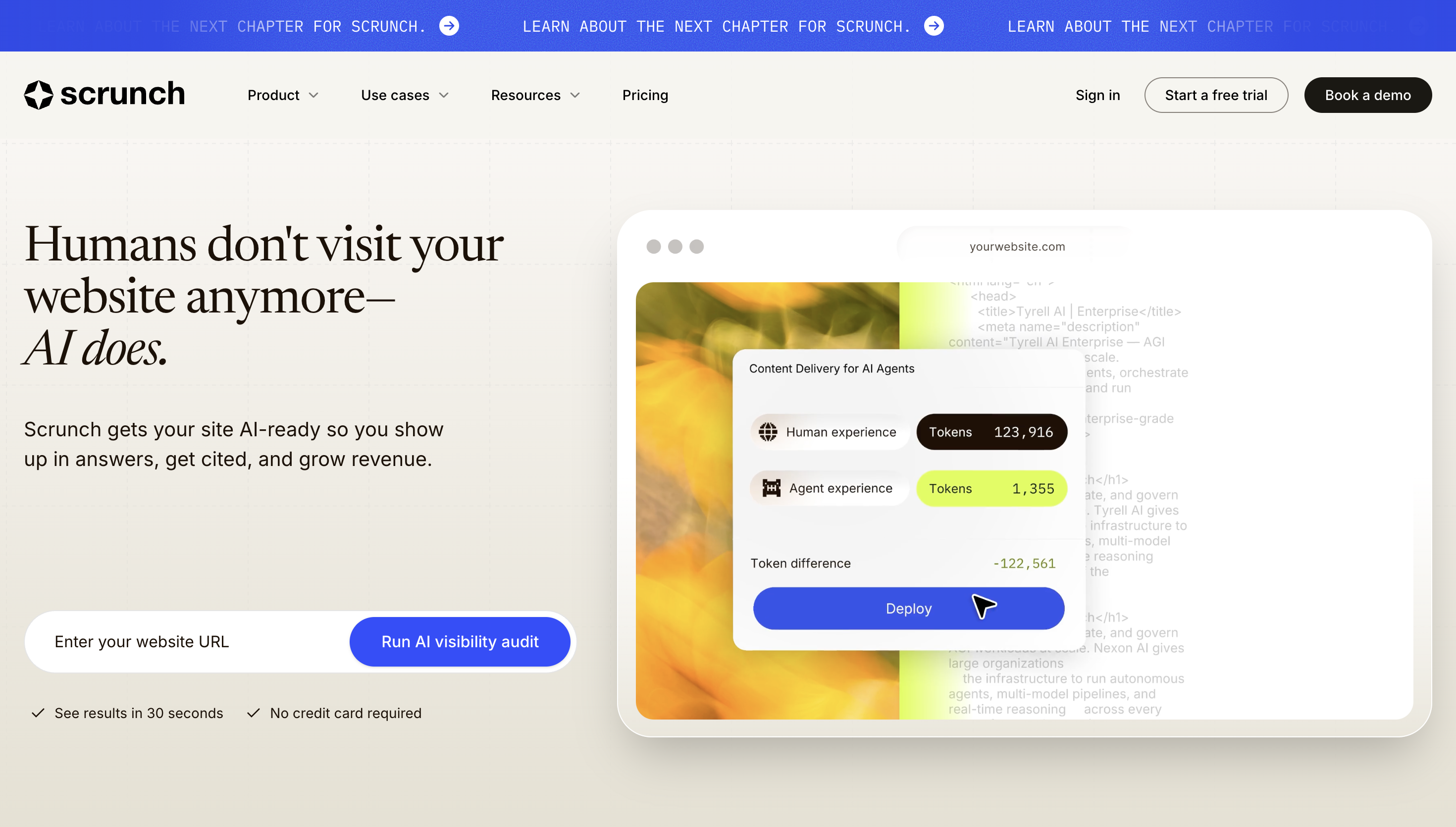
Scrunch AI calls itself an Answer Experience Platform. Alongside prompt tracking across models, its distinguishing feature is crawler control: understanding which AI systems are reaching your site, what they're taking, and shaping how they access your content at a technical level.
That's a genuinely specialised capability. Most platforms in this category tell you where you appear in AI answers. Scrunch goes a layer beneath that, into the infrastructure question of how the models get your content in the first place. Of everything on this list, only Profound comes close on that dimension.
Core plans start around $250 a month, with enterprise pricing by quote. The company is well funded and carries strong brand recognition, holding over 1,000 referring domains.
One piece of context worth having, not as a criticism but as a calibration: most of that authority comes from funding and industry coverage rather than from published content, and their measurable organic footprint in US search is small relative to their profile. That tells you something about how the company has grown its awareness. It tells you nothing about whether the product works, so treat it as background rather than a reason to rule them out.
Why marketing teams look at alternatives
The finding-to-fix gap. Scrunch is strong at telling you that something is wrong and where. It's lighter on doing anything about it. If your team is small and nobody has spare hours to translate findings into briefs, tickets and campaign changes, that gap becomes the whole problem.
It expects technical ownership. Crawler control is powerful if you have someone who can act on it. Without a technical SEO or an engineer with allocated time, the most differentiated part of the product goes unused.
Pipeline connection. Check specifically whether HubSpot, GA4, Search Console, Google Ads and LinkedIn data comes in as live inputs and whether anything can be pushed back out. Visibility data that can't be connected to revenue is hard to defend at budget time.
Price against usage. At $250 a month entry, work out your realistic prompt volume and what that costs at scale before signing. Cost per actionable insight is a more honest metric than cost per prompt.
And the reason that isn't a criticism: if crawler behaviour is genuinely your problem, Scrunch does that better than almost anything here, and none of the cheaper monitors on this list touch it.
The three tiers, and how to locate yourself
Everything in this category falls into one of three groups. Working out which one you're shopping in narrows the list faster than any feature comparison.
Action platforms connect signals to work: tasks, briefs, campaign changes, with a person approving. Best when your bottleneck is shipping.
Monitor-first tools track broadly and cheaply, and hand you the findings. Best when you don't yet know where you stand and want to find out without a procurement process.
Enterprise analytics offer the deepest measurement, compliance controls and defensible reporting. Best when you'll be asked to justify a number in front of a board, and worst when you need something running this week.
The seven below are ordered by how directly each one connects visibility to pipeline, which is the promise in the title of this article. A team shopping purely for measurement depth would reverse the order.
Quick comparison
| Vendor | Tier | Entry price | Key integrations | Main limitation |
|---|---|---|---|---|
| Scrunch AI | Enterprise-leaning | ~$250/mo (Core) | Crawler controls, multi-model | Light on execution, needs technical ownership |
| Strivelabs | Action | Quoted | HubSpot, GA4, Google Ads, Search Console, LinkedIn, Slack | No visibility tracking or crawler control of its own |
| AthenaHQ | Action | Free tier, $295/mo | HubSpot, GA4 | Credit costs hard to forecast |
| Otterly | Monitor | $29/mo | Prompt engines only | Monitoring only, limited exports |
| Rankscale | Monitor | $385/mo | Prompt engines, CMS | Short data history, no task routing |
| Peec AI | Monitor | $80/mo | CMS, Search Console | EU-weighted coverage, tracking only |
| Profound | Enterprise | By quote | Data warehouse, GA4, HubSpot | Slow onboarding, assumes an analyst |
| Semrush AI Visibility Toolkit | Enterprise | $99/mo per domain | Search Console, CMS, backlink data | Estimates rather than direct tracking |
Better decisions start with better infrastructure.
Most mid-market teams pick a channel and hope. Strivelabs gives you the data to know, and the infrastructure to act on it.
Action Platforms
1. Strivelabs
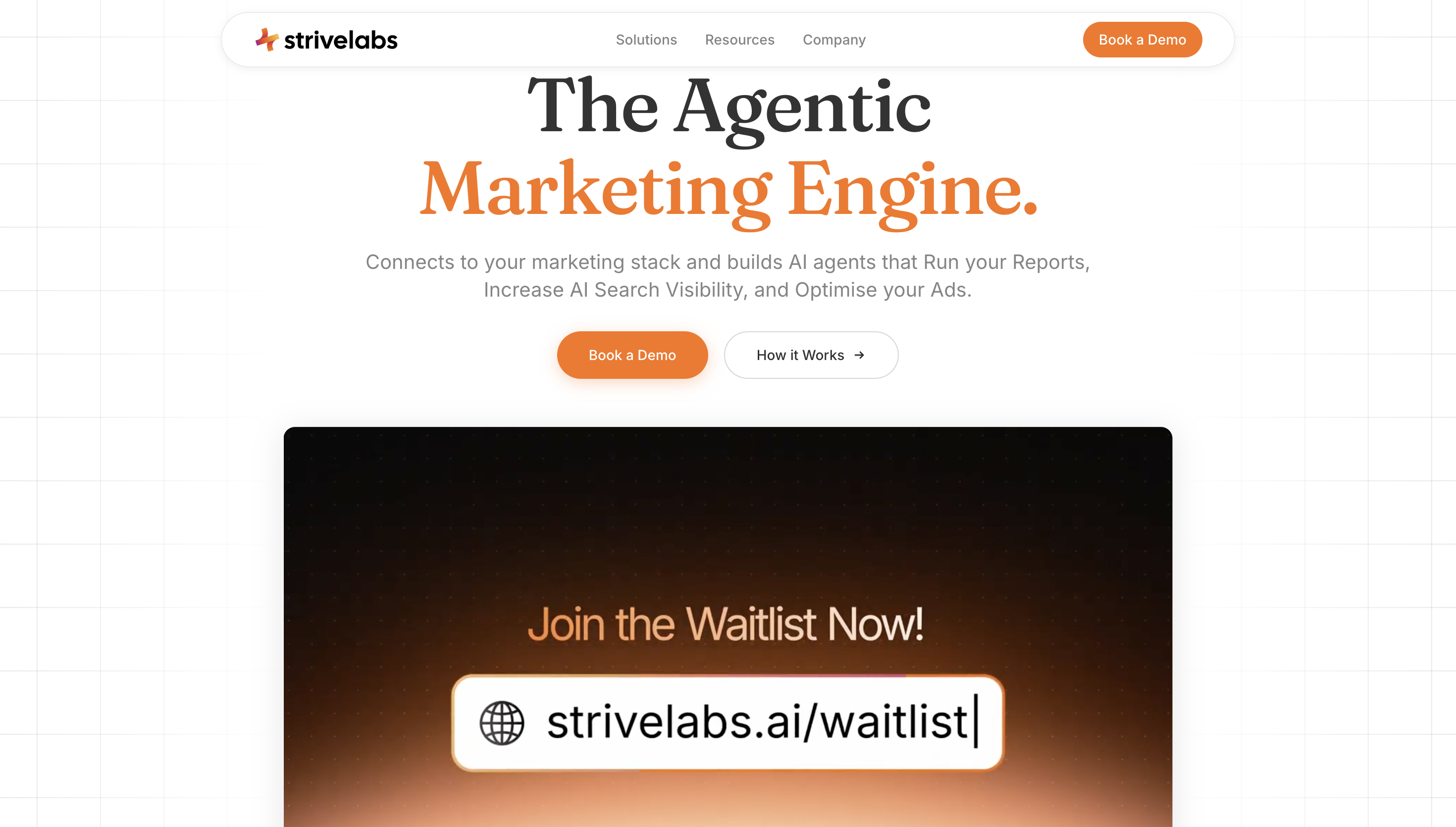
Best for: teams whose bottleneck is acting on findings rather than gathering them
Pricing: quoted
Strivelabs connects to Google Ads, HubSpot, Search Console, GA4, LinkedIn Ads and Slack, then turns signals into work: an SEO brief, a budget shift, a task routed to whoever owns it, with a named person approving before anything executes. Approvals are enforced through role permissions rather than team habit.
Be clear about the trade, because it's a real one. Strivelabs doesn't run prompt-level AI visibility tracking of its own, and it does nothing about crawler access. If those are the jobs you're hiring for, Scrunch or Profound does them and this doesn't. Plenty of teams run a tracker alongside it for exactly that reason.
Better than Scrunch AI at: connecting first-party funnel data to a specific next action, and enforcing approval before anything ships
Falls short on: crawler-level visibility and control, which is Scrunch's core differentiator and something Strivelabs doesn't attempt
2. AthenaHQ
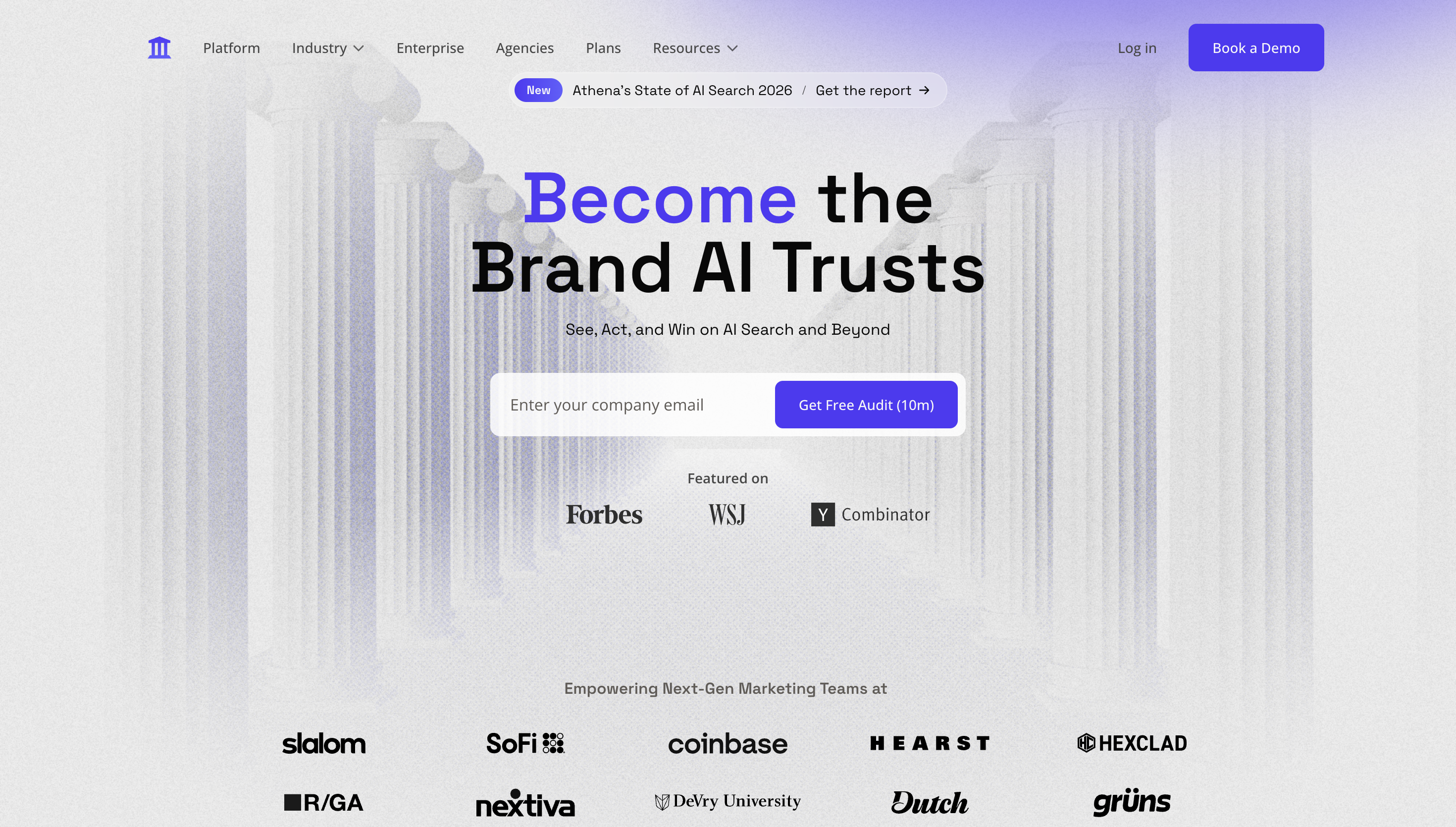
Best for: mid-market teams that want findings arriving as assigned tasks
Pricing: free Essential tier, then $295/mo for 3,600 credits
AthenaHQ pairs tracking across nine or more models with an Action Center that turns findings into items with an owner attached. It estimates prompt volumes and monitors multiple regions. It's the closest thing to a hybrid on this list, doing real tracking and real routing without being best in class at either.
Better than Scrunch AI at: turning findings into assigned work, and a free tier to test with
Falls short on: cost predictability, since credit burn moves with usage, so model your volume before committing
Monitor-first tools
1. Otterly
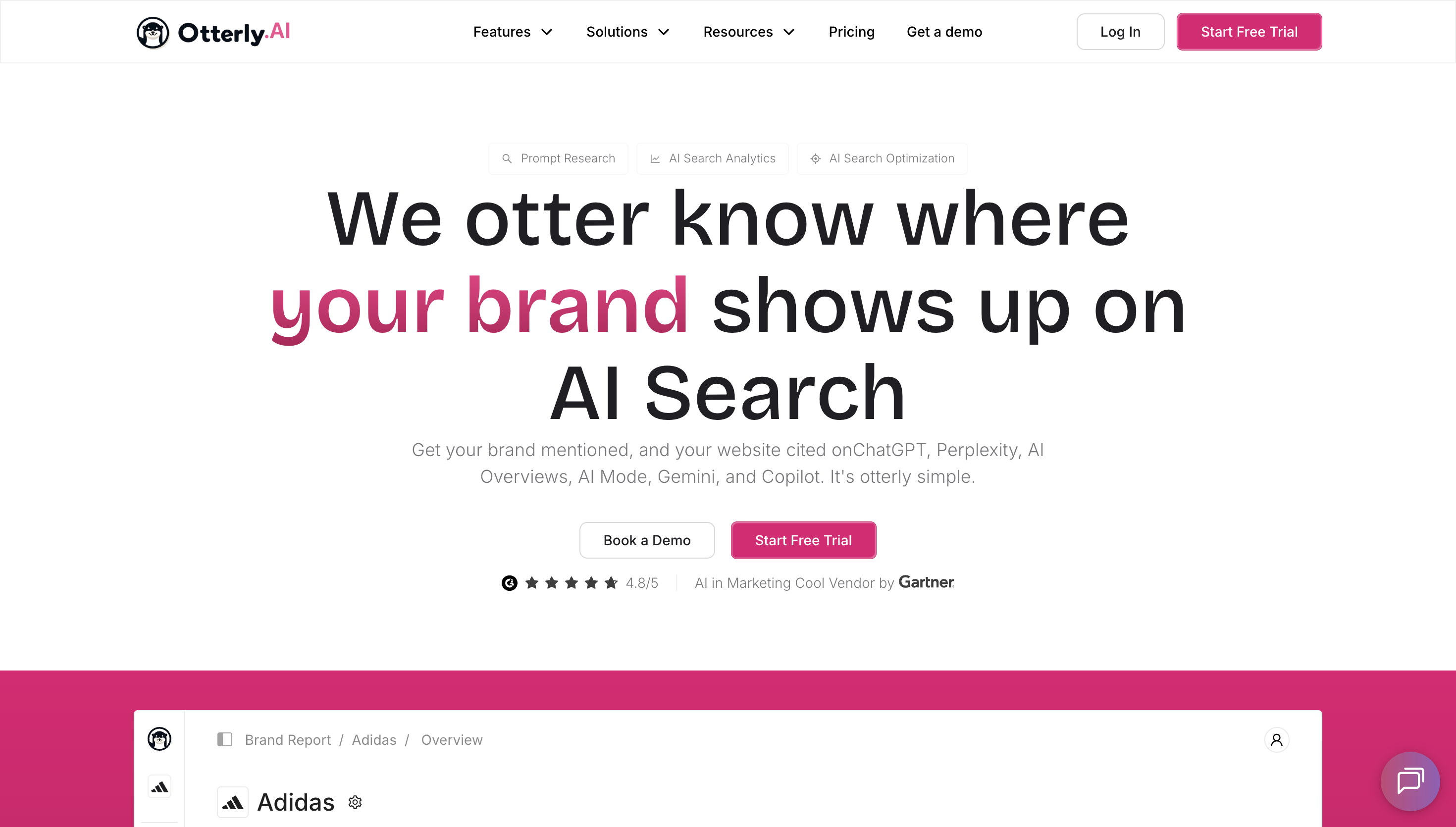
Best for: finding out where you stand without a procurement conversation
Pricing: from $29/mo for 15 prompts, $189 for 100, $489 for 400
The cheapest credible entry point in the category. Scheduled scans across ChatGPT, Perplexity, Claude and Google's AI surfaces, citation alerts, and a dashboard that's useful on day one. Prompt limits are stated plainly, which makes budgeting simple.
Better than Scrunch AI at: price, and time to first useful data
Falls short on: execution entirely, since it identifies changes and pushes nothing into HubSpot or a CMS, and exports are limited on lower tiers
2. Rankscale
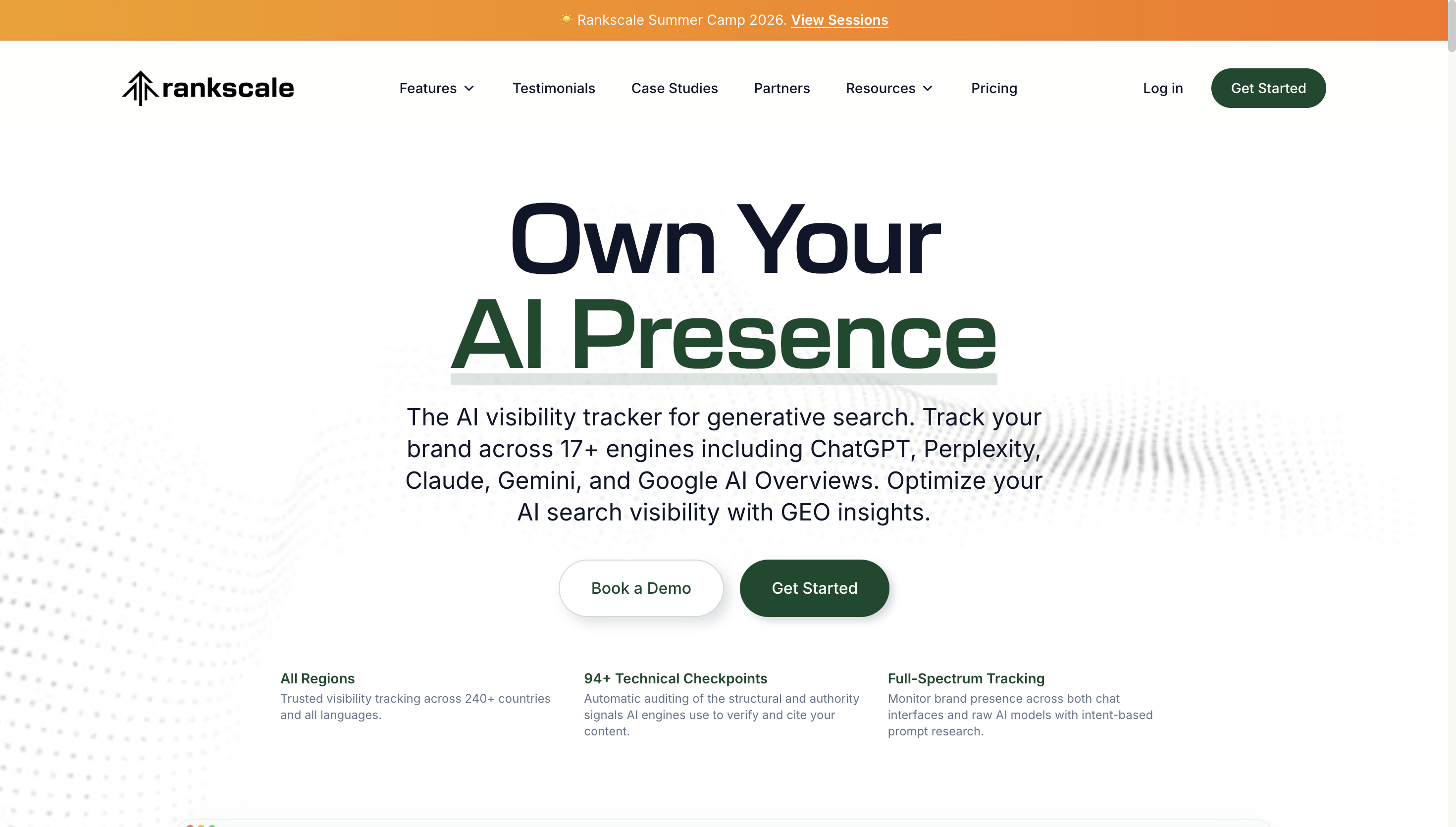
Best for: growth teams that want page-level suggestions alongside the tracking
Pricing: from $385/mo for 5,500 credits
Rankscale tracks across ChatGPT, Gemini, Perplexity, Claude and Grok, and connects signals to specific optimisation recommendations, with refreshes as frequent as hourly. It's the monitor that does most to tell you what to change.
Better than Scrunch AI at: built-in page-level recommendations, and a lighter setup
Falls short on: historical depth, being newer with less accumulated data, and it stops short of routing work to anyone
3. Peec AI
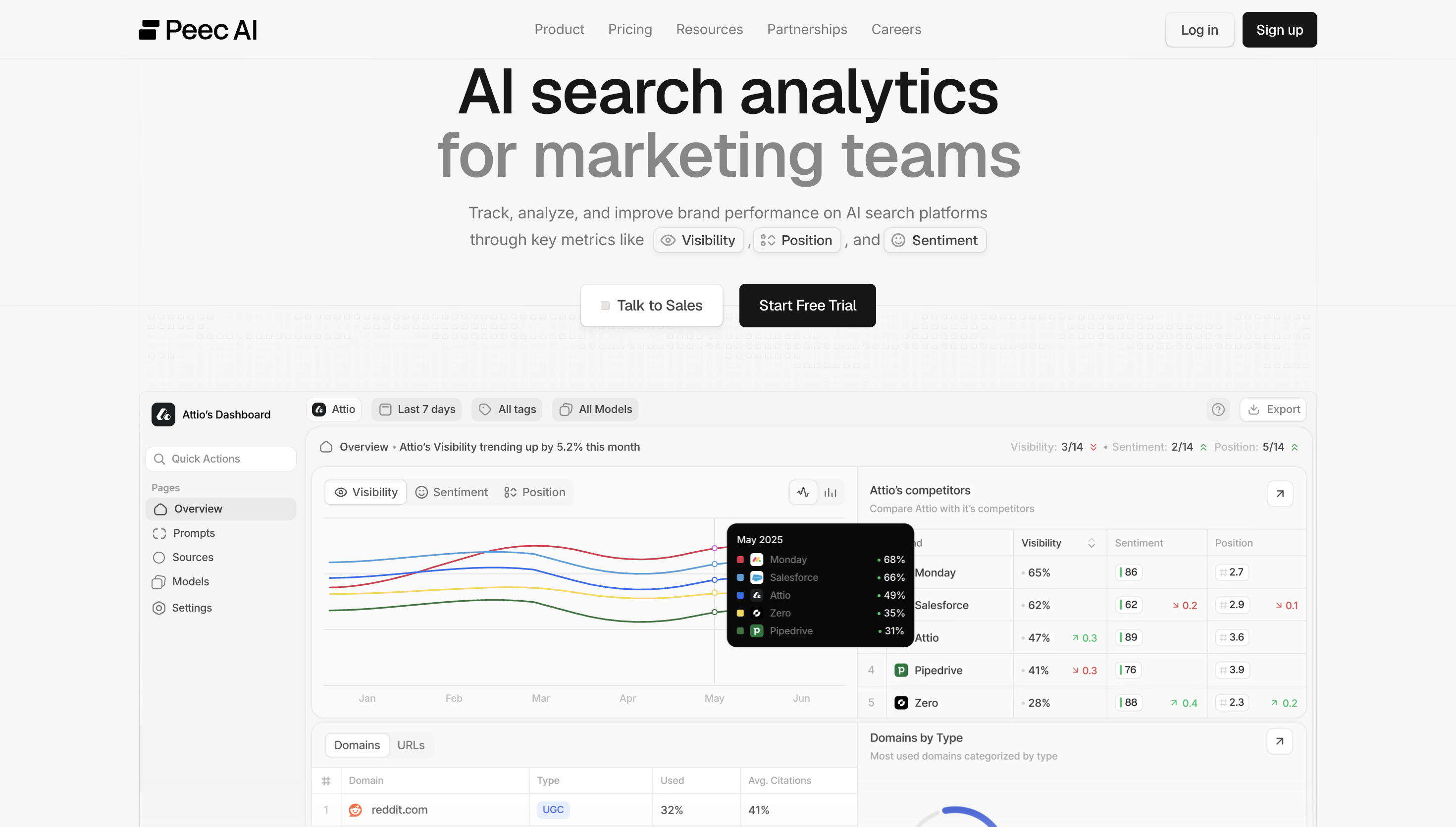
Best for: teams that want tracking running this week, particularly with European buyers
Pricing: from $80/mo annual for 50 prompts, $205 for 150, $420 for 350
Peec AI runs daily prompt monitoring across ChatGPT, Gemini, Copilot and Perplexity with a clean interface and a setup measured in hours. Their strongest coverage is European and German-language, which is where most of their own traffic comes from, so ask about US English prompt handling if that's your market.
Better than Scrunch AI at: speed to first data, and European market coverage
Falls short on: crawler analytics, and it's tracking-only, so the finding-to-fix gap is the same one you're trying to leave
Enterprise analytics
1. Profound
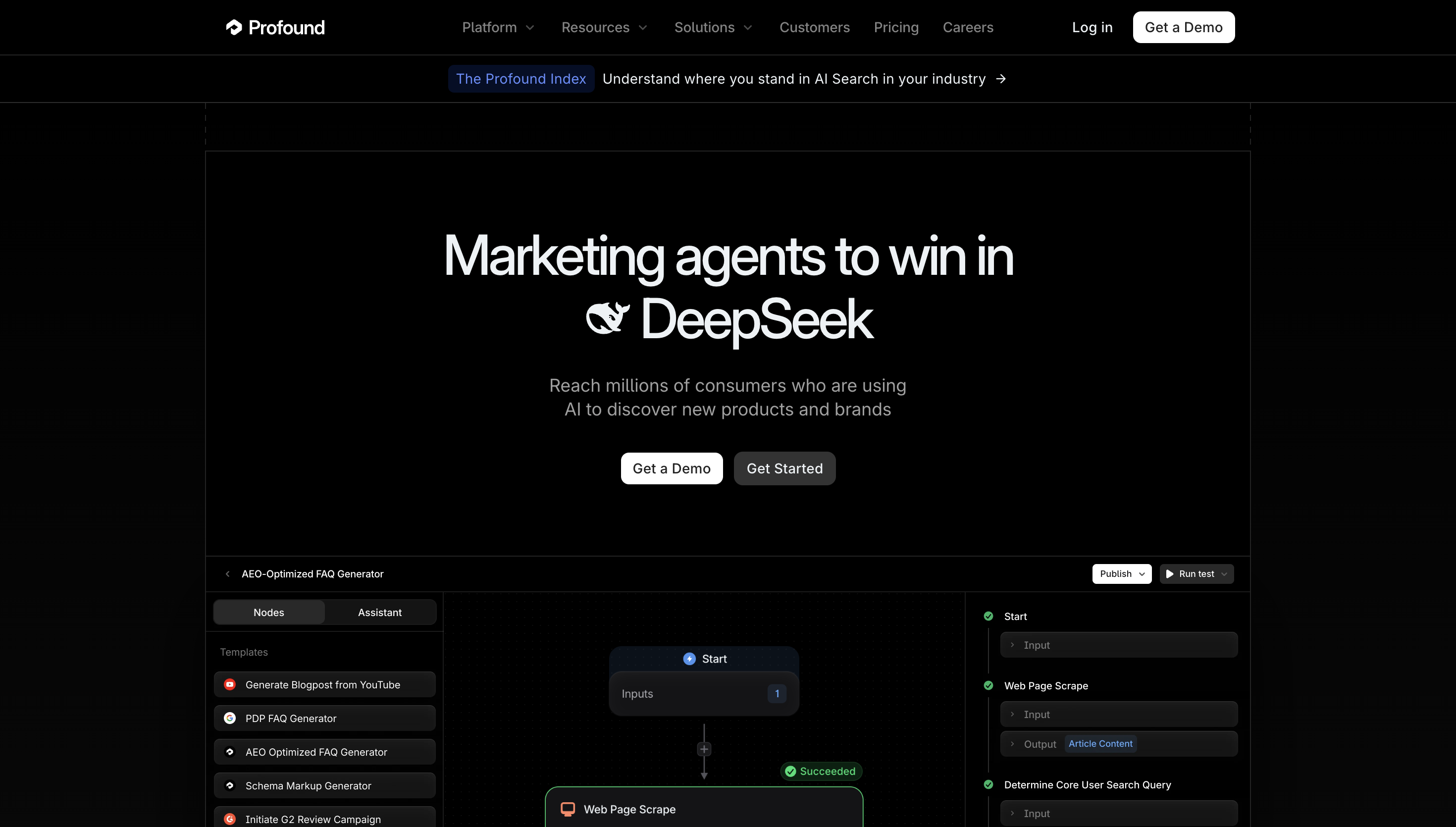
Best for: teams who need measurement that survives a board review or a security audit
Pricing: enterprise, by quote
The most established platform in the category, with the deepest crawler analytics, long-retention prompt history, and SOC 2 compliance. If you'll be asked to show a year of movement and prove where the number came from, this is the option built for that conversation.
Better than Scrunch AI at: measurement depth, citation history, and clearing enterprise procurement
Falls short on: time to value, since onboarding is slow and the product assumes a dedicated owner
2. Semrush AI Visibility Toolkit
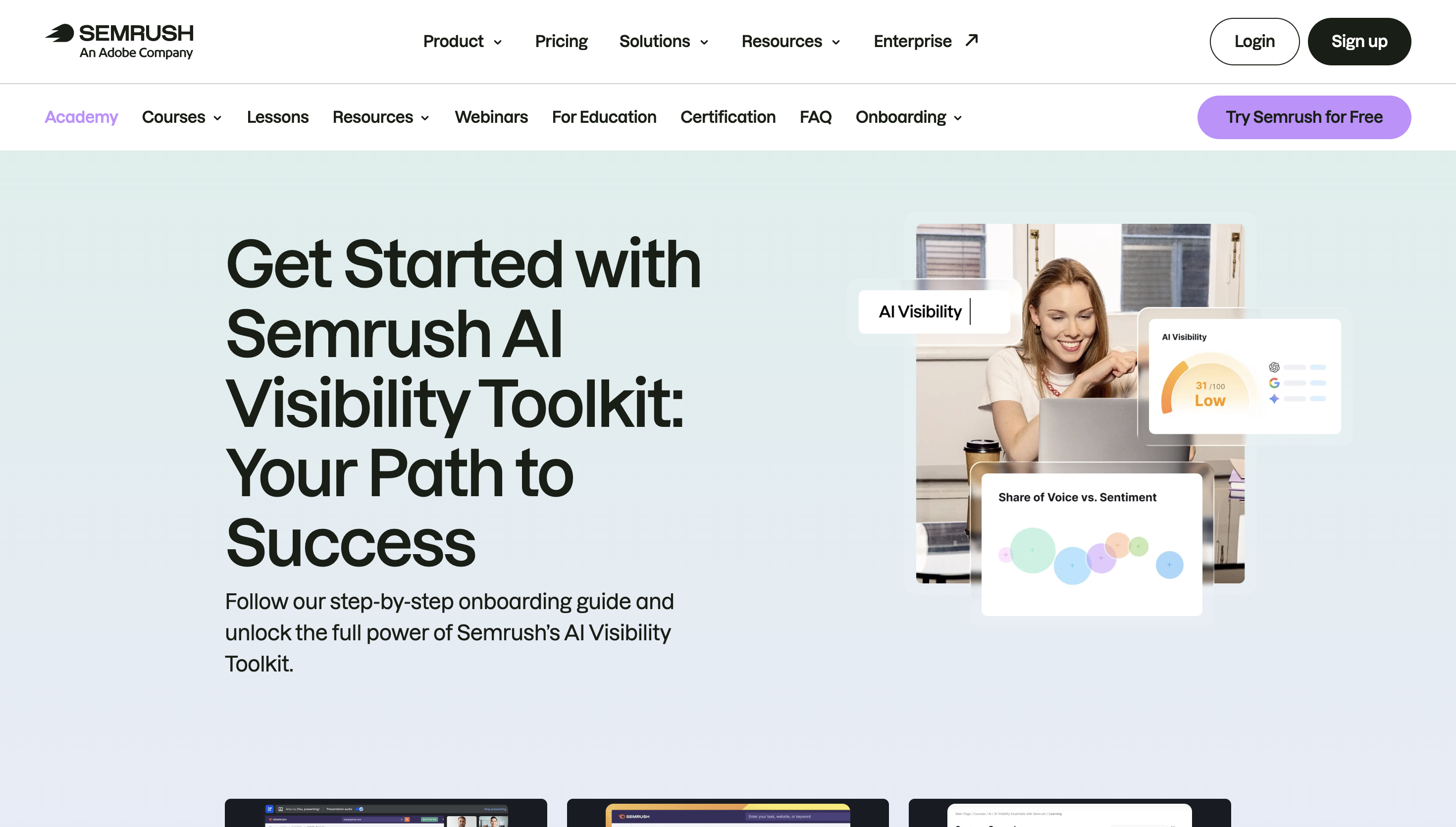
Best for: teams already paying for Semrush
Pricing: ~$99/mo per domain, 25 daily prompts on the base tier
An add-on rather than a platform, which is the entire argument for it. AI visibility data sits next to the keyword, backlink and audit data you already have, so you go from spotting a problem to fixing it without adding a vendor or a login.
Better than Scrunch AI at: consolidation, and predictable published pricing
Falls short on: prompt-level granularity, since it works from estimates, and CRM-side execution isn't what it's built for
Scoring tracking against execution
The useful thing about separating these two axes is that a high score on one tells you almost nothing about the other. Scored 1 to 5 across five capabilities, five of these platforms land like this.
| Vendor | Tracking | Execution | What that means in practice |
|---|---|---|---|
| Profound | 5 | 2 | The most defensible measurement available, and you still need something else to change anything |
| Scrunch AI | 4 | 2 | Strong tracking plus crawler depth nobody else matches, light on shipping the fix |
| AthenaHQ | 4 | 3 | The most balanced option here, best in class at neither |
| Otterly | 3 | 1 | Cheap and fast to see where you stand, then it's all on you |
| Strivelabs | 4 | 5 | All independent visibility tracking, and the most direct route from signal to shipped change |
Score your shortlist yourself on the same five capabilities: prompt coverage across models, citation transparency, GA4 and Search Console mapping, HubSpot action mapping, and enforced human approval.
A vendor scoring 5 on tracking and 2 on execution isn't a bad product. It's half a solution, and worth knowing that before you budget as though it's the whole thing.
When Scrunch AI is still the right choice
Two situations where switching would be a mistake.
Crawler behaviour is your actual problem. If you need to understand and control how AI systems reach your content, Scrunch does that better than anything on this list except Profound, and none of the monitor-first tools attempt it at all.
You have technical ownership. A technical SEO or an engineer with allocated hours will reach parts of this product that a two-person marketing team never will, and that's where the money is.
What to check in a demo
Ask whether findings can be pushed to your workflow in one action, and confirm exactly how that works with HubSpot and your CMS. Confirm GA4 and Search Console data comes in live rather than as periodic exports, and whether sync runs both ways. Check whether LinkedIn and Google Ads data is readable, so paid intent shifts are visible. Confirm approval gates are enforced by role permission and can't be switched off. Ask for the entry price, which specific actions or queries meter toward the bill, and what a realistic monthly invoice looks like at your prompt volume.
Upgrade to an Agentic Marketing OS
Connect your stack, get work routed to the right person with enforced approvals. No more visibility data sitting in a dashboard while the fix waits.
Frequently Asked Questions
What are the best alternatives to Scrunch AI?
The seven worth comparing are Strivelabs, AthenaHQ, Otterly, Rankscale, Peec AI, Profound and the Semrush AI Visibility Toolkit. Otterly is cheapest at $29 a month, AthenaHQ most balanced at $295, Profound deepest on measurement, and Strivelabs handles execution rather than tracking.
What is Scrunch AI used for?
Tracking how your brand appears in AI answers, plus crawler control: seeing which AI systems reach your site, what they take, and shaping that access technically. The crawler layer is what distinguishes it from most trackers.
How much does Scrunch AI cost?
Core plans start around $250 a month, with enterprise pricing by quote. For comparison, Otterly starts at $29, Peec AI at $80, Semrush's toolkit at $99 per domain, and AthenaHQ at $295 after a free tier.
Why do teams leave Scrunch AI?
Usually the gap between findings and fixes. Scrunch tells you what's wrong clearly, and lighter on doing something about it. Teams without technical ownership also struggle to use the crawler features, which is where most of the differentiated value sits.
What is the cheapest Scrunch AI alternative?
Otterly at $29 a month for 15 prompts, then Peec AI at $80. Both trade crawler analytics and execution entirely for the lower price.
Which Scrunch AI alternative connects to HubSpot?
Strivelabs connects to HubSpot, GA4, Google Ads, Search Console, LinkedIn Ads and Slack. AthenaHQ and Profound connect to HubSpot and GA4. The monitor-first tools mostly don't reach CRM data at all.
Is Strivelabs better than Scrunch AI?
Not on tracking, where it scores 1 against Scrunch's 4. It's stronger on execution, scoring 5 against 2. Different jobs, and teams needing both often run a tracker alongside it.
What's the difference between AI visibility monitoring and execution platforms?
Monitoring tracks where you appear in AI answers and reports it. Execution platforms take those findings and produce work: a content update, a budget change, a task with an owner. The test is whether anything leaves the tool.