If you're evaluating Profound and it feels heavier than your team needs, the seven platforms worth looking at are Strivelabs, Peec AI, AthenaHQ, Otterly, Rankscale, Semrush AI Visibility Toolkit, and Ahrefs Brand Radar.
This is written for marketing leads at B2B SaaS companies running small teams, usually somewhere between one and five people, without a dedicated analyst to run a visibility programme. If you have that analyst and an enterprise procurement process, Profound is likely still your answer, and there's a section below explaining why.
At a Glance
-
Profound is the category leader for enterprise teams with an analyst — but it's built for depth that lean teams rarely reach.
-
The cheapest credible entry point is Otterly at $29 a month; Peec AI is the strongest pick for European buyers.
-
AthenaHQ and Strivelabs both move toward action, not just measurement, which is where most small teams stall.
-
If Semrush or Ahrefs is already in your stack, the add-on route is cheaper than adding a new vendor.
-
The most useful question before buying: is your gap measurement or execution?
What Profound actually is
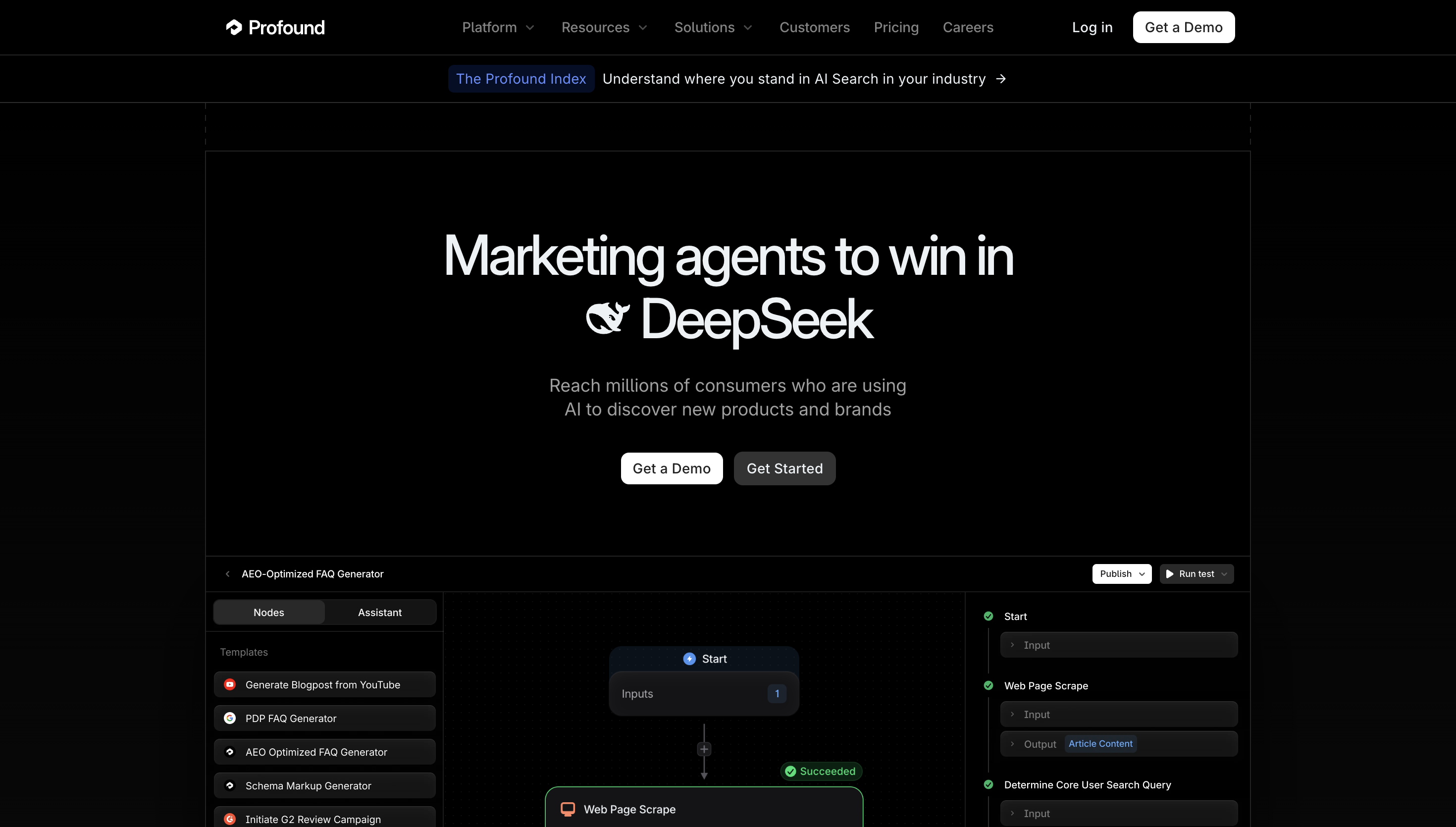
Profound is an AI visibility platform. It monitors how your brand appears when people ask questions of ChatGPT, Gemini, Perplexity, Copilot and Google's AI surfaces, and reports back on where you're cited, where competitors are cited instead, and how that changes over time.
The core mechanic is prompt tracking. You define a set of buyer questions, Profound runs them repeatedly across engines, and you get a picture of your share of the answers. On top of that sit crawler analytics, which show you which AI crawlers are hitting your site and what they're taking, and a set of enterprise features including SOC 2 compliance and long-retention prompt history.
It's the category leader by some distance. Their definitional content on answer engine optimization is the reference most of the industry links to, and they've done more than anyone to establish AEO as a named practice. Most people evaluating this space heard the term from them.
Worth being clear about scope, because it drives most of the switching decisions below. Profound measures. It tells you where you stand and how that's moving. It doesn't write the content, run the ad test, or push the task into your CRM. That's a deliberate product boundary, not an oversight, and for a lot of teams it's exactly right.
Why teams look at alternatives
Four reasons come up repeatedly, and only two of them are really criticisms.
It's built for teams with an analyst. The prompt libraries, the crawler data, the segmentation all reward someone whose job is to sit in the tool. If nobody on your team owns that, you end up paying for depth you never reach.
Pricing sits above what small teams budget for AI visibility. Several platforms below start under $100 a month. If you're testing whether this category is worth anything to you at all, that's a materially different starting position.
Tracking-only means buying twice. You get a clear picture of the gap and then need something else to close it. Teams often discover this three months in, when the dashboards are informative and nothing has actually changed.
Coverage outside the US. If your buyers are primarily in Europe, one of the options below has better regional data.
And the reason that isn't a criticism: Profound is the most established option here, with the longest track record and the most complete enterprise feature set. If your procurement process cares about that, the alternatives will be harder to get approved.
Quick comparison
| Vendor | What it does | Entry price | Best-fit team | Main limitation |
|---|---|---|---|---|
| Strivelabs | Acts on marketing signals across your connected stack | Quoted | Lean teams whose gap is execution, not measurement | Needs your tools connected before it's useful |
| Peec AI | Fast prompt tracking with strong EU coverage | $80/mo (Starter) | Small teams with European buyers | Limited crawler analytics |
| AthenaHQ | Tracking across 9+ LLMs with an action layer | $295/mo (credit model) | Mid-market teams wanting workflows | Credit costs are hard to forecast |
| Otterly | Lightweight tracking across major engines | $29/mo (Lite) | Solo marketers and early startups | Thin reporting, limited exports |
| Rankscale | Tracking with page-level optimisation tips | $385/mo (Growth) | Growth teams running content experiments | Short historical dataset |
| Semrush AI Visibility Toolkit | AI visibility inside your existing SEO suite | $99/mo per domain | Existing Semrush customers | Estimates rather than direct prompt data |
| Ahrefs Brand Radar | Broad mention discovery across AI and the web | ~$199/mo per engine add-on | SEO teams already on Ahrefs | Costs escalate per engine |
Ordered below by fit for a lean B2B SaaS marketing team, not by overall capability. A different team shape would reorder this list.
Better decisions start with better infrastructure.
Most mid-market teams pick a channel and hope. Strivelabs gives you the data to know, and the infrastructure to act on it.
The seven alternatives
1. Strivelabs
Best for: lean teams whose bottleneck is acting on findings, not producing them
Pricing: quoted
Strivelabs connects to Google Ads, HubSpot, Search Console, GA4 and the rest of your stack, and turns signals into actual work: an SEO brief, an ad test, a task in your CRM, with a human approving before anything ships. Worth being precise about the boundary, because it decides whether this is your right first stop. Strivelabs doesn't run prompt-level AI visibility tracking of its own. If measuring citation share across engines is the job you're hiring for, one of the six below does that and this doesn't. A good number of teams run both, using a tracker to see the gap and Strivelabs to close it.
It's first on this list because for most lean teams the bottleneck turns out to be execution rather than measurement, and that's worth testing before you buy another dashboard.
Better than Profound at: turning findings into shipped work rather than reports
Falls short on: setup, since it needs a couple of your tools connected before it produces anything, so week one is configuration
2. Peec AI
Best for: small teams with European buyers
Pricing: from $80/mo annual for 50 prompts, $205 for 150, $420 for 350
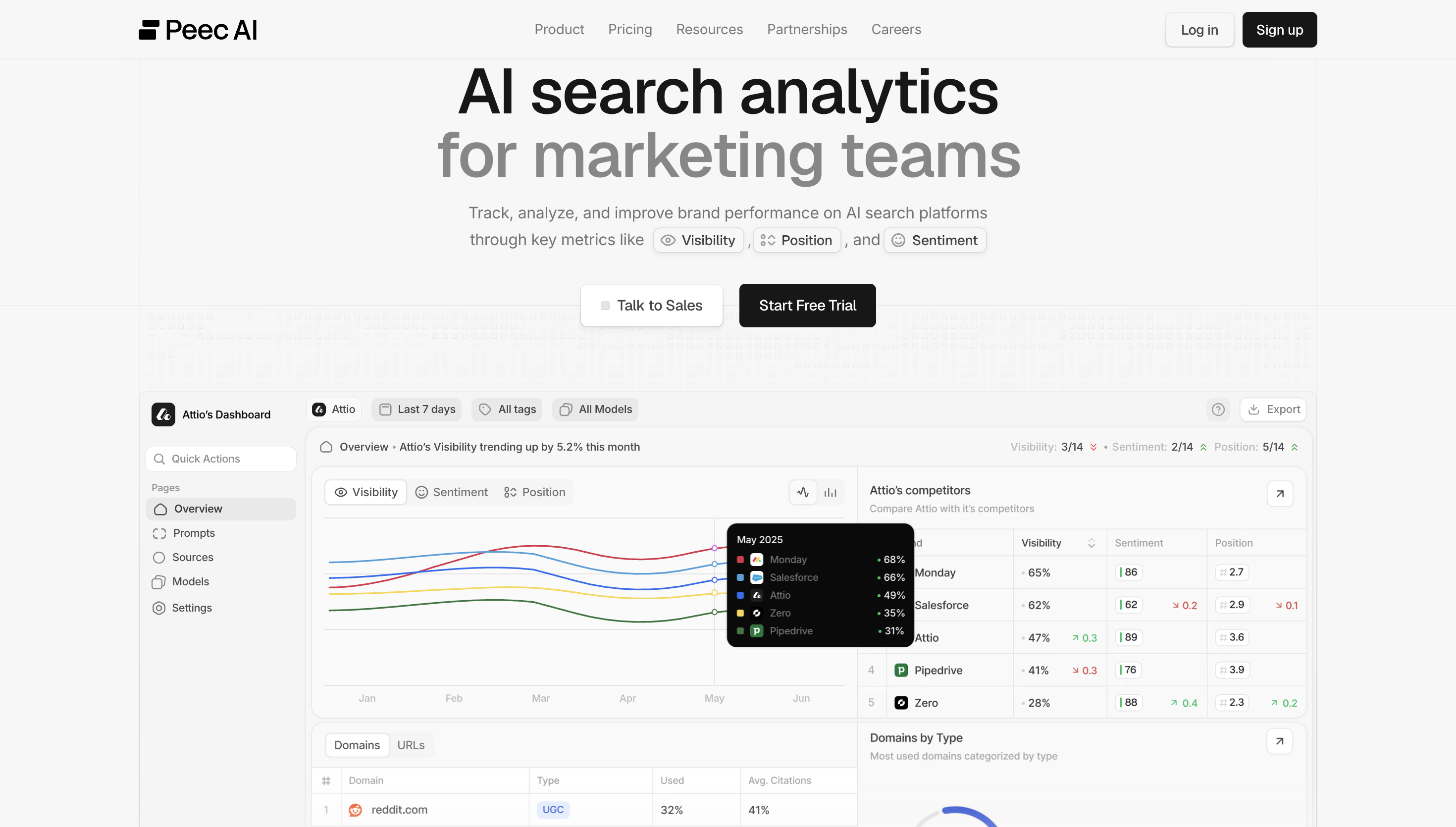
Peec AI does daily prompt monitoring across the major engines with a genuinely clean interface. Setup takes hours rather than weeks, which matters when nobody on the team has time to learn another platform. Their strongest suit is regional coverage, particularly German-language and wider European data, which is where most of their own traffic comes from.
Better than Profound at: speed to first useful data, and European market coverage
Falls short on: crawler analytics, and fewer security and access controls
3. AthenaHQ
Best for: mid-market teams that want the tool to suggest next steps
Pricing: from $295/mo for 3,600 credits
AthenaHQ pairs visibility tracking with an Action Center that converts findings into tasks. It estimates prompt volumes, monitors multiple regions, and gives content and SEO owners a queue rather than a dashboard. Of the pure tracking tools here it comes closest to closing the measurement-to-action gap, though the actions still land in a person's lap.
Better than Profound at: turning findings into assigned work
Falls short on: cost predictability, since credit burn varies with how actively you use it
4. Otterly
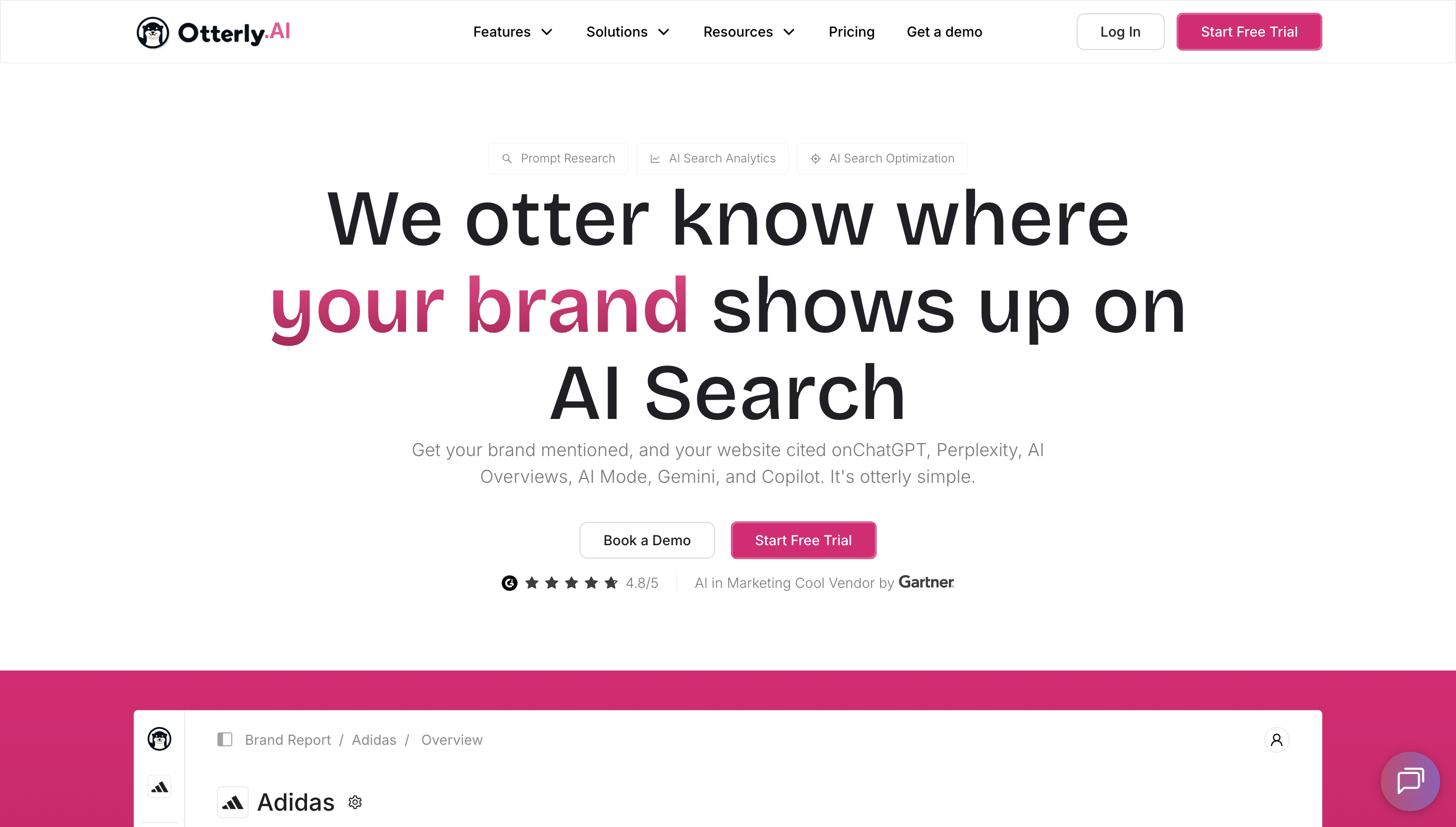
Best for: solo marketers and teams testing whether this category matters
Pricing: from $29/mo for 15 prompts, $189 for 100, $489 for 400
The cheapest credible entry point here. Otterly runs scheduled scans, alerts you when your brand gets cited, and presents it simply enough that you're getting value the day you sign up. The prompt limits are clearly stated, which makes budgeting straightforward.
Better than Profound at: cost, and time to first result
Falls short on: reporting depth, with API access and exports restricted on lower tiers
5. Rankscale
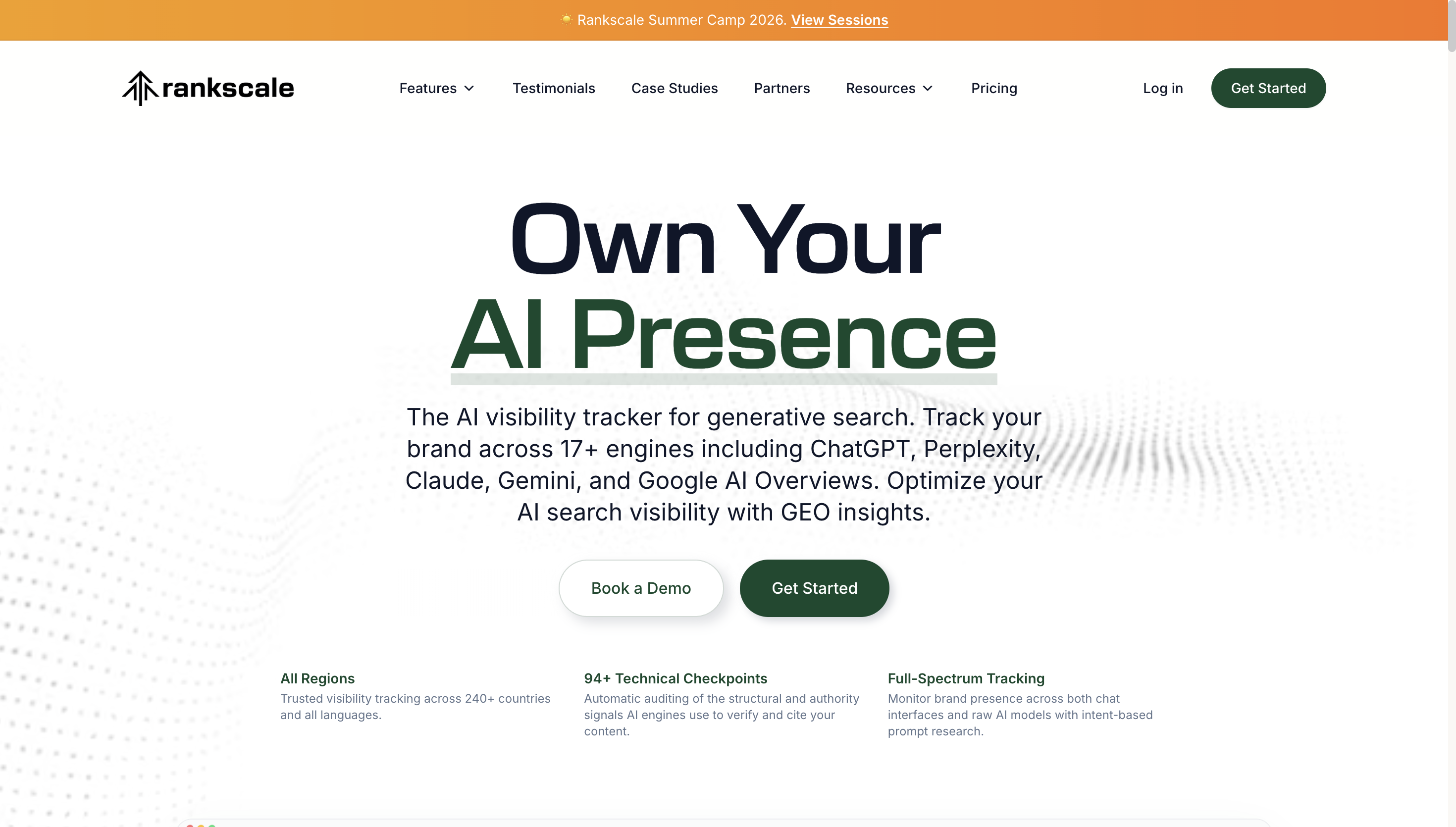
Best for: growth teams that want optimisation recommendations, not just numbers
Pricing: from $385/mo for 5,500 credits
Rankscale connects visibility signals to specific page-level suggestions, with monitoring as frequent as hourly. It's aimed at teams running content experiments who want a shorter path from observation to change.
Better than Profound at: actionable page-level recommendations out of the box
Falls short on: historical depth, being a newer platform with less accumulated data
6. Semrush AI Visibility Toolkit
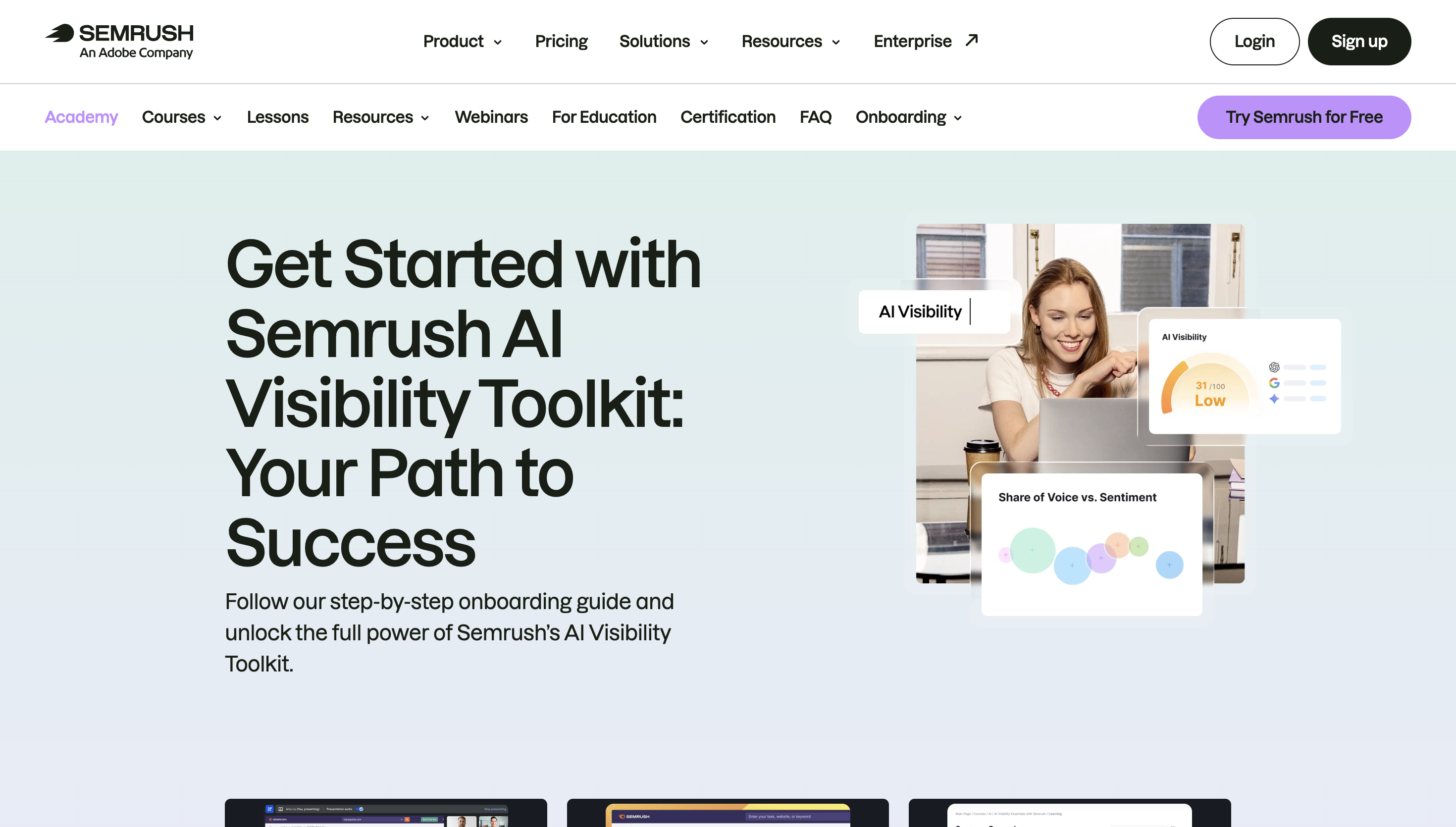
Best for: teams already paying for Semrush
Pricing: ~$99/mo per domain, 25 daily prompts on the base tier
This is an add-on rather than a platform, and that's the whole argument for it. Visibility data sits alongside the keyword and audit data you already have, so you can go from spotting a problem to fixing it without switching tools or adding a vendor.
Better than Profound at: consolidation, if Semrush is already in your stack
Falls short on: prompt-level granularity, since it works from estimates rather than dedicated tracking
7. Ahrefs Brand Radar
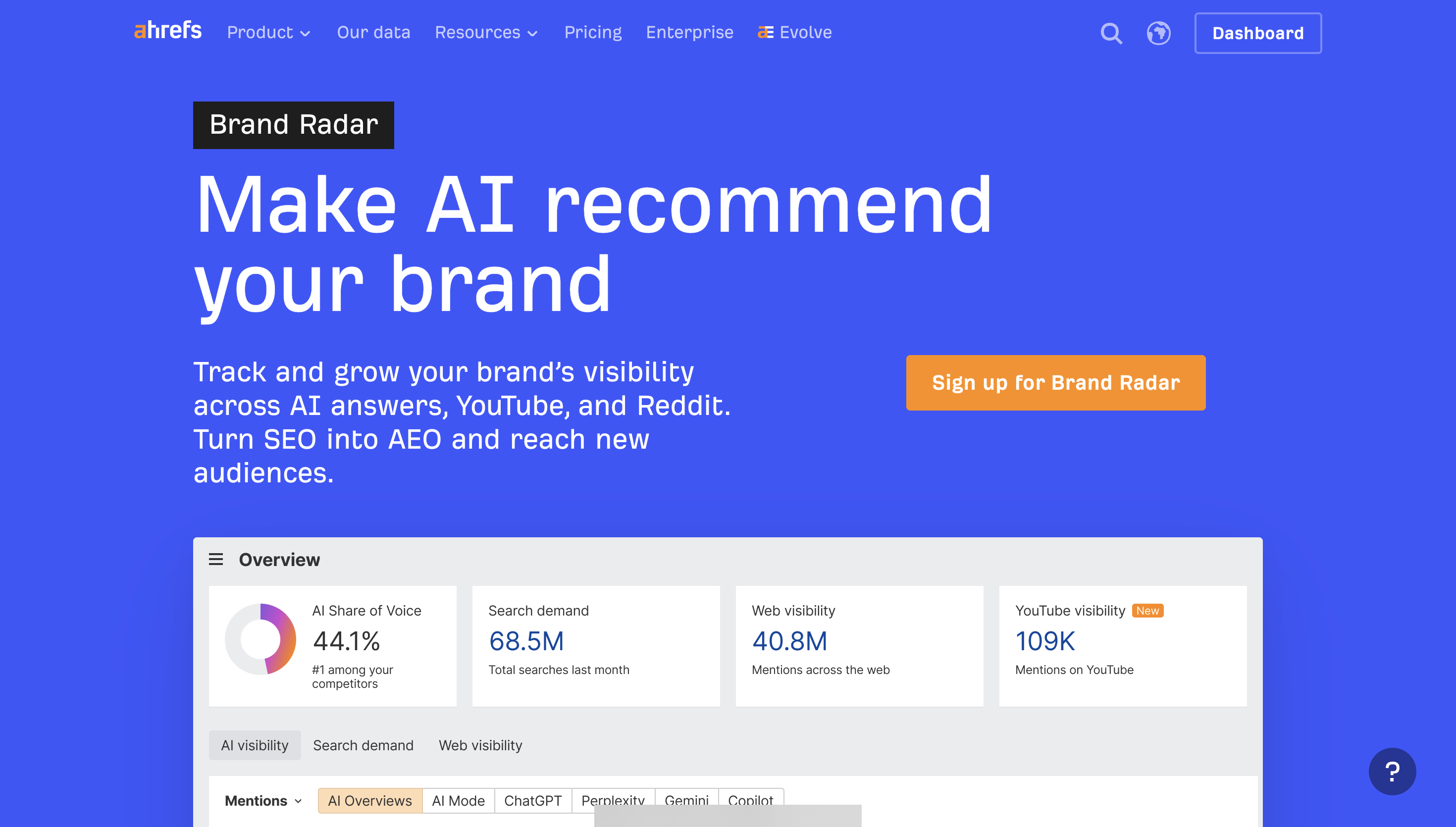
Best for: SEO teams on Ahrefs who need breadth of index
Pricing: from $129 base, roughly $199 per engine add-on
Brand Radar's advantage is the index behind it. Beyond AI engines it tracks mentions across Reddit, YouTube and the wider web, which makes it strong for competitive research rather than just self-monitoring.
Better than Profound at: breadth of mention discovery beyond AI surfaces
Falls short on: per-engine pricing that adds up quickly, and no workflow layer to act on findings
Four more worth knowing about
Scrunch AI - from $250/mo, enterprise by quote. Positions itself as an Answer Experience Platform, with crawler control as the distinctive part. Genuinely specialised, but it needs someone technical to get value from it, and the crawler angle overlaps with what Profound already gives you.
Evertune - from $800/mo, enterprise by quote. Stronger on brand sentiment and distribution analysis, lighter on core AEO coverage. Suits larger brand teams more than lean SaaS marketing.
Knowatoa - around $59/mo self-serve. Fast, cheap audits with a smaller underlying dataset. Reasonable for a quick read on where you stand, not for an ongoing programme.
xFunnel - pricing by quote. Focused on connecting AI visibility to funnel attribution, which is a genuinely different angle, though the underlying data is less deep than the platforms above.
When Profound is still the right choice
Three situations where switching would be a mistake.
You're in a regulated industry, or selling to enterprise buyers whose security review is a real gate. SOC 2 certification and mature access controls clear that faster than a smaller vendor will.
You need long-run historical data. If you're going to be asked to show a year of movement, the platforms with eighteen months of accumulated prompt history are not interchangeable with ones that launched last year.
You have someone whose job includes running this. Profound's depth rewards ownership. If you have an analyst or a technical SEO with time allocated, you'll reach parts of the product the cheaper tools don't have.
How to choose
Five questions, and your answers should narrow this quickly.
Is your gap measurement or execution? If you already know where you're losing citations and nothing has changed in three months, another dashboard won't fix it. If you genuinely don't know where you stand, start with a tracker.
Where are your buyers? Primarily European, look hard at Peec AI. Primarily US, it matters less.
Is there an existing suite in your stack? If Semrush or Ahrefs is already paid for, the add-on route is cheaper and less work than a new vendor.
Who's going to own this? No dedicated owner means the cheaper, simpler tools will get more actual use than the deep ones.
What's the real ceiling on spend? Under $100 a month is a genuinely different shortlist from $300 plus, and it's worth being honest about that before demos rather than after.
If the answer to the first question is execution, that's the conversation to have.
Upgrade to an Agentic Marketing OS
See how Strivelabs gives mid-market teams the operational capacity without the hiring cost.
Frequently Asked Questions
What are the best alternatives to Profound?
The seven worth comparing are Strivelabs, Peec AI, AthenaHQ, Otterly, Rankscale, Semrush AI Visibility Toolkit and Ahrefs Brand Radar. Otterly is the cheapest at $29 a month, Peec AI is strongest in Europe, AthenaHQ adds an action layer, and Strivelabs handles execution rather than tracking.
What is the best Profound alternative for a small B2B SaaS team?
Otterly if budget is the constraint, at $29 a month. Peec AI if you want something running this week. Strivelabs if you already know where you're losing citations and need the work to actually get done. All three are lighter than Profound for teams without a dedicated analyst.
Is Profound worth the money?
For enterprise teams with an analyst, usually yes. It has the deepest crawler analytics, the longest prompt history and SOC 2 certification. For a two-person team without dedicated ownership, you pay for depth you never reach, and a $29 tool you check weekly beats a premium one you don't.
Is there a free or low-cost Profound alternative?
AthenaHQ has a free Essential tier with limited credits. Otterly starts at $29 a month for 15 prompts, and Knowatoa at roughly $59 self-serve. All three trade reporting depth, export access and API availability for the lower price.
Profound vs Peec AI: which is better?
It depends where your buyers are. Peec AI's strongest coverage is European and German-language, and it sets up in hours. Profound is deeper on US data, crawler analytics and enterprise security. For a US team with an analyst, Profound. For a lean European team, Peec AI.
Can I use Ahrefs or Semrush instead of a dedicated AI visibility tool?
Yes, if you already pay for one. Semrush's AI Visibility Toolkit is about $99 per domain each month and Ahrefs Brand Radar roughly $199 per engine. Both trade prompt-level granularity for sitting next to data you already have, which is cheaper than adding a vendor.
Do I actually need an AI visibility tool?
Only if someone will act on what it tells you. If nobody owns the follow-up, a tracker produces dashboards and no change. Test it manually first: run twenty buyer questions through ChatGPT and Gemini and see whether you appear. If the answer worries you, then buy.
What should I compare when evaluating AI visibility platforms?
Five things: which engines are included in your specific tier, how often data refreshes, whether pricing is per prompt or per credit, whether US or European coverage is stronger, and whether the tool stops at reporting. Engine coverage is broadly similar across vendors, so the differences sit in the other four.