If you're evaluating Peec AI from the US and something about the fit feels off, the seven platforms worth comparing are Strivelabs, Profound, AthenaHQ, Otterly, Rankscale, Semrush AI Visibility Toolkit, and Ahrefs Brand Radar.
This is aimed at marketing leads at B2B SaaS companies selling into the US and other English-speaking markets, usually running teams of one to five without a dedicated analyst. The main reason to read it is geography, which turns out to matter more in this category than most buyers expect.
At a Glance
-
Peec AI is strongest for European and German-language markets — not a criticism, just a fit question worth asking on the demo call.
-
For US teams, Profound is the closest like-for-like swap with better US data and crawler analytics.
-
Otterly starts at $29 a month — the cheapest credible entry point on this list.
-
AthenaHQ bridges tracking and action; Strivelabs handles execution rather than measurement.
-
If Semrush or Ahrefs is already paid for, the add-on route skips a new vendor entirely.
What Peec AI is
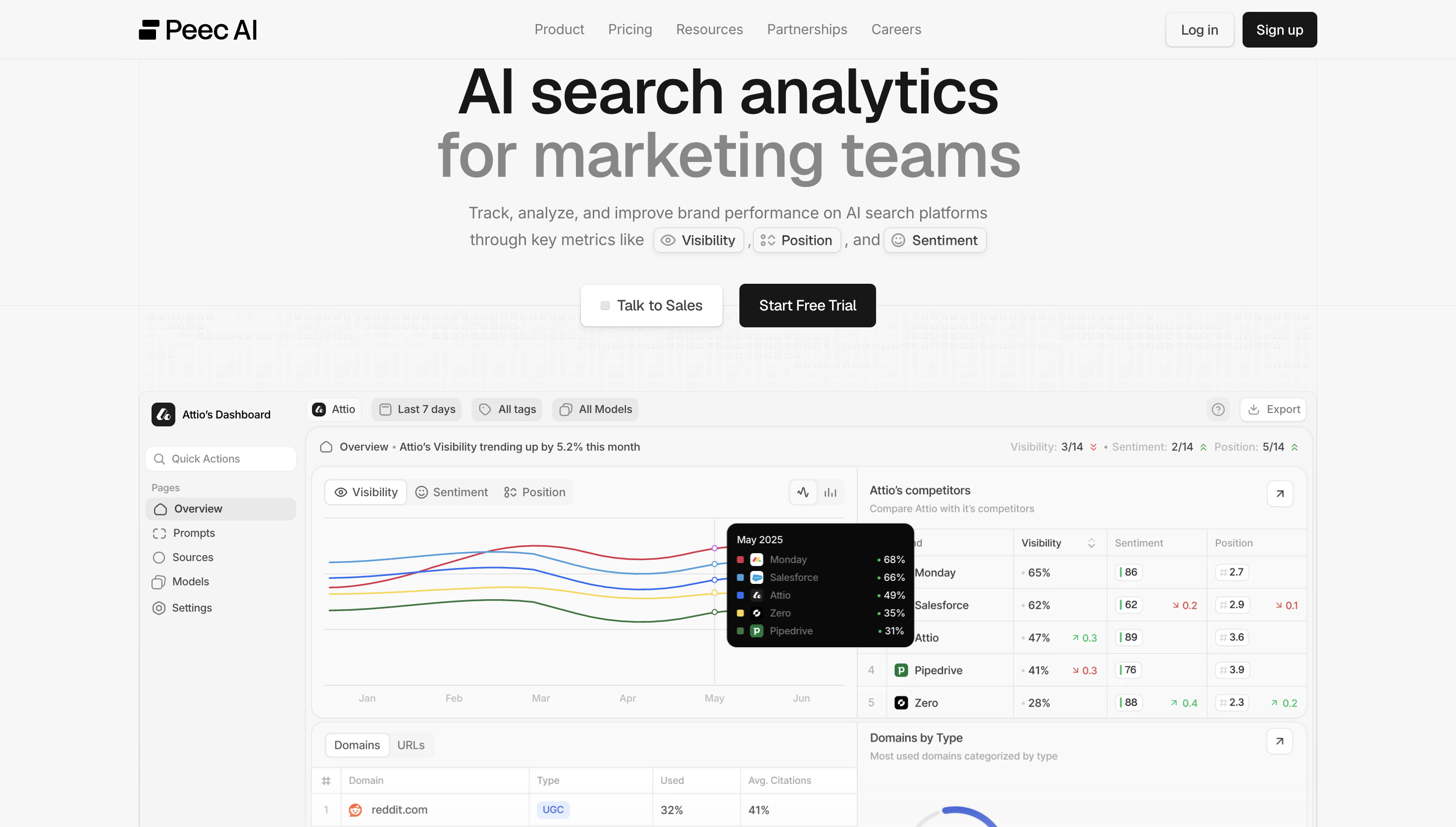
Peec AI is an AI visibility platform. You give it a set of buyer questions, it runs them repeatedly against ChatGPT, Gemini, Copilot, Perplexity and other engines, and reports where your brand gets cited, where competitors get cited instead, and how that shifts over time.
What people consistently like about it is how quickly it gets going. The prompt setup is uncomplicated, the dashboards are clean, and you're looking at real data in hours rather than spending a fortnight in configuration. In a category where several platforms assume a dedicated owner, that's a genuine design choice and not a shortcut.
It's also a serious, well-funded company. They hold over 3,300 referring domains, they publish proper documentation, and they've built a reputation quickly. Nobody should read this as a warning about a shaky vendor.
The thing worth knowing before you shortlist it is where its centre of gravity sits. Peec AI's largest market is Germany. Roughly half their worldwide traffic comes from German-language search, and their strongest coverage and support reflect that. For a European team, that's a feature and probably the reason to pick them. For a US team, it's the question to ask on the demo call.
Why US Marketing Teams look at alternatives
Market coverage is the honest first reason. Ask specifically how prompts behave in US English versus German, how regional results are handled, and whether the engine coverage you care about is equally mature across both. It's a fair question and their team should have a straight answer.
Support hours follow from the same thing. A European-centred company runs European business hours. If your team is on Pacific time and something breaks on a Tuesday morning, that's a real operational difference. Worth confirming rather than assuming.
Tracking-only means buying twice. Peec AI measures. It doesn't write the brief, run the test, or push the task into your CRM. Plenty of teams get three months in with a clear picture of the gap and nothing closed. That isn't a fault in the product, it's a scope boundary, but it catches people out.
Prompt-tier pricing. The plans are structured around prompt counts. If your prompt set grows faster than you expected, the cost curve is steeper than it looks at signup. Model your likely volume before committing to a tier.
And the reason that isn't a criticism: if your buyers are in Europe, or you're selling in German, Peec AI is probably the strongest option on this page and the rest of this article is less relevant to you.
Quick comparison
| Vendor | What it does | Entry price | Best-fit team | Main limitation |
|---|---|---|---|---|
| Strivelabs | Acts on marketing signals across your connected stack | Quoted | Lean teams whose gap is execution, not measurement | Needs your tools connected before it's useful |
| Profound | Multi-engine tracking plus crawler analytics | Enterprise, quoted | US teams with an analyst and a security review | Depth assumes dedicated ownership |
| AthenaHQ | Tracking across 9+ LLMs with an action layer | $295/mo (credit model) | Mid-market teams wanting next steps | Credit costs hard to forecast |
| Otterly | Lightweight tracking across major engines | $29/mo (Lite) | Solo marketers, early-stage teams | Thin reporting, limited exports |
| Rankscale | Tracking with page-level optimisation tips | $385/mo (Growth) | Growth teams running content experiments | Short historical dataset |
| Semrush AI Visibility Toolkit | AI visibility inside your existing SEO suite | $99/mo per domain | Existing Semrush customers | Estimates, not direct prompt data |
| Ahrefs Brand Radar | Broad mention discovery across AI and the web | ~$199/mo per engine add-on | SEO teams already on Ahrefs | Cost climbs per engine |
Ordered below by fit for a lean B2B SaaS team selling into the US. A European team, or one with a dedicated analyst, would order this differently.
Better decisions start with better infrastructure.
Most mid-market teams pick a channel and hope. Strivelabs gives you the data to know, and the infrastructure to act on it.
The seven alternatives
1. Strivelabs
Best for: lean teams whose bottleneck is acting on findings, not producing them
Pricing: quoted
Strivelabs connects to Google Ads, HubSpot, Search Console, GA4 and the rest of your stack, and turns signals into work: an SEO brief, an ad test, a task in your CRM, with a person approving before anything ships.
Worth being precise about the boundary, because it decides whether this is the right first stop. Strivelabs doesn't run prompt-level AI visibility tracking of its own. If the job you're hiring for is measuring citation share across engines, one of the six below does that and this doesn't. A good number of teams run both, using a tracker to see the gap and Strivelabs to close it.
It's first on this list because for most lean teams the gap turns out to be execution rather than measurement, and that's worth checking before you buy another dashboard.
Better than Peec AI at: turning findings into shipped work rather than reports
Falls short on: setup, since it needs a couple of your tools connected before it produces anything, so week one is configuration
2. Profound
Best for: US teams with someone whose job includes running this
Pricing: enterprise, by quote
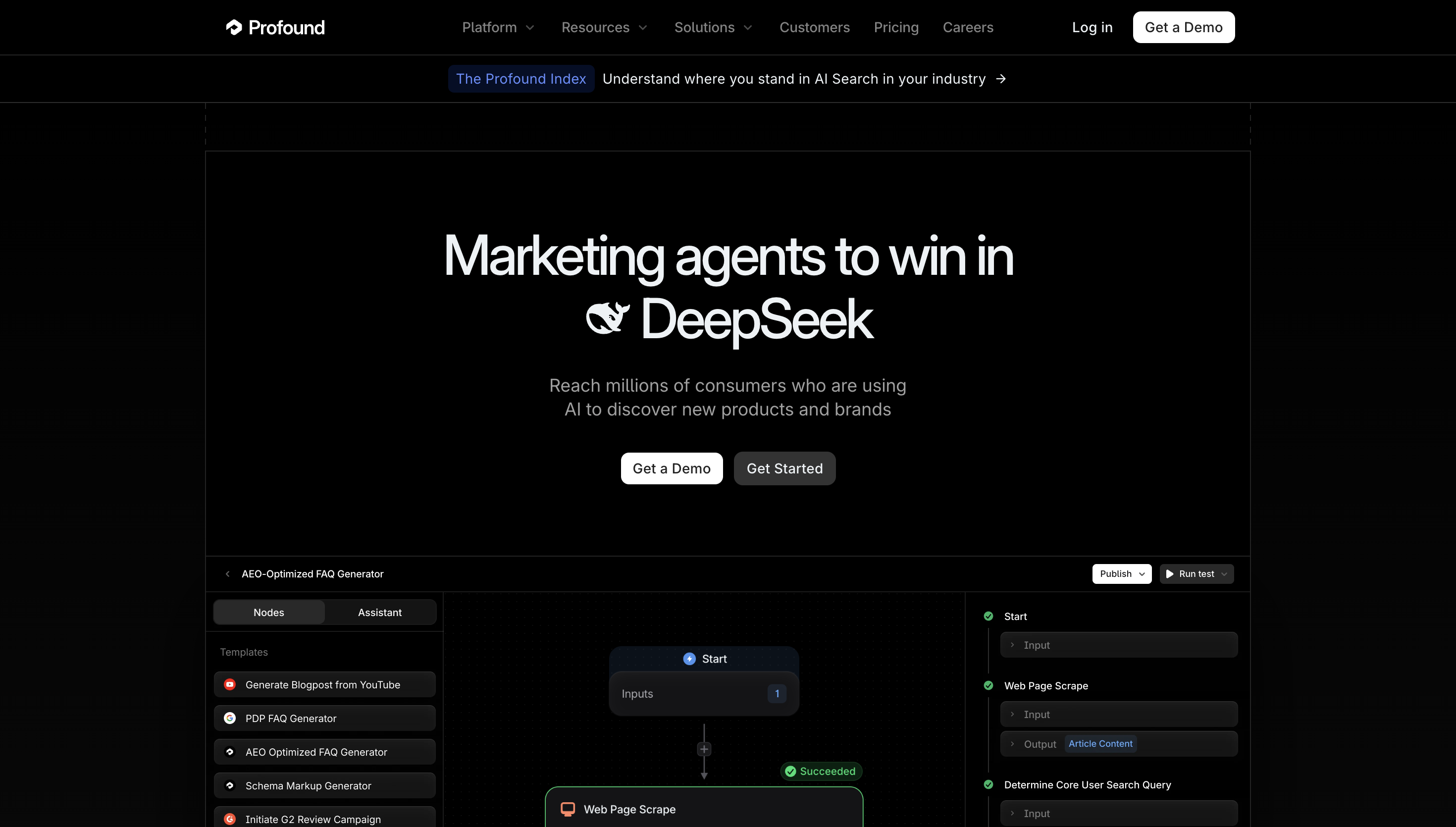
Profound is the most established platform in the category and did more than anyone to establish AEO as a named practice. Beyond prompt tracking you get crawler analytics showing which AI systems are hitting your site and what they're taking, plus long-retention prompt history and SOC 2 compliance. The depth is real, and so is the assumption that someone will use it.
Better than Peec AI at: US market depth, crawler analytics, and clearing enterprise security review
Falls short on: time to value, since the product rewards ownership that small teams often can't spare
3. AthenaHQ
Best for: teams that want the tool to suggest what to do next
Pricing: from $295/mo for 3,600 credits
AthenaHQ pairs tracking with an Action Center that converts findings into tasks, estimates prompt volumes, and monitors multiple regions. Of the pure tracking tools here it comes closest to bridging measurement and action, though the actions still land in a person's queue rather than executing themselves.
Better than Peec AI at: turning findings into assigned work
Falls short on: predictable billing, because credit burn moves with how actively you use it
4. Otterly
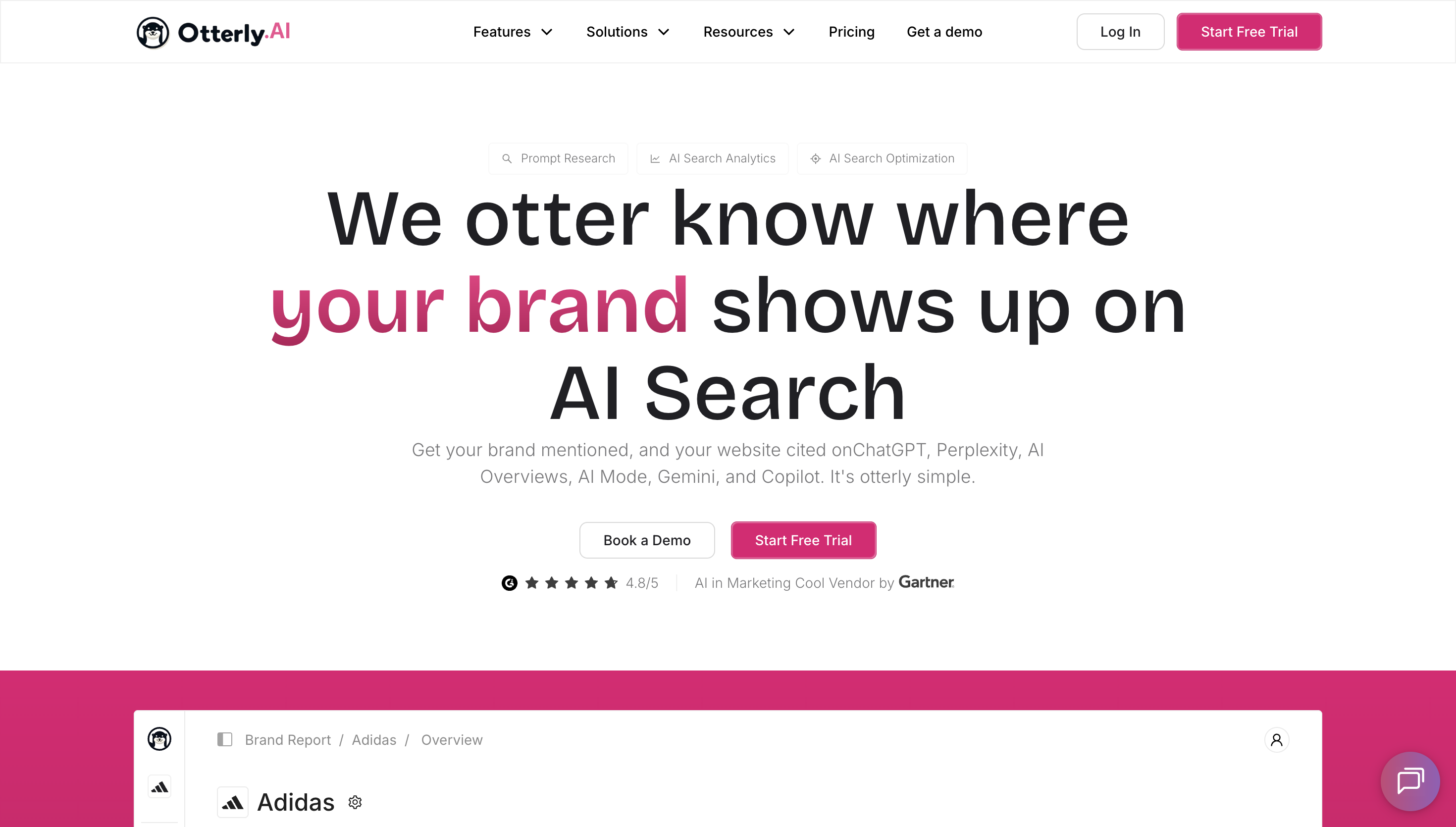
Best for: solo marketers, and teams testing whether this category earns its budget
Pricing: from $29/mo for 15 prompts, $189 for 100, $489 for 400
The cheapest credible entry point here. Scheduled scans, citation alerts, and a dashboard simple enough to be useful on day one. The prompt limits are stated plainly, which makes forecasting straightforward.
One thing to check before signing: confirm exactly which engines are in your tier. Coverage varies between plans and it isn't always obvious from the pricing page.
Better than Peec AI at: price, and lower commitment while you're still testing
Falls short on: reporting depth, with API access and exports restricted on lower tiers
5. Rankscale
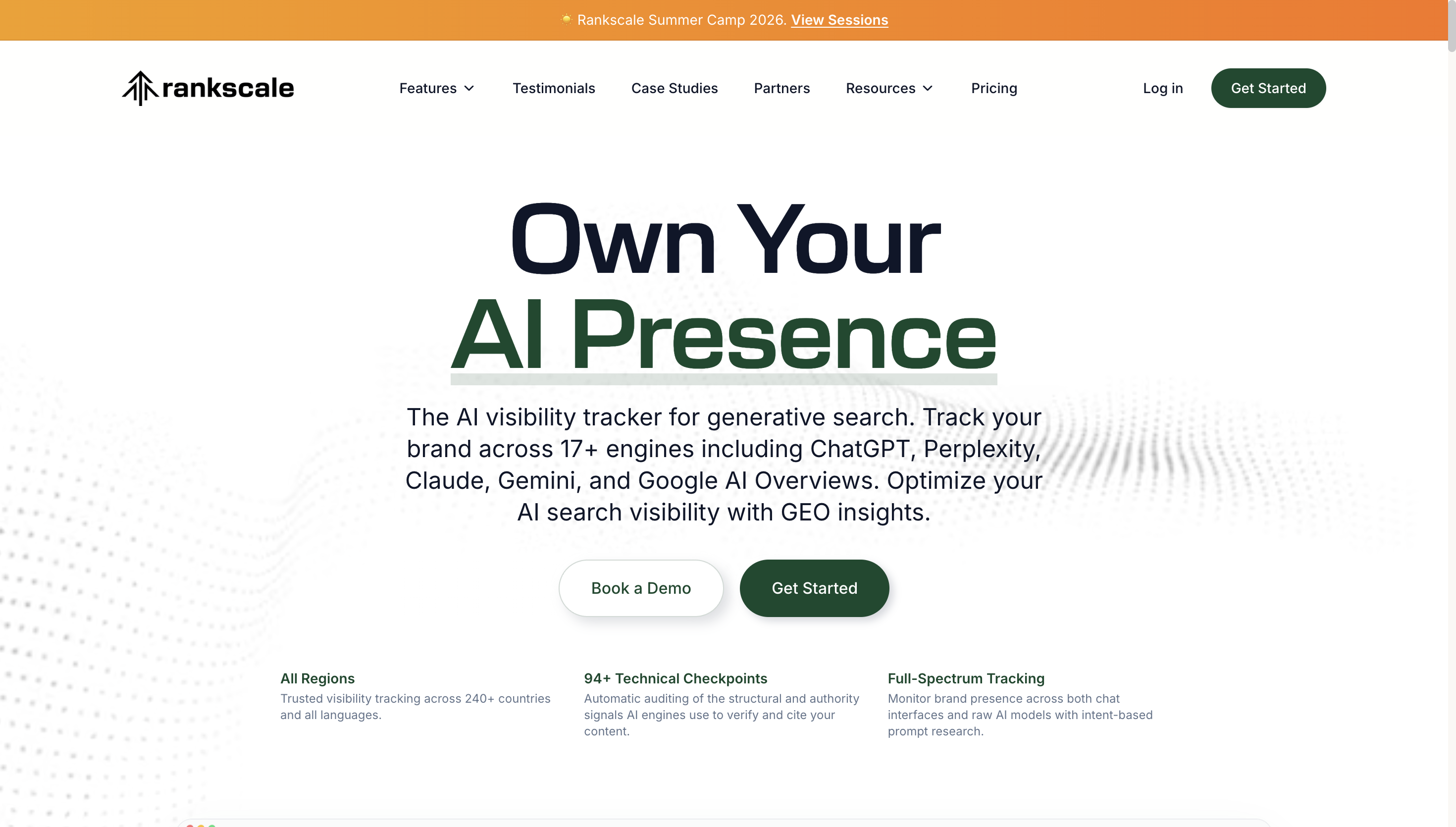
Best for: growth teams that want page-level recommendations, not just numbers
Pricing: from $385/mo for 5,500 credits
Rankscale connects visibility signals to specific optimisation suggestions, with monitoring as frequent as hourly. It suits teams running content experiments who want a shorter path from noticing something to changing something.
Better than Peec AI at: built-in optimisation recommendations
Falls short on: historical depth, being newer with less accumulated data behind the trends
6. Semrush AI Visibility Toolkit
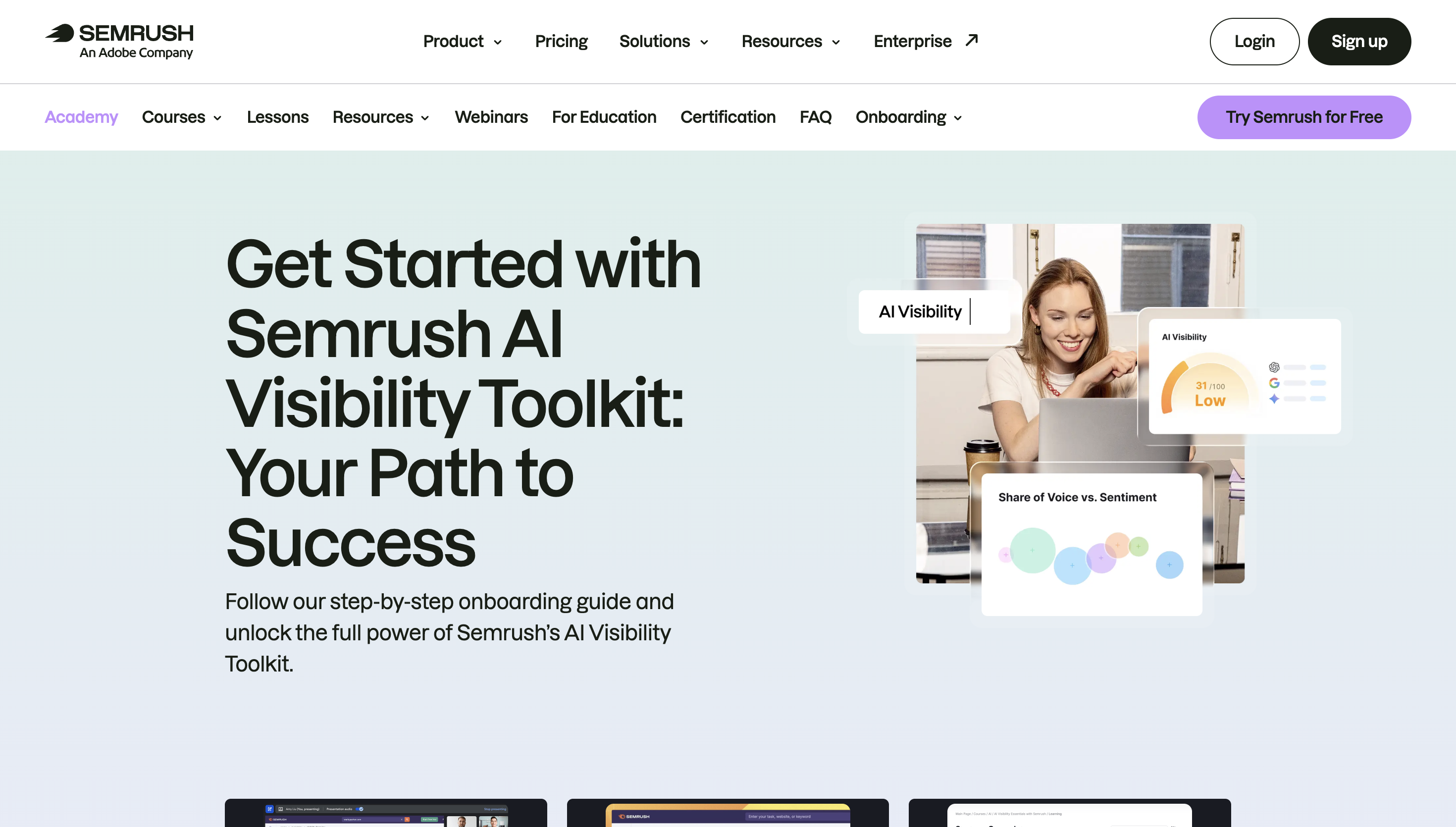
Best for: teams already paying for Semrush
Pricing: ~$99/mo per domain, 25 daily prompts on the base tier
An add-on rather than a standalone platform, which is the entire argument for it. Visibility data sits next to the keyword and audit data you already have, so you can go from spotting a problem to fixing it without adding a vendor or a login.
Better than Peec AI at: consolidation, if Semrush is already in your stack
Falls short on: prompt-level granularity, since it works from estimates rather than dedicated tracking
7. Ahrefs Brand Radar
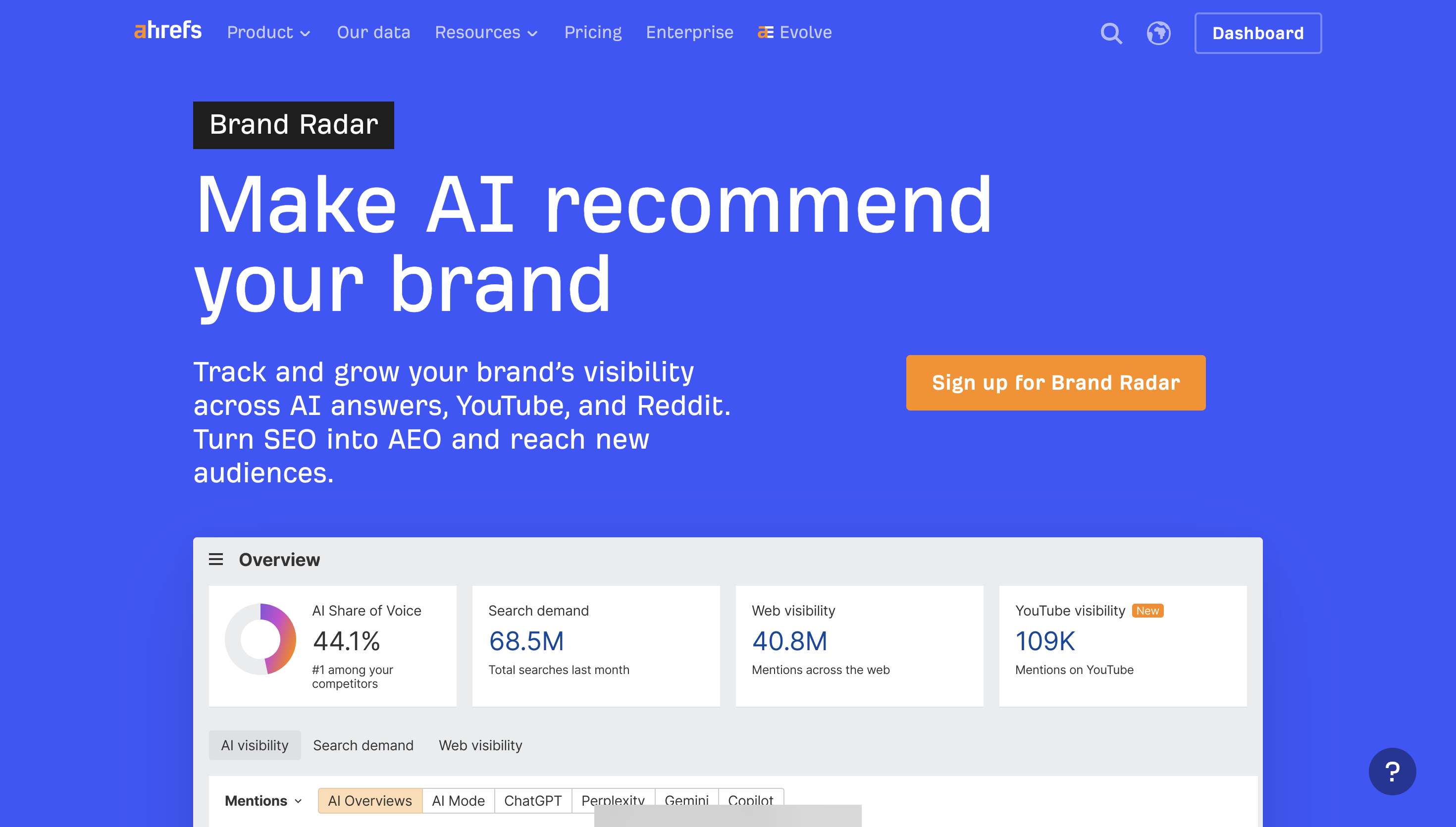
Best for: SEO teams on Ahrefs who need breadth for research
Pricing: from $129 base, roughly $199 per engine add-on
The advantage is the index behind it. Brand Radar tracks mentions across AI engines, Reddit, YouTube and the wider web, and reports citation signals at URL level rather than as raw mention counts, which tells you whether a mention carries any authority.
The trade-off is refresh speed. Several indexes update on a slow schedule unless you buy custom prompts, which makes it strong for mapping a market and weak for week-to-week optimisation.
Better than Peec AI at: breadth of discovery beyond AI surfaces
Falls short on: update frequency, and per-engine pricing that adds up fast
When Peec AI is still the right choice
Three situations where switching would be a mistake.
Your buyers are in Europe, or you're selling in German. The market-coverage argument that runs through this article inverts completely, and Peec AI becomes the strongest option here rather than the one you're leaving.
You need something running this week. Setup speed is genuinely their strongest suit, and several platforms above will take longer to produce anything useful.
You want simplicity over depth. If nobody on the team is going to live inside a tracking tool, a clean product you actually check beats a deep one you don't.
How to choose
Where are your buyers? Europe or German-language, stay with Peec AI. The US and other English-speaking markets, the rest of this list opens up.
Is your gap measurement or execution? If you already know where you're losing citations and nothing has changed, another dashboard won't fix it. If you genuinely don't know where you stand, start with a tracker.
Is a suite already paid for? Semrush or Ahrefs in your stack makes the add-on route cheaper and less work than onboarding a new vendor.
Who owns this day to day? No dedicated owner means the simpler tools get more real use than the deep ones, whatever the feature comparison says.
What's the actual budget ceiling? Under $100 a month is a different shortlist from $300 plus. Worth being honest about that before demos rather than after.
If the answer to the second question is execution, that's the conversation worth having.
Upgrade to an Agentic Marketing OS
See how Strivelabs gives mid-market teams the operational capacity without the hiring cost.
Frequently Asked Questions
What are the best alternatives to Peec AI?
The seven worth comparing are Strivelabs, Profound, AthenaHQ, Otterly, Rankscale, Semrush AI Visibility Toolkit and Ahrefs Brand Radar. Profound is deepest on US data, Otterly is cheapest at $29 a month, AthenaHQ adds an action layer, and Strivelabs handles execution rather than tracking.
What is the best Peec AI alternative for a US B2B SaaS team?
Profound if you have someone to run it and need US market depth. Otterly, if budget is tight, at $29 a month. Strivelabs if you already know where you're losing citations and the work isn't getting done. Profound is the closest like-for-like swap.
Is Peec AI good for US teams?
It works, and plenty use it, but their centre of gravity is Europe. Roughly half their traffic comes from German-language search, and coverage and support hours reflect that. Ask on a demo how US English prompts are handled and what support hours you get.
Peec AI vs Profound: which is better?
Different strengths. Peec AI sets up in hours and is strongest on European and German-language coverage. Profound is deeper on US data, crawler analytics and enterprise security, but expects a dedicated owner. Lean European team, Peec AI. US team with an analyst, Profound.
Is there a cheaper alternative to Peec AI?
Yes. Otterly starts at $29 a month for 15 prompts against Peec AI's $80 entry tier, and AthenaHQ has a free Essential tier with limited credits. Both trade reporting depth, export access and API availability for the lower price.
Can I use Ahrefs or Semrush instead of a dedicated AI visibility tool?
Yes, if you already pay for one. Semrush's AI Visibility Toolkit is about $99 per domain each month and Ahrefs Brand Radar roughly $199 per engine. Both trade prompt-level granularity for sitting next to data you already have.
How do I switch from Peec AI without losing my reporting baseline?
Run both tools in parallel for a month with matching prompt sets, then export from each and compare. That overlap keeps your trend lines continuous. Most platforms won't import a competitor's historical data, so the parallel period is the only way to bridge it.
What should I compare when evaluating AI visibility platforms?
Five things: which engines are in your specific tier, how often data refreshes, whether pricing is per prompt or per credit, whether US or European coverage is stronger, and whether the tool stops at reporting. Engine coverage is broadly similar, so the differences sit in the other four.