The nine platforms worth comparing are Strivelabs, Dojo AI, HubSpot Breeze, Salesforce Agentforce, Adobe GenStudio, Clay, Pixis, Copy.ai and Jasper.
They are not competing for the same job, which is the first thing to sort out. Three are AI layers bolted onto suites you may already pay for. Three solve one specific problem well. Three work across your whole stack. Which group you should be shopping in depends almost entirely on where your pipeline data lives and how many systems a decision has to touch.
This is written for marketing leads at mid-market B2B SaaS companies, typically 50 to 500 people, who need to show that a platform moved pipeline rather than produced output.
At a Glance
-
The nine worth comparing are Strivelabs, Dojo AI, HubSpot Breeze, Salesforce Agentforce, Adobe GenStudio, Clay, Pixis, Copy.ai and Jasper. They fall into three groups solving different problems.
-
Where your pipeline data lives decides which group to shop in. HubSpot or Salesforce points to a CRM-native layer. Signals spread across ads, search and CRM points to a cross-stack platform. One problem channel points to a specialist.
-
Evaluate on four things: whether it reaches live conversion data, native connectors with two-way sync, pricing that supports a pilot, and approval enforced by role permission rather than convention.
-
Run six to eight weeks on one workflow, with the first two weeks in suggestion-only mode. That separates whether the recommendations are good from whether the execution works.
-
Set baselines from three months of HubSpot and GA4 history before you start. Without them the pilot proves nothing either way.
The question that sorts this list
Where does your pipeline data live, and how many systems does a decision have to touch?
If HubSpot or Salesforce holds your pipeline and most of your signals, a CRM-native AI layer is the obvious first look. Every recommendation gets checked against real lead outcomes because the lead data is already there. The trade is scope: an agent inside HubSpot sees HubSpot.
If your signals are spread across ads, search, CRM and social, a cross-stack platform makes more sense. The value isn't in any single system. It's in noticing something that only appears when two datasets are read together.
If one channel is your problem, buy the specialist. A platform is the wrong answer to a Google Ads efficiency question.
Getting this wrong makes the rest of the evaluation irrelevant. Teams buy cross-stack orchestration when their only real problem is ad waste, or buy an ad optimiser when the actual gap is that nobody connects content performance to pipeline.
How to evaluate, in four areas
Data access. Can it see first-party events in GA4, lead stages in HubSpot or Salesforce, and campaign spend in Google Ads? Not "integrates with" on a feature page. Ask to see a recommendation that references live conversion data during the demo. Anything that can't reach outcome data is guessing.
Native connectors. Confirm real connections to your CRM, GA4, Google Ads, LinkedIn Ads and Search Console, and whether sync runs both ways or only reads. Without Search Console in the loop, an automated ad change can't tell you whether it helped ranking or just spent money.
Pilot-friendly pricing. You need a structure that supports six to eight weeks on one workflow. A vendor whose only option is an annual contract is asking you to buy before you know.
Permissions and audit. Role-based access and audit logs, with human approval on anything touching ad accounts, audiences or CRM objects. The test is whether approval is enforced by permission or is a convention someone skips under deadline.
Quick comparison
| Platform | Type | Systems it sees | Where it acts | Main limitation |
|---|---|---|---|---|
| Strivelabs | Cross-stack | HubSpot, GA4, Google Ads, Search Console, LinkedIn Ads, Slack | Routes proposed changes to a named owner for approval | Adds a layer rather than consolidating your stack |
| Dojo AI | Cross-stack | Marketing stack, scope not publicly detailed | Proposes cross-channel actions | Smallest independent evidence base here |
| HubSpot Breeze | CRM-native suite | HubSpot CRM, marketing and content tools | Inside HubSpot | Sees HubSpot. Search Console and non-HubSpot ad data need another tool |
| Salesforce Agentforce | CRM-native suite | Salesforce clouds and Data Cloud | Inside Salesforce | Implementation is a project rather than a signup |
| Adobe GenStudio | Enterprise suite | Adobe creative and content supply chain | Creative production and asset workflow | Built for organisations with creative operations teams |
| Clay | Point solution | Enrichment providers, CRM, outbound tools | Outbound lists and sequences | Outbound only |
| Pixis | Point solution | Google Ads, Meta, GA4 | Paid campaigns | Paid channels only |
| Copy.ai | Point solution | CRM and content tools | Content and GTM workflows | Generation rather than measurement |
| Jasper | Point solution | CMS, HubSpot | Drafting | Writes. Doesn't measure or act on performance data |
Read the third column against your answer to the question above. If everything that matters sits inside HubSpot, Breeze reaching only HubSpot is not a limitation, it's the whole point, and it's the cheaper and simpler buy. If your decisions depend on Search Console performance, ad spend and lead stage at the same time, the narrow columns become the constraint.
Ordered below by how directly each connects data across your stack to an executed action. A team buying a CRM-native layer would put Breeze first.
Better decisions start with better infrastructure.
Most mid-market teams pick a channel and hope. Strivelabs gives you the data to know, and the infrastructure to act on it.
Cross-stack platforms
1. Strivelabs
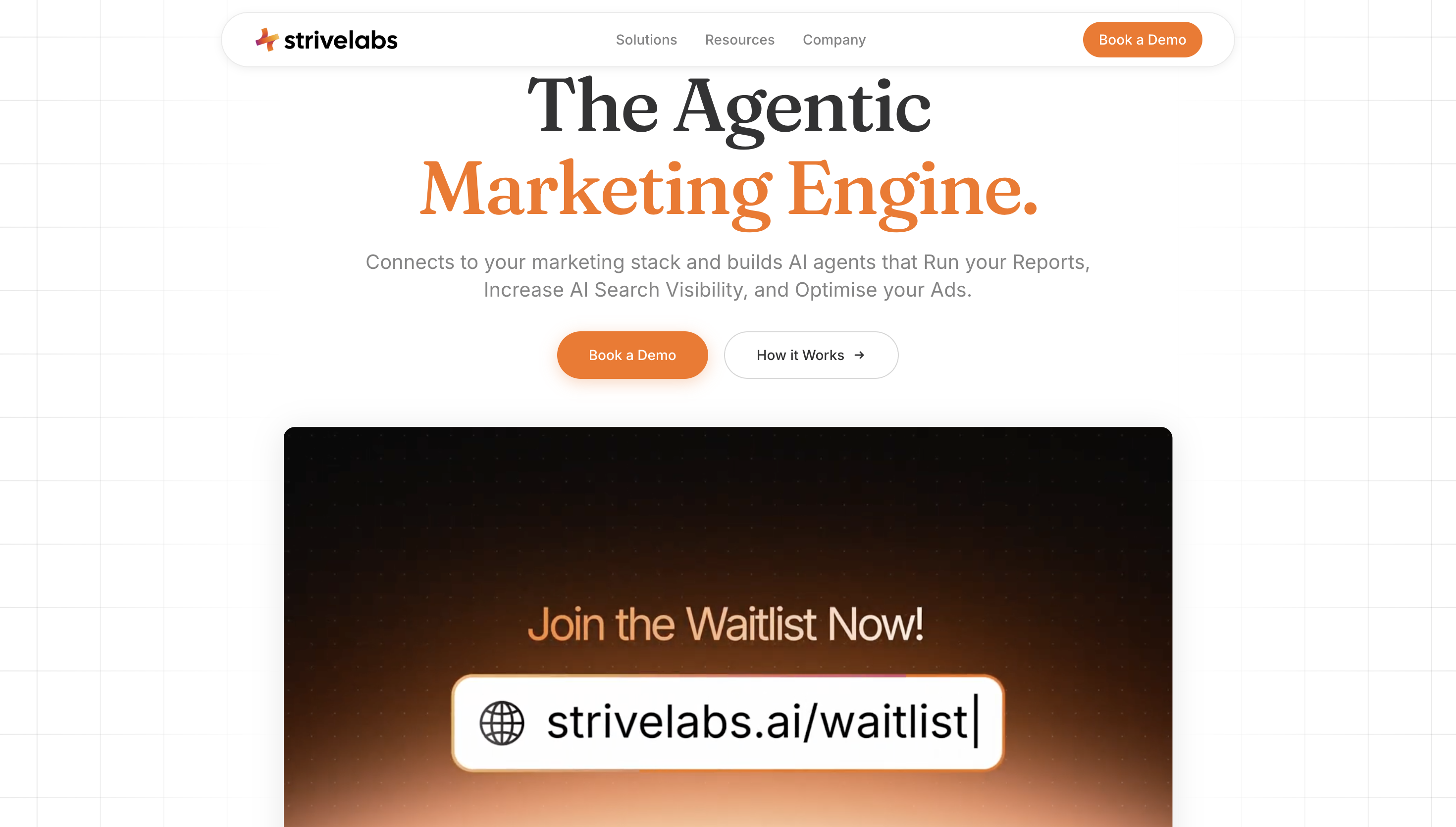
Best for: teams whose signals sit in five systems and whose decisions require two or three of them at once
Pricing: quoted
Strivelabs connects HubSpot, Google Ads, GA4, Search Console, LinkedIn Ads and Slack, reads them together, and turns what it finds into proposed work: a budget shift, a content brief, a task routed to whoever owns it. Nothing executes until a named person approves, and approval is enforced through role permissions rather than left to team convention.
The argument for it is narrow and specific. Most marketing decisions that matter require data from more than one system, and almost no tool can see more than one.
A page with real ad spend starts losing organic clicks. Google Ads shows cost per conversion drifting up. Search Console shows impressions holding but position slipping. Neither system flags a problem alone, because neither is wrong. Together they say a page is decaying while you pay to compensate for it. Strivelabs correlates the two and routes a refresh brief to the content owner with both datasets attached.
Lead quality diverges by channel while cost per lead stays flat. LinkedIn and Google are producing leads at similar cost. HubSpot shows one channel's leads converting to opportunity at half the rate. Your ad platforms can't see stage progression and your CRM can't see spend. The proposal is a budget shift with the pipeline evidence attached, ready to approve or reject.
Demand shows up before you've written anything. HubSpot contacts are visiting a pricing page after arriving on a specific topic, and Search Console shows impressions climbing on queries you have no page for. That's a brief that writes itself, and it's invisible unless something reads both.
Better than the suites at: working across systems no single vendor owns, routing by role rather than by object type, and enforcing approval as a permission rather than a habit
Falls short on: consolidation. It sits on top of your stack rather than replacing part of it, so you're adding a tool rather than removing three. If reducing vendor count is the point, a suite wins on that alone.
2. Dojo AI
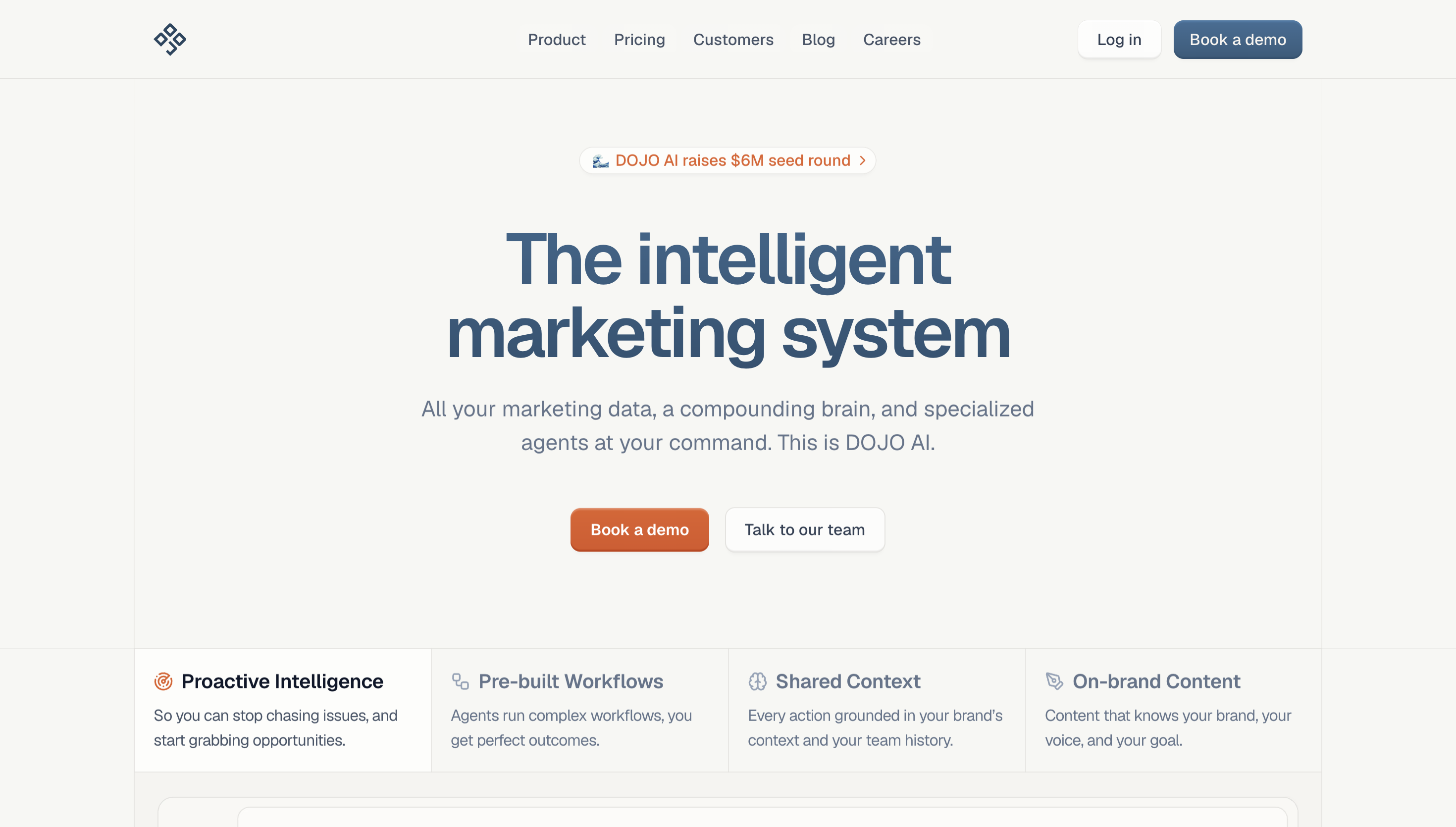
Best for: teams evaluating the same cross-stack approach and wanting a second quote
Pricing: not published, sales-led
Dojo AI describes itself as an integrated marketing operating system aimed at challenger brands, which is the closest positioning to Strivelabs of anything here. Worth a shortlist slot for exactly that reason, because two quotes on the same approach is how you find out what the approach costs.
Better than the suites at: the same cross-system scope
Falls short on: evidence. There's very little independent material to check before you commit, which matters more than it sounds when you're defending the choice internally.
CRM-native and enterprise suites
3. HubSpot Breeze
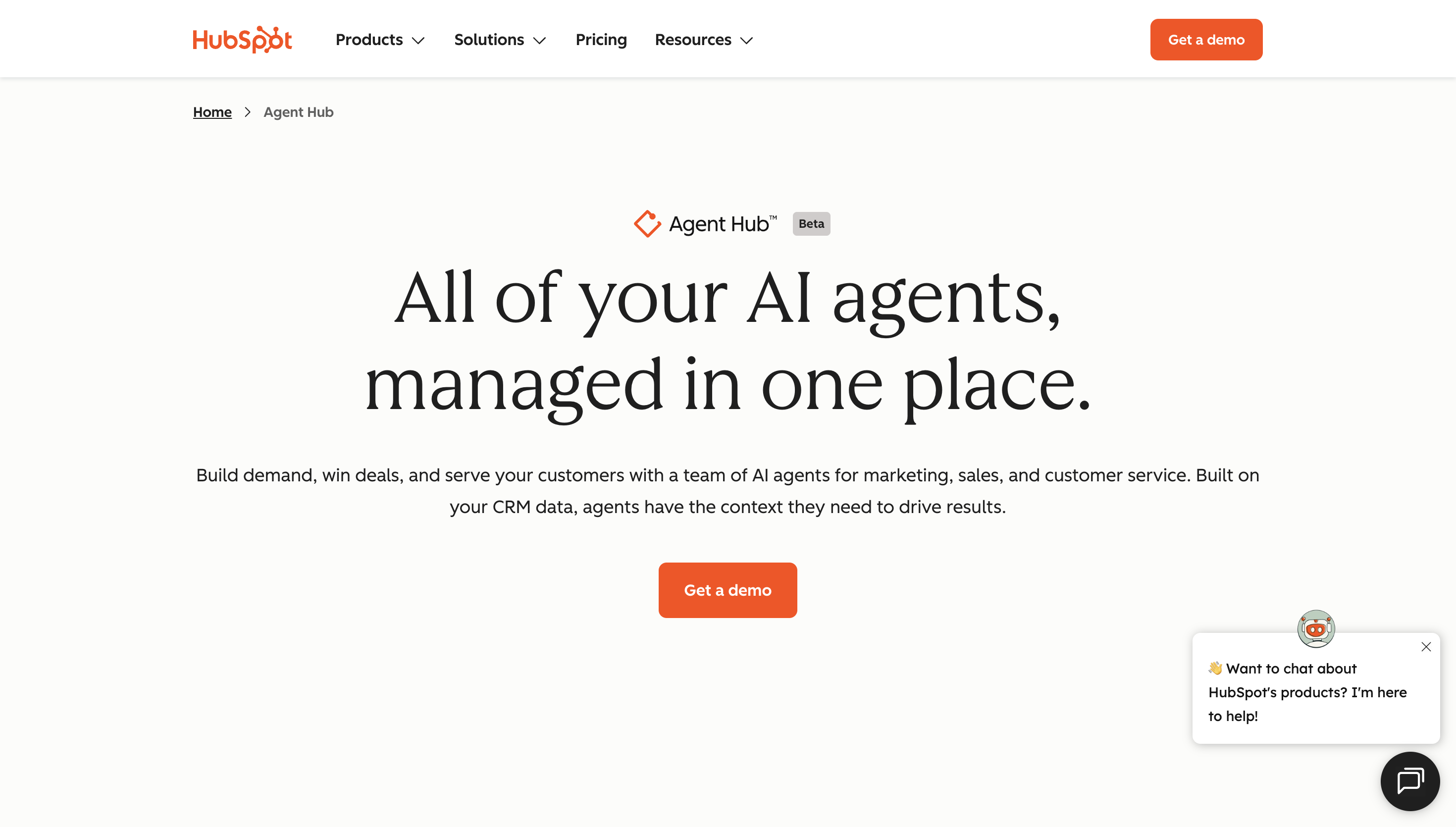
Best for: teams whose pipeline and signals both live in HubSpot
Pricing: published, seat and tier based, with credits on some agents
Breeze puts AI agents inside the CRM you already use, so recommendations sit next to the lead data that judges them. No new vendor, no new login, no integration project. For most mid-market B2B SaaS teams this is the sensible first look, and pretending otherwise would be daft.
Better than the cross-stack options at: proximity to pipeline data, procurement simplicity, and stability
Falls short on: scope. Agents inside HubSpot see HubSpot. Search Console performance and spend in a non-HubSpot ad account sit outside their view, so decisions needing both require something else in the stack.
4. Salesforce Agentforce
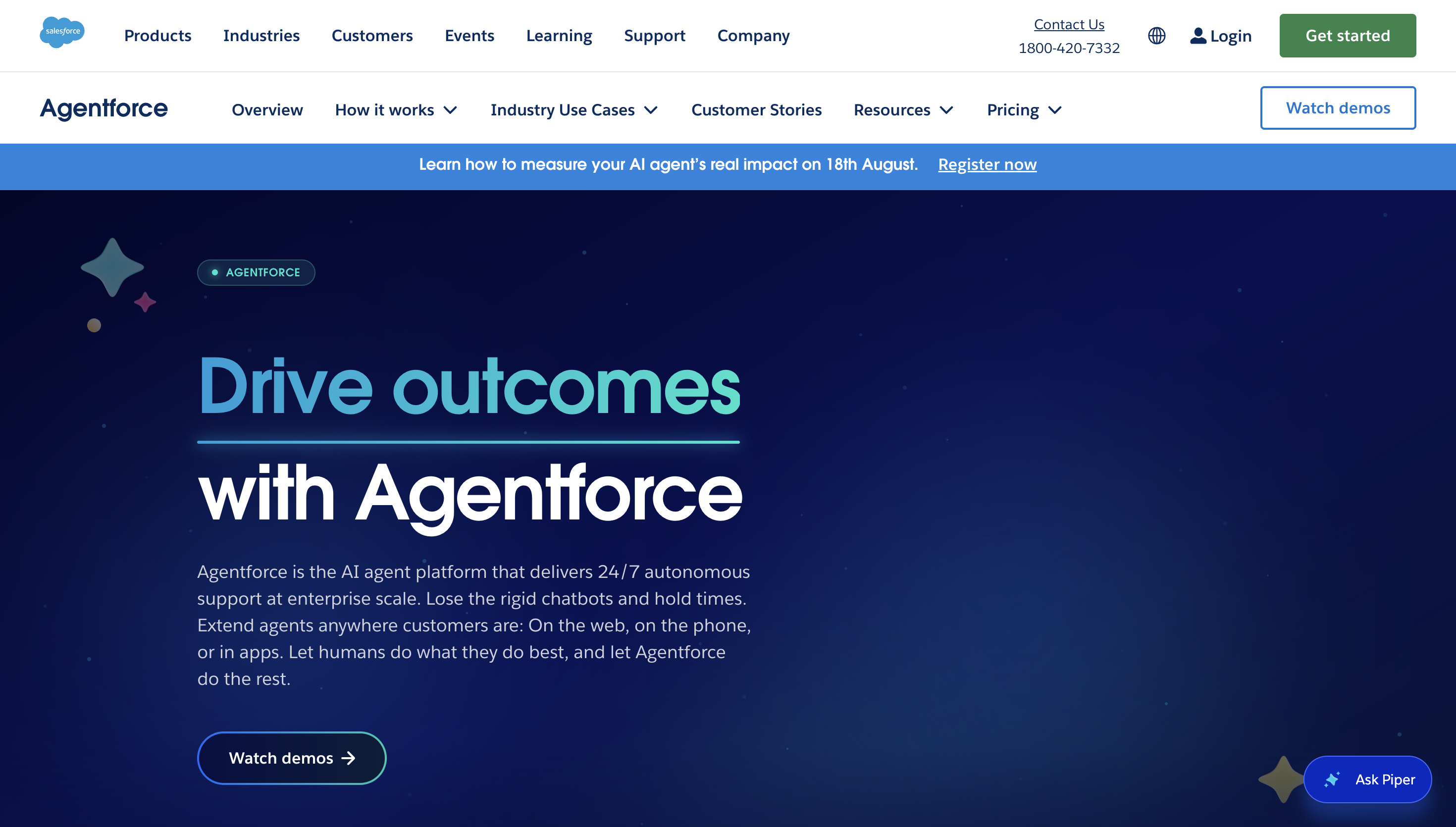
Best for: enterprise teams already committed to Salesforce
Pricing: published, consumption and seat based, plus platform costs
Agentforce extends across the Salesforce clouds with Data Cloud underneath, which makes it genuinely powerful where Salesforce is the system of record. The trade is well documented: implementations are projects, not sign-ups.
Better than the cross-stack options at: depth on Salesforce data and enterprise governance
Falls short on: time to value and total cost, both of which usually exceed the initial estimate
5. Adobe GenStudio
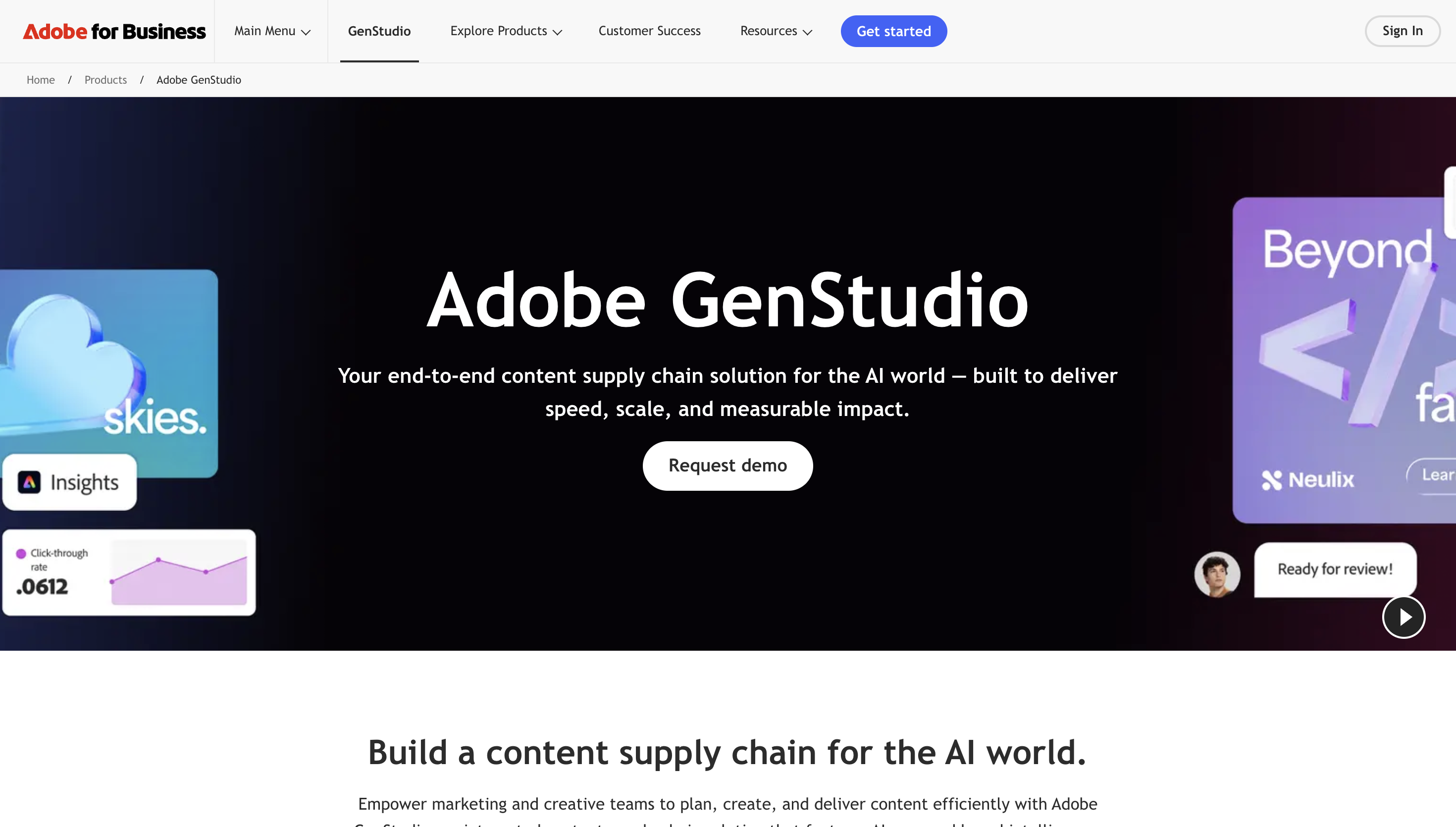
Best for: brands with creative operations teams and high asset volume
Pricing: enterprise, quoted
Adobe operates at a scale nothing else here approaches, and GenStudio handles the content supply chain end to end for organisations producing creative at volume across many markets.
Worth saying plainly: this is not a company a smaller vendor out-features. The case against it for a 50 to 500 person B2B SaaS team is fit, not capability. It's built for a different shape of marketing organisation.
Better than the cross-stack options at: creative production at enterprise scale, and asset governance
Falls short on: relevance to mid-market B2B SaaS, where the constraint is rarely creative volume
Point solutions
6. Clay
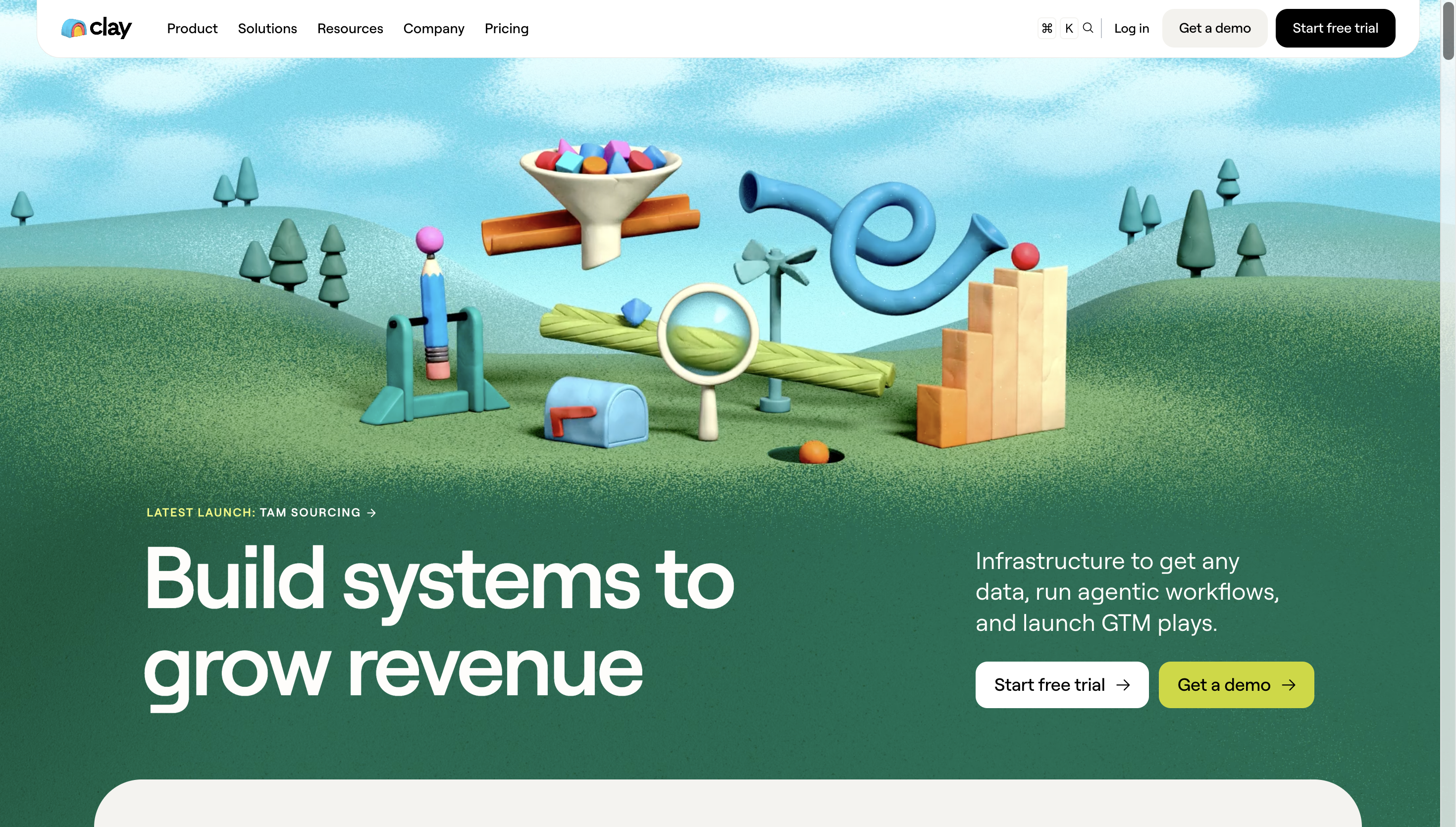
Best for: teams whose gap is outbound data quality
Pricing: published, credit based
Clay does GTM data enrichment and signal aggregation extremely well. If your problem is that outbound targeting is guesswork, this fixes it, and nothing on this list does that job better.
Better than the platforms at: enrichment depth and signal breadth for outbound
Falls short on: scope, since it feeds outbound rather than orchestrating marketing across channels
7. Pixis
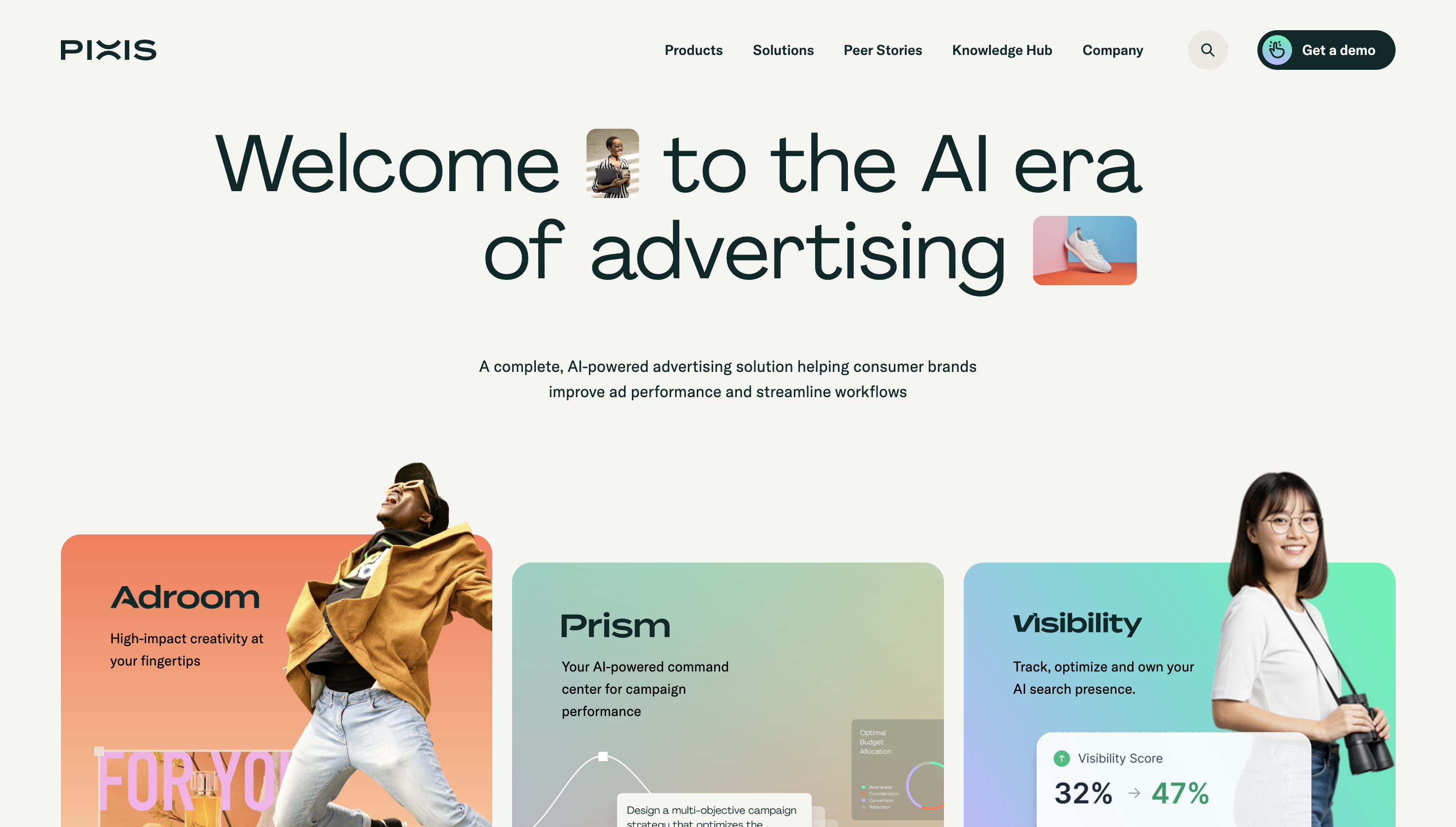
Best for: performance teams focused on paid efficiency
Pricing: not published, sales-led
Pixis applies AI to paid media performance across channels: budget allocation, creative testing, audience work. If ad waste is your named problem, a specialist beats a generalist.
Better than the platforms at: depth on paid optimisation
Falls short on: everything outside paid, so it needs something else to connect spend to content and pipeline
8. Copy.ai
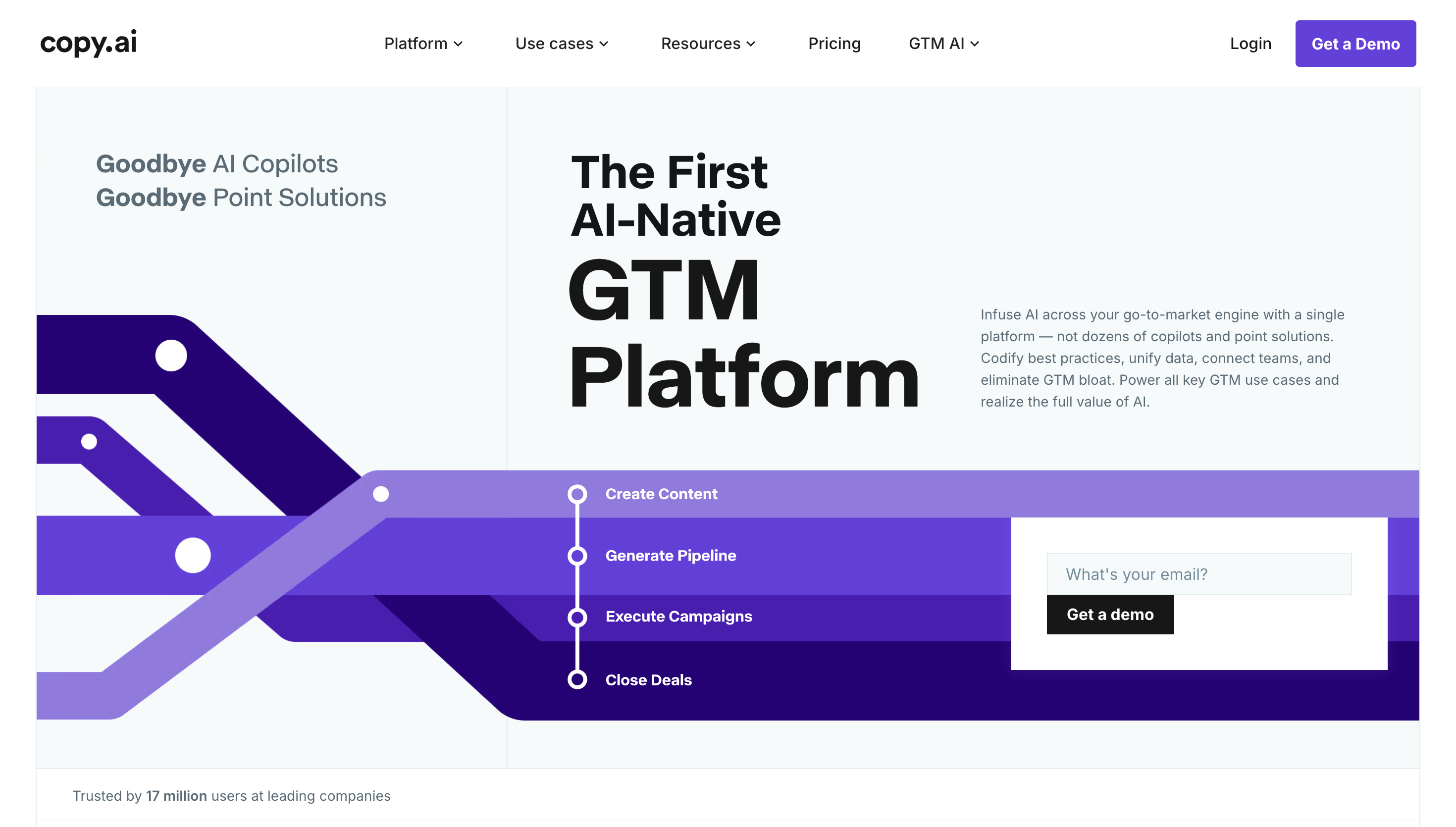
Best for: teams producing GTM content and short-form at volume
Pricing: free tier, then published paid plans
Copy.ai has moved toward GTM workflows rather than pure copy generation, with CRM connections that make it easy to slot into existing campaign work.
Better than the platforms at: speed on content production and entry price
Falls short on: measurement and orchestration, neither of which it attempts
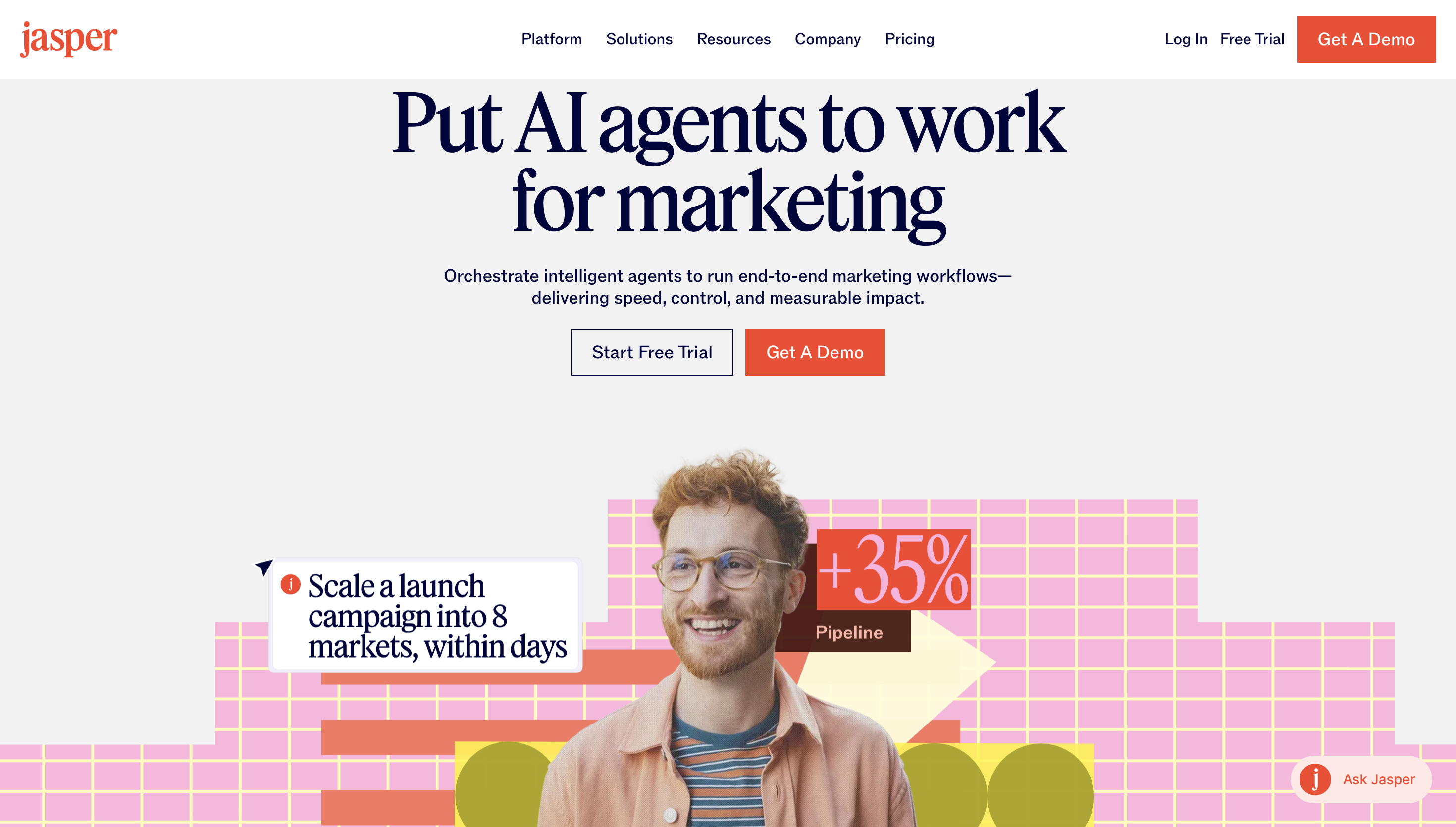
9. Jasper
Best for: teams where several people write and it needs one voice
Pricing: published, per seat
The most mature generation platform in this set, with Brand Voice controls and more independent validation than anything else here. It solves a genuinely different problem from the rest of this list.
Better than the platforms at: brand consistency across writers
Falls short on: acting on data, which it doesn't do, so it sits alongside a platform rather than replacing one
How agentic platforms actually work
Worth understanding before a demo, because vendors describe this inconsistently.
An agent reads signals across your connected systems, forms a view, and proposes an action with its reasoning attached. It doesn't act. A person reviews the proposal, adjusts it if needed, and approves. The decision is logged.
The inputs that make this work are CRM lead stages, GA4 events, Google Ads spend, Search Console impressions and LinkedIn engagement. The outputs are proposals: swap an audience, shift budget, refresh a page, reprioritise a lead.
The whole model depends on the approval gate being real. If a platform can execute without sign-off, or if sign-off can be disabled, you've bought automation rather than an agent with oversight. Ask specifically whether approval is enforced by role permission.
Running a pilot that proves something
Six to eight weeks on one workflow. Content tools can be judged in a fortnight, but anything touching ad spend needs enough spend cycles to produce a signal, and eight weeks is the honest minimum.
Pick one workflow that matters. Shifting budget between LinkedIn and Google based on HubSpot lead quality is a good candidate. So is refreshing declining Search Console pages, or reprioritising leads in the CRM.
Set baselines before you start. Pull three months of HubSpot and GA4 history. Record current time spent on the workflow, conversion rate and cost per lead. Without a baseline the pilot proves nothing either way.
Run suggestion-only for two weeks. Let it propose and don't act. This tells you whether the recommendations are any good, separately from whether the execution works, and those are different questions.
Then switch to approved execution for the remainder. Track conversion rate, cost per lead, experiments run per week and manual hours saved. Set your own targets from your baseline rather than adopting a vendor's benchmark.
Verify the data before you trust the advice. Check that event counts in the platform match GA4 and that Google Ads spend mirrors correctly. A platform reading bad data confidently is worse than no platform.
Collect the qualitative read too. Ask the team whether the reasoning attached to each proposal was clear enough to act on. That determines whether anyone uses it in month six.
Governance, which is where these go wrong
Three things in place before execution is switched on.
Approval thresholds. A named person signs off on any budget shift above a set amount, and every change is logged.
Role-based permissions. Some users see proposals only, others can approve. Setting this by job role rather than seniority is what keeps it working when someone is on holiday.
Logged reasoning. Record why each decision was approved or rejected. That log is how you improve the instructions you give the system, and it's what an auditor will ask for.
Choosing, in one paragraph
If your pipeline lives in HubSpot and your signals mostly do too, start with Breeze. If you're on Salesforce at enterprise scale, Agentforce. If your problem is one channel, buy the specialist: Clay for outbound data, Pixis for paid. If you need one voice across many writers, Jasper. And if the pattern you keep hitting is that the answer requires ad spend, search performance and lead stage at the same time, no single-system tool will find it. That's the cross-stack case, and it's the conversation worth having.
Upgrade to an Agentic Marketing OS
Connect your stack, get work routed to the right person with enforced approvals. No more decisions made blind to what you're spending on paid.
Frequently Asked Questions
What is the best AI marketing platform for B2B SaaS?
It depends where your pipeline data lives. HubSpot Breeze if you're on HubSpot, Salesforce Agentforce if you're on Salesforce, Clay for outbound data, Pixis for paid, Jasper for content, and Strivelabs or Dojo AI if signals are spread across systems.
How do AI agents differ from marketing automation?
Automation follows fixed rules someone configured. An agent reads current data, forms a recommendation, shows its reasoning and waits for approval. The practical difference is that you review a proposal rather than a workflow you built months ago.
Do I need a platform if I already have HubSpot?
Often not. Breeze puts agents inside the CRM you already pay for, with no integration work. The case for something else starts when your decisions depend on data HubSpot can't see, like Search Console performance or non-HubSpot ad spend.
What is the main safety control on an agentic platform?
Enforced human approval. The platform proposes, shows the supporting data, and executes nothing until a named person signs off. Confirm that gate is set by role permission and cannot be switched off.
How long before a pilot shows results?
Six to eight weeks on one workflow. Anything touching ad spend needs enough cycles to produce signal. Content-only tools can be judged faster, in one to two weeks.
Can these platforms move budget across ad networks?
The cross-stack and paid specialists can propose it, given access to Google Ads, Meta and GA4. Set hard limits, require approval above a threshold, and insist the proposal shows expected impact before anything moves.
What should I measure during a pilot?
Conversion rate, cost per lead, experiments run per week and manual hours saved, all against a baseline recorded before starting. Add a qualitative read on whether the reasoning was clear enough to act on.